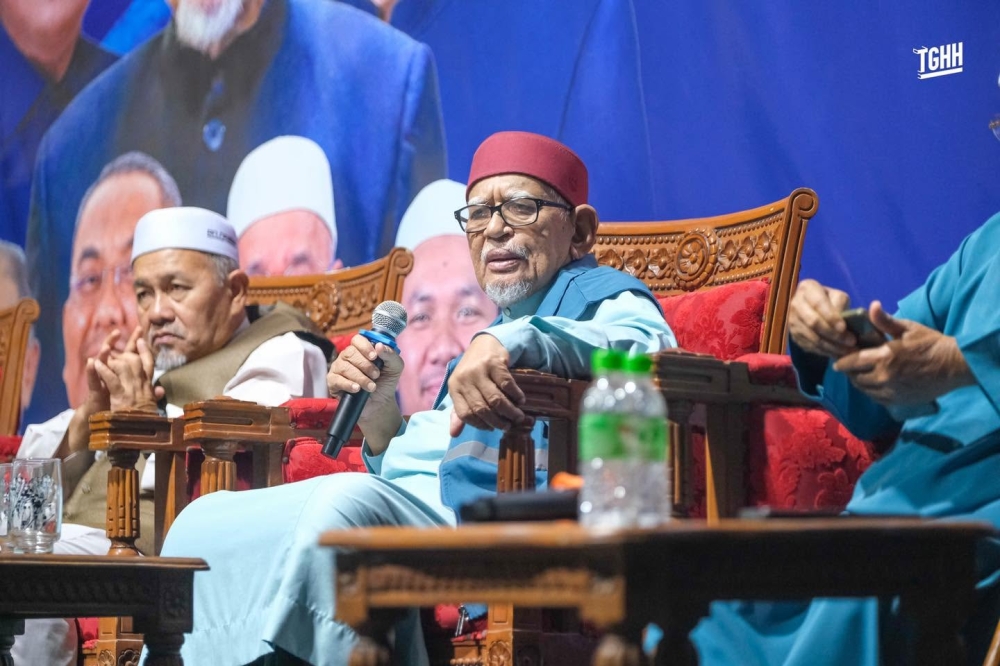
PAS has indicated its readiness to endorse an Umno candidate for the position of Negeri Sembilan menteri besar, provided that the broader political arrangement ensures Malay-Muslim leadership remains the defining characteristic of state governance. The declaration, made during discussions in Seremban on July 13, reflects the evolving strategic positioning within Malaysia's largest Malay-Muslim political coalition and underscores the complex power dynamics at play within the Perikatan Nasional alliance structure.
The willingness of PAS to defer the chief ministerial role to Umno carries significant weight given the party's recent electoral gains and its strengthened bargaining position within Malay-Muslim political circles. Such deference, however conditional, suggests pragmatic calculations about how best to consolidate Malay-Muslim political interests across the state rather than pursue narrow partisan advantage. This represents a calibrated approach to coalition management that acknowledges both parties' mutual interest in preserving their collective electoral dominance and policy influence.
Negeri Sembilan's political configuration has become increasingly complex following recent electoral contests and coalition realignments. The state government composition matters substantially beyond its borders, as political developments in any peninsular state serve as bellwethers for federal coalition stability and the balance of power between Umno, which has historically anchored Malay-Muslim establishment politics, and PAS, which has built significant grassroots strength particularly among rural and semi-urban Malay constituencies. The arrangement being discussed between these two parties will shape the state's policy direction across critical areas including Islamic affairs administration, economic development incentives for bumiputera communities, and inter-religious relations governance.
The emphasis on Malay-Muslim leadership functioning as a bedrock principle rather than merely a procedural outcome carries ideological and practical implications. This framing suggests that regardless of which party holds the menteri besar portfolio, the state administration should prioritize and protect Malay-Muslim communal interests, institutional prerogatives, and policy preferences. Such language resonates particularly within constituencies that view communal political representation not as one competing interest among many but as a foundational principle that should structure governmental decision-making hierarchies.
Umno's acceptance of the leadership role reflects its continued ambitions to dominate peninsular Malay-Muslim politics despite its reduced parliamentary representation compared to earlier decades. The party retains substantial local government machinery, traditional support networks among middle-class and rural Malay voters, and deep institutional connections within the civil service and professional classes. Negeri Sembilan represents terrain where Umno remains competitively positioned, making the menteri besar position a meaningful prize that enhances the party's profile and administrative influence.
PAS's strategic positioning demonstrates how the party has evolved beyond its historical role as a primarily oppositional force or regional powerhouse confined to the northeastern peninsula. By negotiating power-sharing arrangements with Umno at the state level while maintaining independent political organization and grassroots mobilization capacity, PAS has become a central player in Malaysia's coalition mathematics. The party's capacity to extract concessions—including presumably ministerial portfolios, administrative appointments, and policy influence beyond formal offices—demonstrates its leveraging power within larger political arrangements.
The Perikatan Nasional framework within which these negotiations occur remains fluid and contested. The alliance structure has experienced repeated friction points regarding seat allocations, ministerial distribution, and policy direction, particularly between PAS's more assertive Islamization agenda and Umno's more establishment-oriented approach to governance. Arrangements like the Negeri Sembilan settlement serve as pressure-relief mechanisms that allow divergent coalition partners to coexist by establishing clear territorial or portfolio divisions that minimize direct competition for identical resources.
For Malaysian observers and analysts tracking federal political stability, such state-level arrangements carry implications that extend well beyond individual state boundaries. How Umno and PAS navigate power-sharing in Negeri Sembilan, whether their cooperation produces effective governance outcomes, and whether their public declarations about Malay-Muslim leadership translate into coherent administrative practice will influence whether they can maintain larger coalition arrangements at federal or other state levels. Political fractures that emerge in one state frequently propagate through interconnected networks of party leadership and activist bases.
The broader Negeri Sembilan political landscape includes significant non-Malay populations, particularly in urban areas and plantation-dependent zones, whose political interests and communal concerns extend beyond Malay-Muslim leadership frameworks. While constitutional and political arrangements legitimately recognize Malay-Muslim communal interests, questions about how governance balances these with broader inclusive representation and multiethnic state administration will test whether the Umno-PAS arrangement can deliver stability and development benefits across the entire electorate.
The negotiated acceptance of Umno leadership by PAS, grounded explicitly in commitments to Malay-Muslim political primacy, exemplifies how Malaysia's coalition politics often operates through layered agreements that address both immediate seat-distribution questions and deeper questions about which communal constituencies should occupy privileged positions within state institutions. Whether this settlement proves durable will depend on whether both parties can maintain discipline among their respective bases and whether concrete governance outcomes validate the strategic compromises involved.

