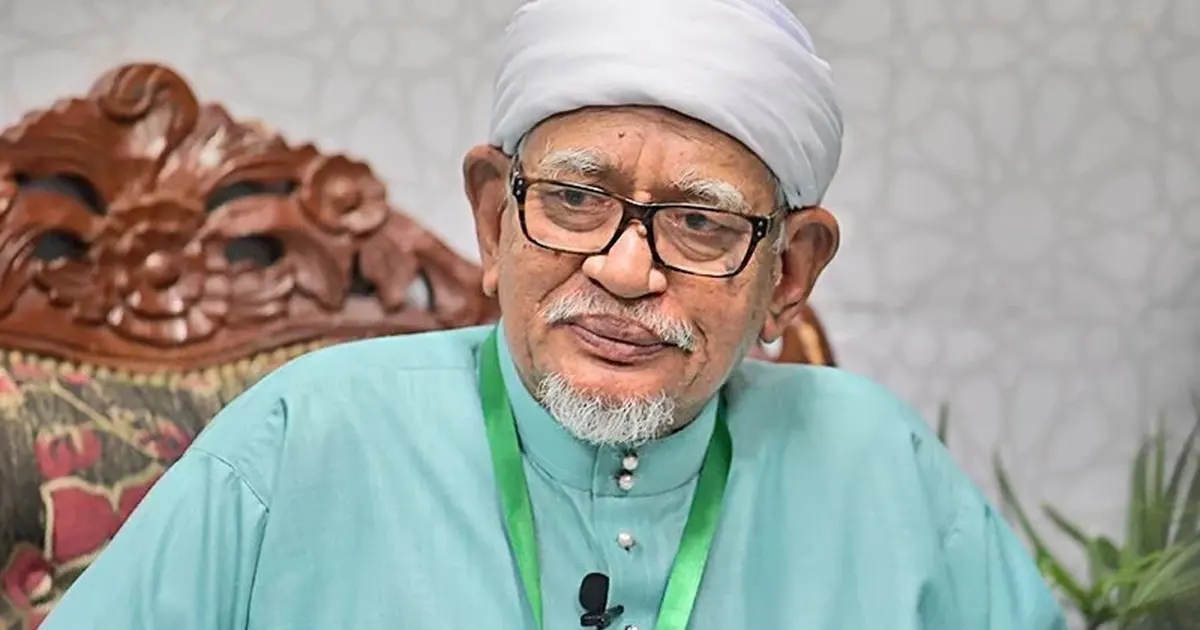
PAS president Hadi Awang has signalled that discussions between his party and Barisan Nasional regarding seat allocations in Melaka remain fluid and ongoing. The talks represent a critical juncture in coalition-building within the crucial eastern seaboard state, where the Islamic party holds significant organisational strength and electoral appeal.
In remarks acknowledging the political realities shaping the negotiation framework, Hadi emphasised that the discussions will necessarily account for BN's underwhelming electoral performance during the 15th general election, when the long-dominant coalition failed to secure any parliamentary representation from Melaka. This outcome marked a historical low point for the coalition in a state it had previously considered a stronghold, reflecting the seismic shifts in Malaysian voting patterns that have reshaped political alignments across the country.
The Melaka state arena holds particular strategic importance to both organisations. For PAS, which has consolidated considerable influence in several peninsular states and has emerged as a pivotal kingmaker in national politics, maintaining and expanding territorial control serves both immediate electoral objectives and longer-term institutional ambitions. For Barisan Nasional, recovery in Melaka carries symbolic weight beyond raw seat numbers, representing an opportunity to demonstrate resilience and relevance following years of electoral decline that culminated in losing federal power in 2018.
The negotiation framework itself reflects deeper complexities within Malaysian coalition politics. When two ostensibly allied entities enter seat-sharing discussions, the arithmetic rarely proves straightforward. Historical vote share, organisational capacity, community demographics, and incumbent advantage all become subjects of intricate bargaining. Hadi's acknowledgment that GE15's results will influence talks suggests PAS is positioning itself from a position of comparative strength—a tactical advantage when dividing contested territory.
Melaka's electoral geography has undergone significant transformation. The state encompasses multiple parliamentary constituencies with distinct demographic profiles and voting inclinations. Some areas lean toward PAS's base of Malay-Muslim voters, while others retain pockets of traditional BN support. The rise of PKR and other opposition forces adds further complexity to calculations about which seats either party can realistically defend or capture. Any seat agreement must therefore navigate not merely internal coalition dynamics but also the competitive threat from external political forces.
The broader context of PAS-BN cooperation merits careful consideration. Both parties have compelling incentives to maintain their governing partnership at federal and state levels. Federal stability depends partly on managing regional power bases effectively, and Melaka's state government remains a crucial platform for demonstrating coalition viability. Yet cooperation between nationalist and Islamist-oriented movements inevitably generates internal tensions, particularly regarding policy priorities and resource allocation. Seat negotiations therefore often become proxies for deeper ideological and strategic disagreements.
For Malaysian political watchers, these discussions signal the evolving nature of alliance construction in the post-GE15 environment. The consensus-based politics that once characterised BN's internal operations has given way to more transactional, issue-specific cooperation arrangements. PAS's rise reflects not merely organisational effectiveness but also the fragmentation of alternative political forces, which has inadvertently benefited the Islamic party's negotiating position. Conversely, BN's weakness in Melaka during GE15 diminishes its leverage in seat discussions, forcing the coalition to accept less favourable terms than it might have commanded during periods of greater electoral strength.
Regional implications extend beyond Melaka itself. How PAS and BN resolve seat allocation in one state often influences calculations in neighbouring territories. Selangor, Negeri Sembilan, and Pahang all feature similar dynamics, with PAS strength and BN revival efforts competing for organisational dominance. A generous settlement in Melaka might set expectations PAS cannot sustain elsewhere, while excessive BN concessions could create resentment among party grassroots. The negotiations therefore carry precedential weight across multiple state political economies.
Electoral management within coalitions has become increasingly sophisticated and contentious in contemporary Malaysia. Sophisticated analysis of constituency-level data now informs seat allocation discussions in ways that earlier, more informal arrangements never contemplated. Both parties likely employ detailed assessments of voter behaviour, demographic shifts, and candidate viability when entering negotiations. This technical dimension adds layers of complexity to what might superficially appear as simple political horse-trading.
The timeline for concluding these negotiations remains unclear, though state elections in Melaka may eventually force resolution. Hadi's public acknowledgment that talks are ongoing suggests neither party has staked out immovable positions, which historically facilitates eventual agreement. However, coalition management in Malaysian politics frequently involves extended negotiation periods punctuated by public posturing and private compromise.
For ordinary Malaysians observing these developments, the seat-sharing discussions represent tangible evidence of how political coalitions actually function beyond electoral campaigns and parliamentary votes. These negotiations determine which candidates receive party nomination, which in turn shapes the quality and orientation of state governance. The outcome in Melaka will therefore influence not merely internal party calculations but also the practical quality of governance that constituents experience.

