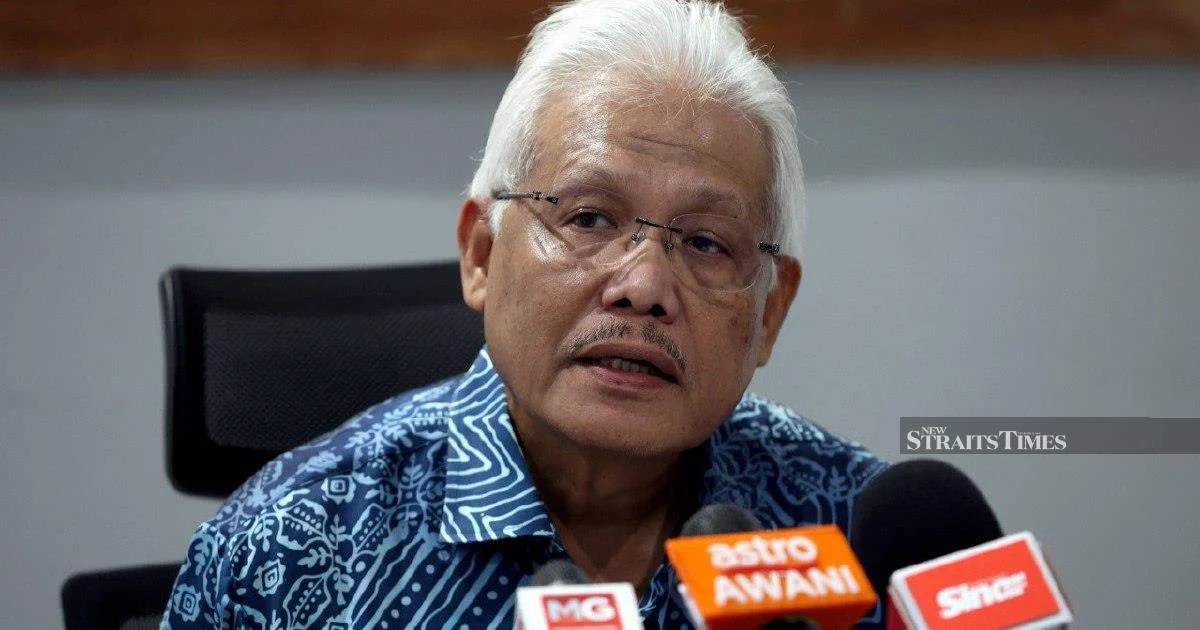
Parti Wawasan Negara, the rebranded successor to Parti Cinta Malaysia, has positioned itself as a potential mediator between Pas and Umno, two of Malaysia's most influential Malay-Muslim political organisations. The party, under the leadership of Hamzah Zainudin, believes it can play a stabilising role in reconciling differences between the two rivals, thereby bolstering broader Malay political cohesion at a time of persistent electoral and ideological tensions.
The move reflects growing concerns within the Malay-Muslim political sphere about fragmentation that could weaken collective bargaining power and governance effectiveness. Historical patterns demonstrate that divisions within this bloc have repeatedly created opportunities for opposition parties to gain ground and influence policy direction. Hamzah's initiative acknowledges this structural vulnerability and seeks to address it through a bridge-building approach rather than confrontational politics.
Pas, the Islamist Pan-Malaysian Islamic Party, and Umno, the long-ruling United Malays National Organisation, represent fundamentally different political philosophies and voter bases, though both draw heavily from Malay-Muslim communities. Pas emphasises Islamic governance and appeals strongly to rural and semi-rural constituencies, while Umno has traditionally relied on bureaucratic networks, business elites, and urban Malay voters. Past cooperation frameworks—most notably during the Muafakat Nasional agreement—have been episodic and subject to breakdown when electoral calculations or ideological differences resurface.
Wawasan Negara's emergence as a potential intermediary introduces a new variable into this complex dynamic. The party's rebranding from Cinta Malaysia suggests a more institutionalised approach to political positioning, moving beyond a niche player status to assume a facilitative role. For this to succeed, the party must demonstrate sufficient organisational independence and credibility that both Pas and Umno view it as a genuine neutral stakeholder rather than a proxy for either side.
The proposition carries significance for Malaysian governance more broadly. Political fragmentation among Malay-Muslim parties has historically correlated with reduced policy coherence on key national issues—education, economic distribution, Islamic affairs, and federal-state relations. When these parties compete aggressively rather than coordinate, parliamentary business slows, coalition governments become unstable, and extremist or fringe positions sometimes gain disproportionate influence. A functional bridge-building mechanism could theoretically mitigate these inefficiencies.
However, structural obstacles to reconciliation persist. Electoral competition remains zero-sum at the constituency level; cooperation in one state does not automatically translate to cooperation in another. Ideological differences on matters of Islamic law, secularism, and the interpretation of constitutional provisions continue to divide the two parties fundamentally. Moreover, Umno's traditional dominance in federal-level appointments and resource allocation creates asymmetrical power dynamics that complicate egalitarian partnership models.
For regional observers, the initiative underscores Malaysia's ongoing struggle to balance majority-community political expression with national unity and pluralism. The Malay-Muslim bloc's internal cohesion (or lack thereof) influences not only domestic politics but also Malaysia's positioning within Southeast Asia, its foreign policy orientation, and its economic policy frameworks. Weakness or division in this arena has occasionally been exploited by regional competitors or used to justify electoral adventurism by parties seeking to mobilise grievance narratives.
Hamzah Zainudin's profile as a former government official and diplomatic figure lends some credibility to the mediation proposal, though it also raises questions about whether Wawasan Negara can maintain perceived impartiality while being led by someone with established ties to the Umno establishment. This ambiguity may either enhance or undermine the party's effectiveness depending on whether Pas interprets the initiative as a good-faith effort or a covert Umno manoeuvre.
The practical mechanics of such mediation remain undefined. Whether Wawasan Negara envisions formal coalition agreements, policy coordination forums, or merely informal dialogue channels will determine the initiative's plausibility. Past attempts at three-way cooperation among Malay parties have faltered because parties struggled to move beyond symbolic gestures toward substantive institutional change or resource-sharing arrangements that affected electoral outcomes or ministerial positions.
Successful bridge-building would require both Pas and Umno to prioritise long-term political stability over short-term electoral gains—a calculus that becomes increasingly difficult as general elections approach. The incentive structures in Malaysian politics currently reward aggressive position-taking and community mobilisation rather than compromise and accommodation. Until these underlying incentives shift, even well-intentioned mediation efforts risk becoming footnotes in the larger narrative of Malay political competition.
Wawasan Negara's initiative nevertheless signals recognition that the costs of perpetual intra-bloc conflict have become visible to significant political actors. Whether this recognition translates into meaningful institutional innovation or remains a rhetorical gesture will become apparent through concrete actions—formation of joint committees, agreement on policy platforms, or visible coordination during parliamentary proceedings. The coming months will test both the sincerity and the viability of this mediation proposal.

