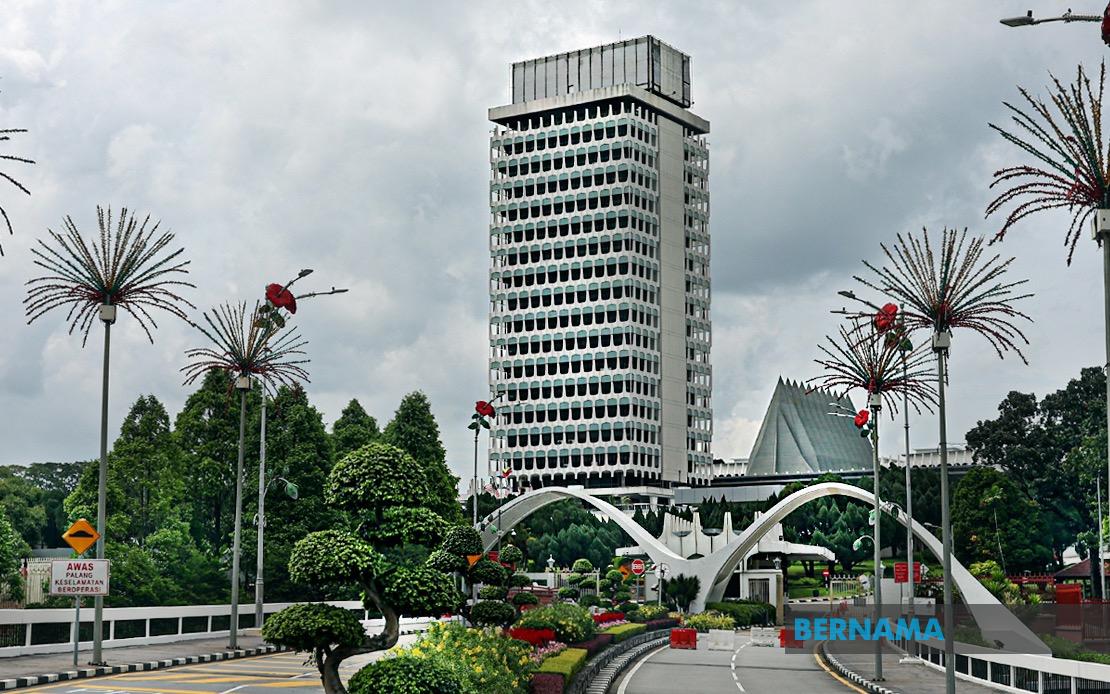
Parliament's third week of sitting delivered substantive progress on legislative and oversight fronts, with lawmakers addressing interconnected challenges spanning economic competition, agricultural stability, and institutional accountability. The parliamentary calendar moved forward with the tabling and passage of two competition-related bills designed to modernise Malaysia's approach to market enforcement in an increasingly digital economy, signalling Parliament's recognition that traditional regulatory frameworks require recalibration to address contemporary commercial practices.
The Competition (Amendment) Bill 2026 and the Competition Commission (Amendment) Bill 2026 emerged as centerpieces of legislative activity, representing the government's strategic pivot toward strengthening enforcement mechanisms against anti-competitive behaviour. These amendments reflect a broader regional trend across Southeast Asia, where regulators confront the complexities of digital commerce, platform economics, and cross-border trading patterns that existing statutes were not designed to address. For Malaysian businesses and consumers, the implications extend beyond abstract competition policy; improved enforcement directly affects pricing transparency, market access for small competitors, and the sustainability of digital entrepreneurship in an increasingly concentrated online marketplace.
Parallel to competition legislation, Parliament initiated debate on the Control of Padi and Rice (Amendment) Bill 2026, a measure underscoring the government's determination to fortify the domestic rice sector against malpractice and market distortion. The proposed framework introduces substantially increased penalties, with maximum fines escalating to RM1 million, signalling zero tolerance for regulatory violations in an industry foundational to Malaysia's food security posture. This agricultural focus carries particular resonance for Southeast Asian readers, as rice price stability and domestic production resilience remain central to regional food policy discussions amid climate volatility and global supply chain uncertainties.
The week's proceedings also centred on comprehensive debate surrounding the Human Rights Commission of Malaysia (SUHAKAM) Annual Report 2024, a recurring parliamentary fixture that obligates the government to respond systematically to institutional observations on civil liberties and rights compliance. Members of Parliament leveraged this platform to advance varied recommendations, ensuring that parliamentary record-keeping creates a documented expectation of governmental responsiveness on human rights matters. Such debates, while sometimes appearing procedural to external observers, serve as crucial mechanisms through which legislatures maintain institutional checks over executive human rights performance, particularly relevant in a regional context where civil society organisations monitor parliamentary engagement with rights issues.
Prime Minister Datuk Seri Anwar Ibrahim's ministerial question time remarks focused substantively on government support mechanisms for Malaysia's micro, small and medium enterprises sector, a demographic comprising over 98 per cent of the nation's business establishments. The Premier's emphasis on accelerating and rationalising financing application processing reflects acknowledgment that bureaucratic bottlenecks, not merely capital scarcity, constrain MSME expansion. This focus resonates across Malaysia's commercial landscape, where enterprises struggling with working capital constraints represent untapped productivity and employment potential. The government's commitment to ensuring financial institutions process applications efficiently addresses a persistent complaint from business associations concerning delays that disadvantage smaller operators competing against more capitalised competitors.
Press freedom considerations dominated subsequent parliamentary exchange, with the Prime Minister addressing Malaysia's declining ranking in the World Press Freedom Index 2024. Anwar attributed the downward movement to specific enforcement actions directed against certain media organisations, contextualising such measures within the government's commitment to protecting content boundaries surrounding religion, race, royal institutions, and national security. This framing distinguishes between suppressing legitimate political criticism and enforcing prohibitions against content categories that Malaysian jurisprudence historically designates as sensitive. The government's clarification attempted to reconcile international press freedom assessment methodologies with domestic constitutional and statutory frameworks, highlighting ongoing tension between global benchmark standards and national regulatory contexts.
Significantly, the Prime Minister announced a procedural modification whereby complaints against journalists from recognised media organisations would no longer automatically trigger investigations or enforcement action but instead require referral to the Malaysian Media Council (MMM) for preliminary assessment. This institutional gatekeeping mechanism aims to insulate routine journalistic activities from executive enforcement while maintaining governmental capacity to address content genuinely contravening legislative prohibitions. For Malaysian newsrooms and international media observers, the change signals potential reduction in unpredictable enforcement exposure, though the MMM's independence and decision-making transparency remain variables affecting practical impact.
Parliamentary focus extended to specialised committee reports addressing organ donation and transplantation systems and alarming trends in abuse and violence cases over six years preceding 2024. The organ donation discussion reflects Malaysia's ongoing efforts to improve transplantation infrastructure and donation rates, areas where regional performance lags comparable developed economies despite advanced medical capacity. Simultaneously, the documented rise in abuse cases across the examined period prompted parliamentary deliberation on prevention, victim support, and enforcement effectiveness—issues demanding sustained budgetary and policy attention extending beyond individual parliamentary sitting weeks.
Defence and security considerations featured through debate concerning naval modernisation, specifically the replacement system for existing Naval Strike Missiles deployed aboard Littoral Combat Ships. This procurement discussion represents visible parliamentary engagement with defence planning, an area typically dominated by executive discretion. The legislative conversation around weapons platform selection reflects increasing parliamentary comfort asserting oversight roles in capital-intensive military expenditure decisions, a healthy development for institutional accountability in a democracy with significant defence budgets.
Public health system digitalisation emerged as another significant parliamentary concern, with members directing attention toward accelerating the modernisation of information systems across public healthcare facilities. This agenda aligns with broader Southeast Asian health system priorities, where digital infrastructure gaps constrain data interoperability, clinical efficiency, and patient outcomes. Malaysia's push toward healthcare digitalisation addresses logistical realities affecting urban and rural healthcare access, workforce coordination, and pandemic preparedness—considerations that transcend routine administrative improvement and directly influence citizen wellbeing.
Financial accountability featured through Deputy Finance Minister Liew Chin Tong's disclosure that the government's cumulative liabilities stemming from 1Malaysia Development Berhad (1MDB) total RM51.4 billion, encompassing both settled and outstanding obligations. This figure maintains 1MDB's profile as a persistent financial liability influencing government budgetary flexibility and representing unresolved consequences of corporate governance failure. The parliamentary acknowledgment of outstanding liabilities ensures continued legislative awareness of contingent obligations affecting fiscal planning.
Parliamentary Speaker Tan Sri Dr Johari Abdul's remarks following a lawmaker's hospitalisation at the National Heart Institute emphasised health screening importance among parliamentary colleagues, a reminder that legislative bodies comprise individuals confronting ordinary health vulnerabilities. The Speaker's appeal, while modest in its policy dimensions, underscores the intersection of occupational demands and personal health management in roles requiring intense workloads.
With one week of sitting remaining before conclusion on July 16, Parliament's third week substantively advanced governmental accountability on competition policy, food security, press freedom, human rights, healthcare modernisation, and financial stewardship, creating a documented legislative record against which executive performance shall be measured.

