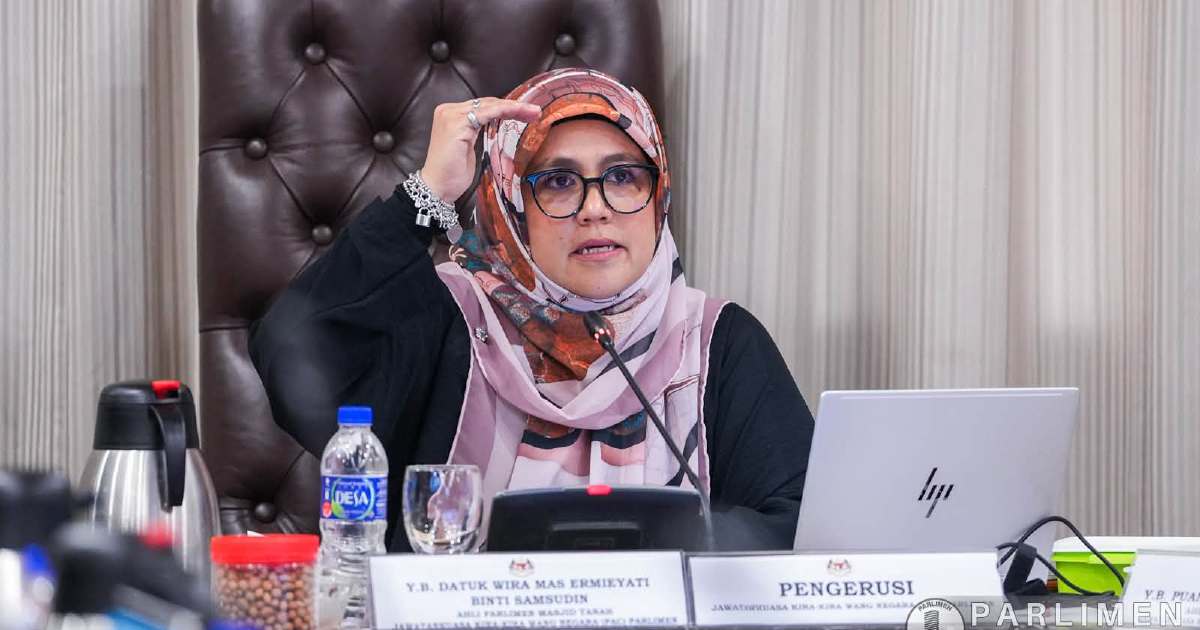
The Public Accounts Committee has formally initiated an investigation into governance and financial practices at Lembaga Tabung Haji, moving forward with a motion that secured unanimous parliamentary backing. The decision marks an escalation in scrutiny of the institution that manages savings schemes for Malaysian Muslims undertaking the Hajj pilgrimage, and comes amid growing public concern about the organisation's stewardship of depositor funds.
The unanimous vote signals rare bipartisan agreement on the need for accountability, with lawmakers across the political spectrum convinced that a thorough examination is warranted. The investigation will encompass three key areas: governance structures and decision-making processes, financial management practices, and investment performance across the fund's portfolio. This three-pronged approach suggests the committee believes potential weaknesses may exist across multiple operational levels rather than representing isolated incidents.
Tabung Haji's role as custodian of pilgrim savings has made it a financially significant institution, with millions of Malaysian Muslims placing their trust in its management of their Hajj funds. The organisation has historically positioned itself as both a financial services provider and a community institution, creating expectations of high fiduciary standards. Any shortcomings in these areas could affect public confidence not only in Tabung Haji itself but potentially in broader institutional trust within the financial sector.
The committee's decision to investigate reflects mounting public awareness of potential vulnerabilities in how the institution operates. Over recent years, various concerns have surfaced regarding investment decisions, governance transparency, and financial reporting standards. Rather than dismissing these as technical matters for internal management, the committee has determined that parliamentary oversight is necessary to ensure adequate safeguards are protecting depositor interests.
Investment weaknesses represent a particularly significant focus area given the scale of assets under Tabung Haji's management. The fund manages substantial reserves contributed by individual Malaysians over decades, making investment performance directly consequential for individual depositors' savings. An investigation into investment practices will likely examine whether returns are competitive with comparable instruments, whether portfolio allocation strategies are appropriate, and whether decision-making processes include adequate risk assessment and diversification.
Governance issues merit equally serious attention. The investigation will presumably examine board composition and independence, executive accountability mechanisms, conflict-of-interest protocols, and whether decision-making structures provide adequate checks and balances. Robust governance frameworks are essential for any institution managing public funds, and their absence creates space for decisions that may not align with depositor interests.
The financial management component of the inquiry will likely scrutinise budgetary practices, operational transparency, internal controls, and whether funds are being deployed efficiently. This dimension directly connects to public accountability and the institution's duty to explain how depositor contributions are allocated between current pilgrim services, reserves, and investment activities.
For Malaysian Muslims considering using Tabung Haji services, this investigation offers an opportunity for legitimate grievances to surface and be addressed through official channels. The inquiry may uncover systemic issues that, once exposed, can be remedied through structural reforms. Alternatively, it may exonerate the institution on certain matters, providing reassurance where concerns are unfounded.
The investigation also carries implications for Malaysia's broader financial governance architecture. How the committee addresses findings at Tabung Haji could establish precedents for oversight of other government-linked institutions managing public funds. A rigorous investigation demonstrates that even culturally significant and historically trusted institutions remain subject to parliamentary scrutiny.
Stakeholders will now be watching for the committee's investigative timeline and methodology. The inquiry will likely involve public hearings, document reviews, and expert consultations to build a comprehensive understanding of institutional practices. The eventual report will be scrutinised for both its findings and its recommendations for structural improvements.
For the institution itself, cooperation with the investigation offers the chance to address concerns transparently and implement improvements that restore or enhance public confidence. The alternative—resisting scrutiny or providing incomplete information—would likely compound rather than resolve concerns.
The investigation represents a potentially pivotal moment for Tabung Haji's governance trajectory. Whether it results in minor adjustments or more significant institutional restructuring will depend on what the committee discovers and how seriously deficiencies are viewed. Either way, the probe signals that no institution, regardless of its cultural importance or historical standing, is immune from parliamentary accountability when questions about stewardship arise.

