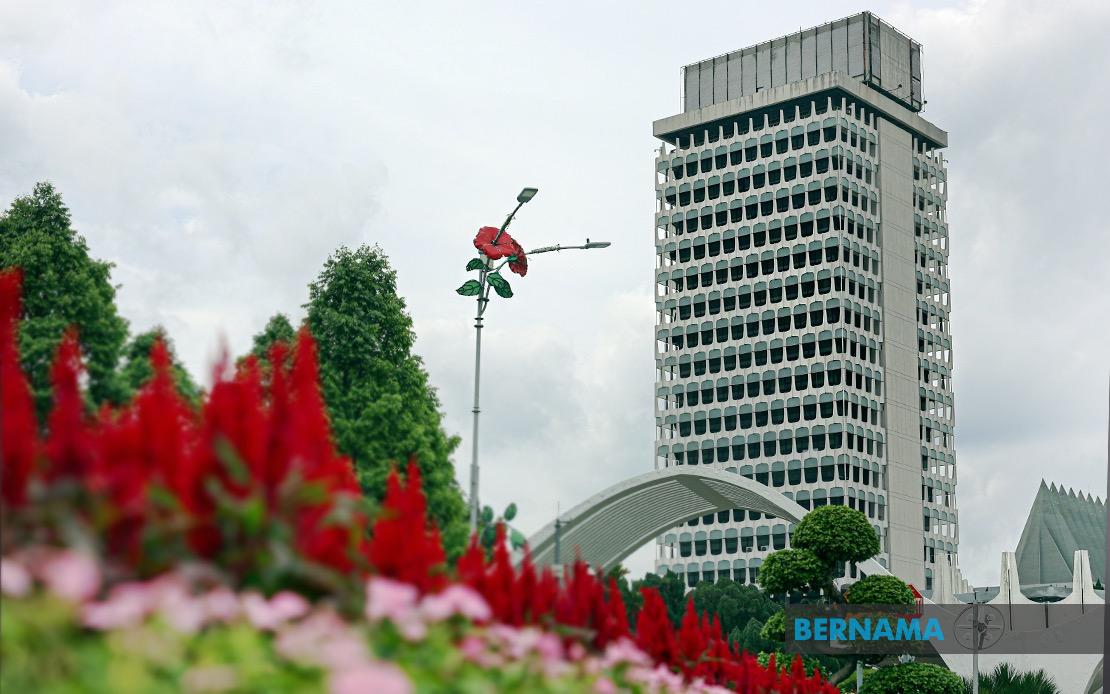
Parliament reconvenes today with a substantive agenda spanning financial accountability, energy policy, and social welfare—three areas where the government faces sustained legislative scrutiny. The Dewan Rakyat will hear urgent questions about the scale of Malaysia's lingering 1MDB liabilities, the renewable energy transition programme, and the growing problem of homelessness among vulnerable populations, signalling continued parliamentary focus on outcomes rather than rhetoric.
Chong Chieng Jen, the Stampin MP from the Pakatan Harapan opposition bloc, will directly challenge the Finance Minister during the morning Questions for Oral Answers session on the full extent of 1MDB's outstanding debt obligations and how much of that burden has been discharged so far. This line of questioning reflects enduring public and legislative concern about the costs of the sovereign wealth fund scandal, which implicated former Prime Minister Najib Razak and has shadowed Malaysian finance for over a decade. The scale of recovery remains a flashpoint: Chong will push for transparent figures on both the total value of misappropriated funds and the actual quantum of assets and cash that authorities have successfully retrieved to date. The opacity surrounding these numbers has long frustrated transparency advocates and foreign observers alike.
The renewable energy question posed by Datuk Seri Dr Ronald Kiandee, a Beluran representative from the Perikatan Nasional coalition, addresses Malaysia's ambitious but contested energy transition agenda. Kiandee will probe the Energy Transition and Water Transformation Minister on whether cross-sector partnerships—a hallmark of recent energy policy—are genuinely moving the needle toward national renewable capacity goals. His inquiry extends beyond aspirational targets to concrete metrics: total investment sums mobilised, specific renewable projects brought online, and structural bottlenecks impeding faster deployment. This questioning matters for regional context, as Malaysia lags several Southeast Asian peers in renewable penetration and faces pressure to meet regional climate commitments while maintaining competitiveness in energy-intensive industries.
The renewable energy portfolio carries particular weight in Malaysia's economic calculus. Unlike larger regional economies, Malaysia cannot simply scale up renewables without considering impacts on industrial electricity costs and energy security. Ministers have promised aggressive capacity additions, yet questions persist about whether investment frameworks, grid modernisation, and skilled workforce development can keep pace with ambition. Kiandee's structured questions suggest parliamentary impatience with generic announcements and a demand for granular implementation detail.
A second social welfare inquiry, posed by Fong Kui Lun of Bukit Bintang, shifts focus to an often-neglected constituency: homeless elderly citizens and persons with disabilities residing in urban areas. Fong seeks a census of this vulnerable population recorded during the current year, then pivots to scrutinising government capacity to house and support them through enhanced shelters, care facilities, and intervention programmes. The trajectory is troubling: Malaysia's rapid urbanisation and rising cost of living have swelled the ranks of homeless and near-homeless elderly even as formal welfare infrastructure remains patchy. Fong's dual-part question—first establishing the scale of the problem, then examining whether support services can meet it—flags a governance gap that will likely resurface in budget debates.
Parliament will also receive a formal briefing from the chairman of the Parliamentary Special Select Committee on Women, Children and Community Development regarding enhancements to the Integrated One Stop Crisis Centre (OSCC) network. These centres, designed to provide consolidated support for survivors of abuse and family violence, represent one pathway toward coherent social service delivery. The briefing suggests parliament is monitoring implementation progress and resource allocation, underscoring legislative interest in translating policy design into measurable outcomes in vulnerable communities.
On the legislative agenda, the Agriculture and Food Security Minister will table the Control of Padi and Rice (Amendment) Bill 2026 for its second reading. This bill touches on a perennial tension in Malaysian agricultural policy: balancing subsidies and price controls that protect farmers and consumers against fiscal sustainability and market efficiency. The timing—during what continues to be a period of global food system uncertainty—ensures this measure will draw scrutiny from rural MPs concerned about farm incomes alongside urban representatives focused on food affordability.
The sitting represents the second gathering of the Fifth Session of the 15th Parliament, a 16-day block running through July 16. The density of substantive business suggests parliamentary committees and opposition benches have prepared thoroughly, and ministers can expect to defend policy implementation across multiple fronts. The prominence of recovery questions around 1MDB indicates that the scandal, though receding from daily headlines, remains politically and legislatively alive—particularly as Malaysia seeks to rebuild international confidence in its institutional integrity.
Collectively, the parliamentary agenda reflects three governance challenges defining contemporary Malaysia: first, resolving financial legacies of past misadventure while maintaining forward momentum; second, executing an energy transition that serves both climate and economic interests; and third, expanding social protection systems to reach marginalised populations in growing cities. How effectively ministers respond will shape both the political narrative through the parliamentary session and public confidence in government capacity to translate policy commitments into tangible improvements.

