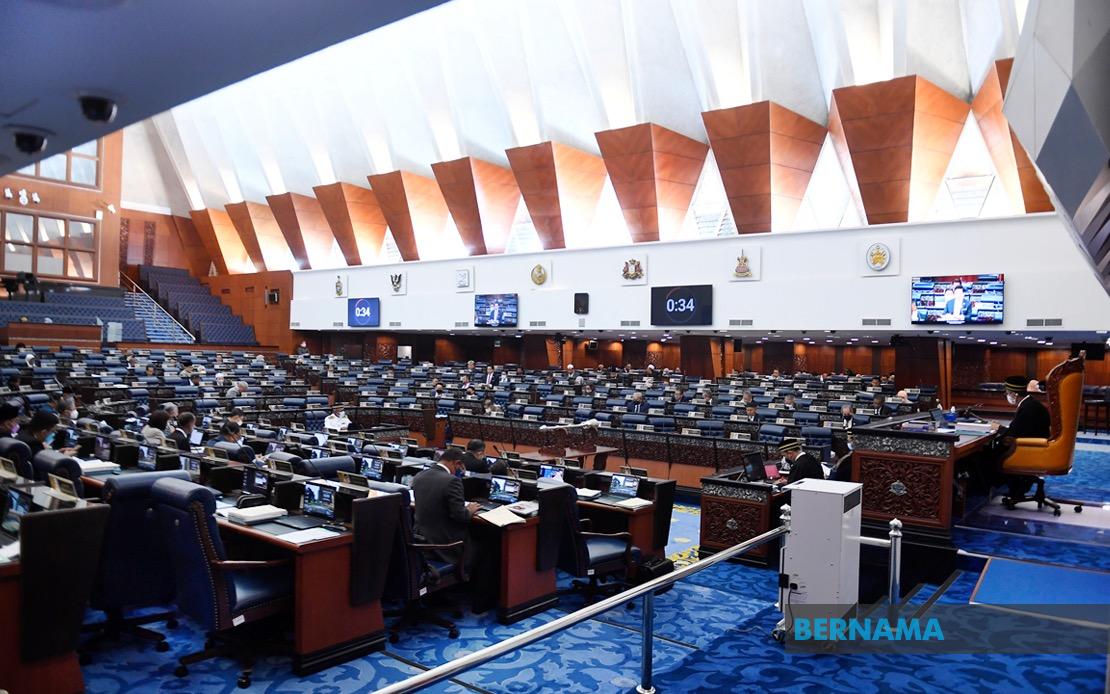
Parliament reconvenes today with two contentious issues dominating the agenda: the allocation of federal funds to state governments and the status of restrictions on announcing development projects during election campaigns. The session will test whether the government can justify its resource distribution mechanisms and clarify enforcement intentions ahead of significant state-level contests.
Doris Sophia Brodi, the GPS member representing Sri Aman, will lead questioning on the allocation framework. Her parliamentary inquiry signals persistent concerns from state lawmakers that the federal government distributes resources inadequately relative to the tax revenue states generate. The MADANI administration has faced criticism that its allocation methodology disadvantages certain states, particularly those with smaller populations or lower revenue bases. Brodi's questions will press the Prime Minister to detail how the government assesses fairness and what structural improvements have been introduced to address longstanding complaints about disproportionate resource flows.
Equally significant is Shahidan Kassim's planned interrogation of the Prime Minister regarding project announcement protocols. Malaysia's electoral rules prohibit government announcements of new allocations or infrastructure projects after nomination day closes, a measure designed to prevent ruling coalitions from leveraging development news as campaign momentum. However, enforcement has historically proven inconsistent. With Johor, Melaka, and Negeri Sembilan preparing for state elections, Shahidan's focus on enforcement mechanisms reflects heightened scrutiny about whether the restriction will be credibly implemented this time, or whether it will remain largely symbolic.
The parliamentary agenda also reflects broader governance anxieties emerging in Malaysia's digital age. Ismail Sabri Yaakob will press the Communications Minister on artificial intelligence threats, particularly deepfake videos and manipulated visual content circulating through social media networks. As AI-generated content becomes increasingly sophisticated, the gap between fabrication and reality narrows, creating acute challenges for media literacy initiatives. The government's response will indicate whether it has developed systematic strategies to counter misinformation or whether current approaches remain reactive and fragmented.
Energy infrastructure represents another critical concern. Chong Zhemin will interrogate the Energy Transition and Water Transformation Minister about Malaysia's capacity to sustain power supplies as data centres and artificial intelligence operations expand. The digital economy promises substantial economic growth, but realising that potential depends on reliable electricity infrastructure. Malaysia risks becoming a bottleneck for regional tech investment if generation capacity cannot match rapidly climbing demand from energy-intensive sectors.
Social welfare programmes feature prominently in today's questioning. Awang Hashim will examine the effectiveness of mySalam, a health protection scheme targeting the bottom 40 percent of income earners. Simultaneously, Syahredzan Johan will scrutinise redemption rates for MADANI Book Vouchers across 2024 and 2025, exploring whether intended beneficiaries are actually accessing the cultural and educational resources the scheme promises. These questions probe whether government assistance programmes translate into tangible citizen benefit or remain underutilised initiatives.
Women's workforce participation emerges as another parliamentary focus. Mumtaz Md Nawi will quiz the Human Resources Minister on TalentCorp's effectiveness, specifically whether initiatives like the Career Comeback Programme successfully encourage women to resume employment after career breaks. Malaysia's female participation rates in the formal economy remain below regional and global benchmarks, representing untapped economic potential and persistent gender-based labour market barriers.
Cost-of-living pressures continue dominating household concerns across Malaysia. Iskandar Dzulkarnain will seek updated figures on Program Jualan Rahmah MADANI implementation by constituency, while questioning whether the government intends increasing programme frequency. This scheme distributes subsidised essentials through designated retail points, directly addressing inflation's squeeze on lower-income households. Parliamentary interest suggests the government may be considering expansion, indicating recognition that current frequency inadequately addresses citizen hardship.
Following formal Question Time, Parliament will resume debating the Sexual Offences Against Children (Amendment) Bill 2026, legislation designed to strengthen protections for vulnerable minors. The debate's resumption suggests substantive disagreement remains over specific amendments, requiring additional parliamentary discussion before passage. This legislative priority underscores growing concern about child safety in Malaysia's increasingly connected digital environment.
The sitting will also address amendments from the Dewan Negara concerning the Employment Insurance System (Amendment) Bill 2025, which recalibrates worker protections and employer obligations. The upper house revisions will require reconciliation with lower house positions before the legislation achieves final passage. Additionally, Parliament will consider the Cyber Crime Bill 2026, legislation establishing frameworks for investigating and prosecuting technology-enabled offences from ransomware attacks to online fraud.
Collectively, today's parliamentary agenda reflects the intersection of economic development, social welfare, electoral integrity, and technological governance. The questions raised and government responses offered will indicate whether Malaysia's administration possesses adequate mechanisms for distributing resources fairly, protecting citizens from emerging digital threats, and expanding economic participation while maintaining cost-of-living support. For Malaysian constituencies and Southeast Asian observers monitoring regional governance trends, the parliamentary session provides crucial insight into whether recent policy commitments translate into substantive institutional change.

