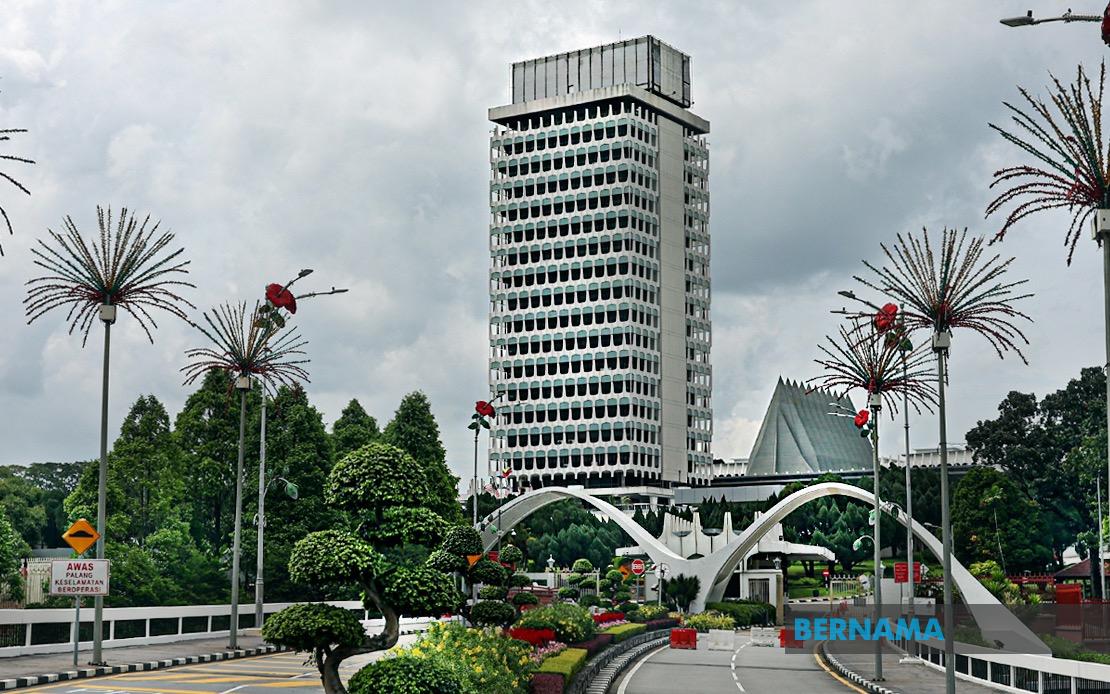
Parliament's legislative agenda on July 7 encompasses a cross-section of pressing national concerns, reflecting growing anxieties within Malaysia's business community and civil society. The Dewan Rakyat's ministerial questioning session will spotlight the deepening financial constraints affecting small business operators, the government's performance on safeguarding press independence, and welfare provisions for vulnerable populations. These discussions underscore the complex policy terrain facing the MADANI administration as it seeks to balance economic resilience with institutional integrity.
The financing predicament confronting Malaysia's MSME sector has reached a critical inflection point, prompting parliamentary scrutiny. Lee Chuan How, representing Ipoh Timor under the Pakatan Harapan banner, will interrogate whether ministerial leadership fully comprehends the mounting desperation among entrepreneurs struggling to obtain credit facilities essential for operational continuity. The question taps into a systemic challenge long recognized by economists and industry bodies: access to working capital remains prohibitively difficult for entities lacking substantial collateral or established banking relationships. This bottleneck particularly constrains growth trajectories in manufacturing, services, and digital commerce where MSMEs form the backbone of employment generation across Malaysia.
For Malaysian businesses already navigating post-pandemic recovery challenges, inadequate financing mechanisms represent far more than a procedural obstacle. They translate directly into inability to invest in technology upgrades, workforce expansion, or supply chain resilience. When hundreds of thousands of microenterprises cannot secure modest loans to purchase inventory or equipment, the cumulative drag on gross domestic product and employment becomes significant. The question reflects mounting frustration that despite various government initiatives and microfinance schemes, credit accessibility remains stubbornly constrained for segments that cannot navigate complex banking requirements or demonstrate track records satisfactory to institutional lenders.
Malaysia's declining position in international media freedom rankings has simultaneously generated alarm among journalists, activists, and international observers. Ahmad Fadhli Shaari, representing Pasir Mas under Perikatan Nasional, will press the Prime Minister for clarification regarding the nation's deterioration from 88th place to 95th in the 2026 World Press Freedom Index. This slippage, though modest in absolute terms, signals a troubling directional trend when press independence faces global reassessment. The descent occurs amid broader regional patterns where media autonomy has contracted across Southeast Asia, though Malaysia's specific vulnerabilities merit independent scrutiny.
The mechanics underlying Malaysia's diminished ranking warrant examination. International indices measuring press freedom typically consider factors including legal frameworks restricting reporting, physical intimidation of journalists, economic pressures limiting editorial independence, and governmental interference in news dissemination. For a nation aspiring to regional leadership in democratic governance, even marginal downturns carry diplomatic and reputational consequences. The question presented to cabinet raises expectations for substantive articulation of government measures—whether legislative reforms, institutional safeguards, or enforcement mechanisms—designed to arrest and reverse this negative trajectory. Malaysian readers and international media freedom advocates will scrutinize whether ministerial responses demonstrate genuine commitment or represent rhetorical reassurance.
Beyond headline economic and media concerns, parliamentary business extends to welfare infrastructure affecting elderly citizens. Aminolhuda Hassan from Sri Gading proposes exploring establishment of dedicated funding mechanisms to enable mosques and prayer halls to upgrade physical accessibility for senior congregants. This intervention addresses an overlooked dimension of social inclusion: ensuring religious spaces accommodate aging populations through installations such as wheelchair ramps, accessible toilet facilities, and other age-appropriate infrastructure. The proposal reflects growing recognition that demographic aging across Muslim-majority Malaysia necessitates thoughtful adaptation of community institutions to serve populations with mobility constraints and health vulnerabilities.
The parliamentary agenda subsequently pivots toward institutional governance questions through scheduled examination of the Human Rights Commission of Malaysia's 2024 annual reporting. SUHAKAM's documented performance provides parliament an opportunity to assess whether Malaysia's dedicated human rights body possessed adequate resources, independence, and effectiveness in monitoring state conduct and investigating citizen complaints. This retrospective assessment becomes particularly relevant amid questions about media freedom and institutional accountability, establishing contextual links between independent oversight mechanisms and broader democratic health.
Parliament's substantive legislative work will then progress toward constitutional refinement through resumed debate on the Constitution (Amendment) (No. 2) Bill 2026. This measure proposes fundamental restructuring of Malaysia's legal architecture by disaggregating the dual roles currently vested in the Attorney General position. By establishing separate individuals serving as Attorney General and Public Prosecutor, the amendment intends to enhance institutional independence and reduce potential conflicts of interest within prosecutorial decision-making. The separation responds to longstanding arguments by legal scholars and civil society organizations that unifying prosecutorial and legal advisory functions within single office holders created structural vulnerabilities to political influence.
The constitutional amendment represents another dimension of Malaysia's ongoing institutional evolution, comparable to concurrent discussions regarding media independence and SUHAKAM effectiveness. Collectively, these parliamentary preoccupations suggest recognition that democratic functionality depends upon multiple reinforcing institutional checks and professional autonomy. When parliaments seriously engage questions of prosecutorial independence, press freedom, human rights oversight, and economic inclusion, they signal commitment to systemic integrity beyond rhetorical endorsement.
These combined policy discussions arrive amid complex regional context where Southeast Asian nations variously navigate tensions between political stability and institutional independence. Malaysia's parliamentary engagement with such questions demonstrates commitment to iterative refinement rather than stasis, even as critics argue reforms remain insufficiently ambitious. The substantive parliamentary exchange on July 7 will reveal whether cabinet responses address questioners' concerns with concrete policy commitments, legal reform timelines, and resource allocations or persist with defensive clarifications. For Malaysian stakeholders in business, journalism, governance, and civil society, ministerial responses will either validate expectations for institutional strengthening or reinforce skepticism about genuine commitment to systemic reform.

