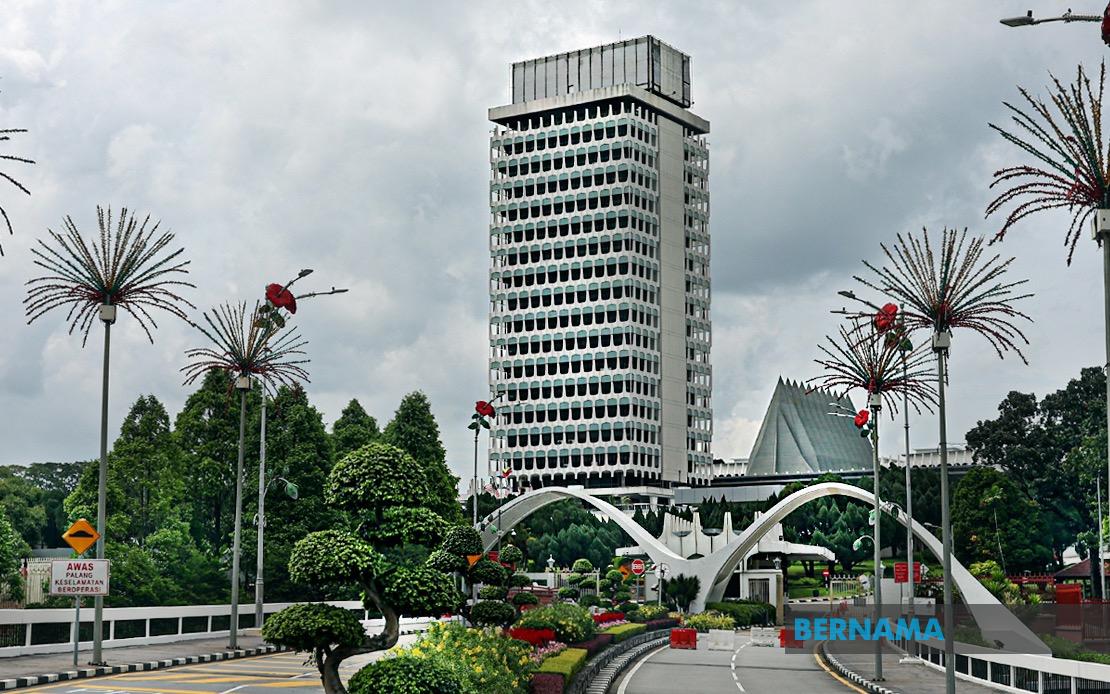
The Dewan Rakyat convenes today to scrutinise several policy initiatives as the government faces mounting pressures from an energy crisis and slowing economic activity. Among the priority items on the parliamentary agenda is the progress of the Corporate Renewable Energy Supply Scheme (CRESS), a programme designed to accelerate private sector participation in Malaysia's renewable energy transition. The session also includes critical examination of Malaysia's foreign policy direction regarding Myanmar, evaluated against commitments made through the Five-Point Consensus framework, alongside separate deliberations on economic mitigation strategies and infrastructure sovereignty concerns that reflect broader regional anxieties about technology and data control.
During Minister's Question Time, Rodziah Ismail of Ampang will seek a comprehensive update on CRESS from the Minister of Energy Transition and Water Transformation. Her inquiry extends beyond mere programme metrics to probe the findings of an ongoing System Access Charge (SAC) rate review, an assessment that carries significant implications for Malaysia's competitive positioning as a regional data centre hub. The SAC rate structure directly influences operational economics for data centres, and a reassessment could either enhance or constrain Malaysia's attractiveness to multinational technology firms seeking Southeast Asian hubs. Rodziah will also request detailed information on participation levels and coordination between CRESS, the Corporate Green Power Programme (CGPP), and emerging Battery Energy Storage Systems (BESS) initiatives, reflecting parliamentary concern that renewable energy infrastructure must align across multiple policy frameworks to maximise effectiveness.
The global energy crisis has triggered cascading economic consequences that demand immediate government response. Mohd Syahir Che Sulaiman, representing Bachok, will press the Minister of Economy to articulate the specific mitigation steps undertaken by the National Economic Action Council to counteract rising unemployment and business contractions. The mounting job losses and contraction signals appear concentrated in energy-intensive sectors and reflect the vulnerability of Malaysia's economy to external supply shocks, a concern amplified by broader geopolitical uncertainties affecting global economic stability. The government's documented track record of mitigation effectiveness will offer insight into whether existing policy instruments remain adequate to shield Malaysian workers and entrepreneurs from deepening economic headwinds.
Fuel subsidy policy has emerged as a focal point for parliamentary debate, reflecting the political sensitivity of cost-of-living pressures facing ordinary Malaysians. Datuk Seri Hasni Mohammad of Simpang Renggam will question Finance Minister on the rationale underlying the standardisation of fuel subsidy targeting mechanisms, particularly the use of MyKad identification for diesel distribution. His inquiry into whether the 200-litre entitlement for both fuels adequately serves consumer needs points to concern that the government's subsidy architecture may not calibrate benefits appropriately across different usage patterns, occupation types, and geographic circumstances.
Malaysia's foreign policy trajectory toward Myanmar constitutes a particularly significant line of inquiry today, with implications for regional stability and ASEAN cohesion. William Leong Jee Keen of Selayang will question the Foreign Minister on how Malaysia's stated foreign policy position toward the Myanmar government reflects and advances progress under the Five-Point Consensus (5PC). The 5PC, agreed upon by ASEAN in response to Myanmar's political crisis, represents a framework seeking dialogue, humanitarian access, and political reconciliation. Leong's question implicitly probes whether Malaysia's diplomatic actions genuinely advance these collective ASEAN objectives or diverge from them, a distinction bearing on Malaysia's credibility within regional diplomatic processes and on the ASEAN consensus itself.
Data sovereignty and digital security concerns dominate a separate line of parliamentary inquiry that reflects Malaysia's evolving strategic priorities. Datuk Seri Amirudin Shari of Gombak will seek clarification from the Digital Minister on mechanisms for aligning state-level digital infrastructure initiatives, specifically referencing Selangor's Dark Fiber Network, with national data sovereignty requirements. His questioning recognises that fragmented state-level technology infrastructure can create security vulnerabilities and strategic dependencies on foreign providers unless coordinated within a coherent national framework. The inquiry extends further to examine whether data sovereignty considerations are embedded within Malaysia's ambition to achieve AI readiness by 2030, a timeline suggesting the government has set concrete targets for technological capability development that presumably should incorporate security and autonomous control dimensions.
Educational policy and federalism intersect in a query from Datuk Idris Ahmad of Bagan Serai, who will request the Prime Minister's assessment of Islamic Education curriculum effectiveness in student development and coordination mechanisms between federal and state Islamic Religious Councils. This question reflects ongoing discussion about educational standards and the division of responsibilities between federal authority and state-level religious administration in Malaysia's plural system, where Islamic Affairs remain largely state prerogatives despite federal involvement in national curriculum setting.
Constitutional arrangements specific to Malaysian Borneo emerge through questioning from Isnaraissah Munirah Majilis of Kota Belud, who seeks clarification on Malaysia Agreement 1963 (MA63) implementation progress and timelines for adjusting parliamentary representation for Sabah and Sarawak to comprise 35 per cent of total nationwide seats. The MA63 represents the constitutional foundation for East Malaysian participation in the federation, and periodic demands for enhanced parliamentary representation reflect demographic change and regional development that the original 1963 arrangement did not anticipate. Movement toward greater proportional representation for Sabah and Sarawak carries implications for both regional influence and patterns of political coalition-building at the national level.
The Public Accounts Committee will brief parliament on health insurance premium increases, private hospital cost escalation, and their cascading effects on public health outcomes. This examination involves the Ministry of Finance, Ministry of Health, and Bank Negara Malaysia, indicating that the cost pressures in private healthcare systems trigger policy reverberations across multiple government domains and monetary authorities. The briefing implicitly acknowledges that healthcare affordability affects public health equity and that price dynamics in the private sector carry implications for government budgets and macroeconomic stability.
Parallel to these question-and-answer sessions, the Dewan Rakyat will continue deliberation on the Prisons (Amendment) Bill 2026, reflecting ongoing legislative attention to criminal justice and detention facility governance. The parliamentary session, now in its second meeting of the fifth session of the 15th Parliament, runs through July 16, providing an extended window for examining the government's management of energy transition, economic stability, foreign relations, digital infrastructure, and domestic social policy amid a complex and challenging external environment.

