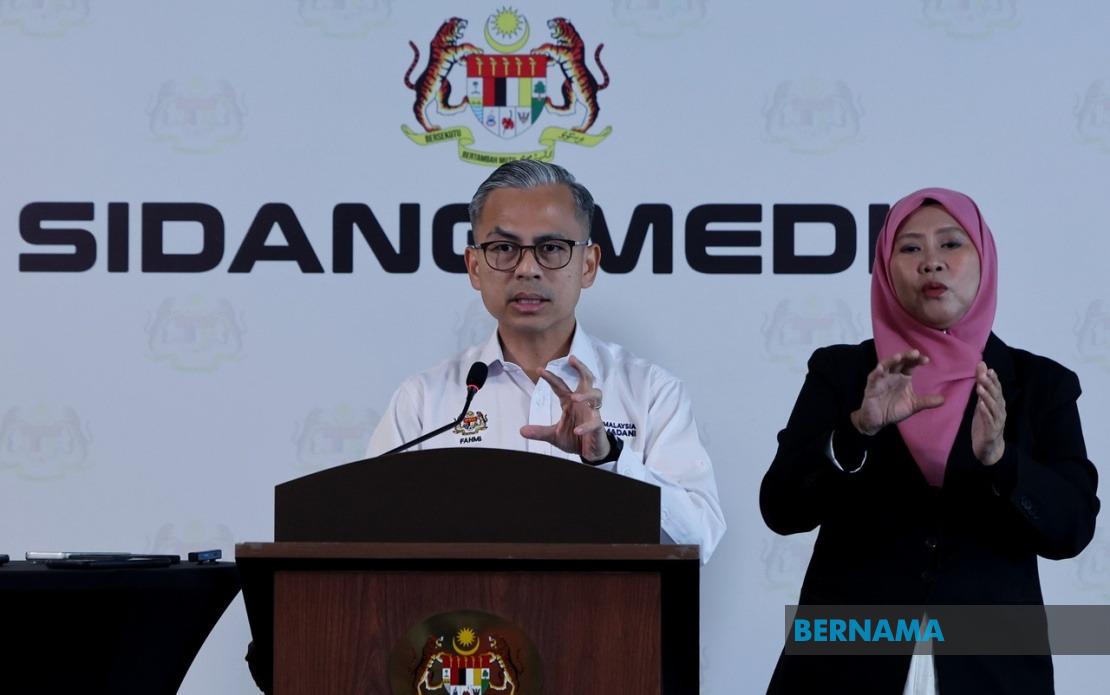
Parliament will convene for an extraordinary session on August 11 to scrutinise the findings of the Royal Commission of Inquiry into Tabung Haji, with between 35 and 40 MPs already confirming their intention to contribute to the debate. Communications Minister Datuk Seri Fahmi Fadzil revealed the participation levels during a press briefing in Putrajaya, signalling substantial parliamentary interest in what promises to be a contentious examination of the pilgrimage fund's troubled management. The special sitting, beginning at 10 am and continuing through the afternoon without scheduled breaks, will be the first major parliamentary airing of the damaging findings released publicly on July 29.
The unprecedented session reflects the gravity with which the government views the RCI's conclusions, which detailed systematic failures across multiple dimensions of Tabung Haji's operations. Speaker Tan Sri Johari Abdul has formally consented to the continuous sitting arrangement, indicating that parliamentary leadership recognises the need for extended debate to address the scope and severity of findings. Prime Minister Datuk Seri Anwar Ibrahim's decision to call the special sitting underscores the political significance of the report in a nation where the pilgrim fund holds deep cultural resonance and manages savings for hundreds of thousands of Muslims planning to perform the Hajj.
The RCI investigation spanned a critical six-year period from 2014 to 2020, a timeframe capturing significant portfolio decisions that ultimately precipitated a sharp erosion of asset value. The commission's mandate extended beyond identifying which investments performed poorly to uncovering whether governance failures, negligence, or deliberate misconduct contributed to the deterioration. By focusing on forensic examination of decision-making processes, the inquiry moved beyond superficial criticism of investment performance to examine the institutional machinery that approved and oversaw problematic positions.
Among the report's most serious findings was evidence of suspicious transactions that warrant criminal or civil investigation. The discovery of concealed information suggests that Tabung Haji's management deliberately withheld data that would have revealed problems to the board and stakeholders. Such concealment represents a fundamental breach of corporate governance and fiduciary duty, extending culpability beyond mere poor judgment into the realm of intentional misconduct. These allegations carry implications for both individual accountability and broader reforms needed within Malaysia's Islamic financial institutions.
The 35 to 40 MPs expressing readiness to debate represent a significant cross-section of parliamentary opinion, though the exact distribution between government and opposition benches remains unstated. The participation rate suggests that the issue transcends typical partisan divisions, as concerns about mismanagement of public and community resources command attention across ideological lines. Individual MPs will likely use their speaking slots to investigate specific investments, question why auditory and supervisory mechanisms failed, and propose remedial measures to prevent recurrence.
Public livestreaming of the proceedings via official Dewan Rakyat broadcasting channels will enable Malaysian citizens and diaspora communities to observe parliamentary examination of an institution they have entrusted with substantial financial resources. This transparency serves multiple functions: it allows stakeholders to hear direct explanations and justifications from elected representatives, creates a public record of accountability mechanisms in action, and demonstrates democratic institutions engaging meaningfully with governance failures affecting ordinary Malaysians.
The RCI's recommendation for forensic auditing of past investment decisions signals that preliminary findings warrant deeper technical investigation beyond the commission's scope. Forensic auditing will examine transaction documentation, communications, decision memoranda, and approval processes to establish precise timelines and responsibility chains. This investigative layer introduces specialised accounting and legal expertise capable of uncovering whether particular individuals possessed information suggesting investments would underperform yet proceeded regardless.
For Malaysian policymakers, the Tabung Haji episode illustrates vulnerabilities within governance structures of large financial institutions managing public assets. The case study will likely inform discussions on strengthening board independence, enhancing internal audit functions, improving whistleblower protections, and establishing clearer accountability mechanisms for senior management. Islamic financial institutions across Southeast Asia will observe the Malaysian approach to remediation as they assess their own governance frameworks.
The August 11 sitting also carries political ramifications for the MADANI government, which has positioned itself as committed to fighting institutional corruption and mismanagement. The decision to hold a special parliamentary debate demonstrates responsiveness to public concern and commitment to transparency, though the government's subsequent handling of recommendations and enforcement actions will determine whether citizens perceive the exercise as genuinely reformative or primarily performative.
Looking ahead, the debate will likely expose disagreements among MPs regarding the severity of culpability, the appropriateness of various remedial measures, and the adequacy of proposed reforms. Some contributors may call for criminal prosecution of individuals identified as bearing responsibility, while others emphasise systemic restructuring over personalised blame. The range of perspectives articulated will inform public understanding of parliamentary opinion on institutional reform and accountability standards expected of senior management in major Malaysian institutions.

