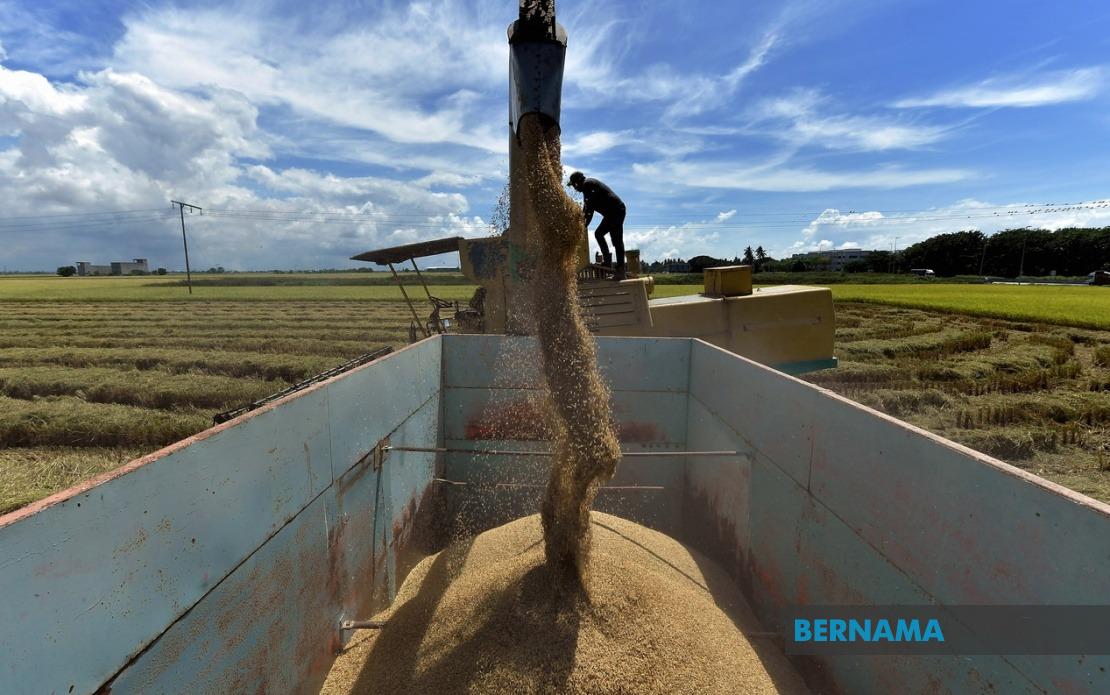
Parliament has successfully enacted the Control of Padi and Rice (Amendment) Bill 2026, representing a significant legislative step to fortify Malaysia's rice supply chain and enhance enforcement mechanisms within an industry critical to the nation's food security. The Dewan Rakyat approved the measure through a majority voice vote following spirited debate from both government and opposition lawmakers, signalling broad parliamentary consensus on the need for stronger oversight of rice production, distribution, and trading activities.
At the heart of the amendments lies a substantial recalibration of penalty structures that have remained virtually unchanged for three decades. Section 22 of the principal Act establishes new maximum fines of RM250,000 for individuals and RM1 million for companies and corporate bodies convicted of offences. This represents the first significant penalty revision since the Act was originally introduced in 1994, a gap that had rendered existing punishment levels inadequate relative to the scale of illicit activities in what Deputy Minister Datuk Chan Foong Hin described as a multi-billion-ringgit industry.
The legislative reform reflects mounting evidence of substantial losses within Malaysia's rice sector, particularly through smuggling and the illegal diversion of domestically-produced white rice. Official enforcement data compiled by the Ministry of Agriculture and Food Security documented significant seizure values that underscored the disconnect between the economic rewards accruing to criminal operators and the comparatively modest penalties they faced under previous legislation. Chan argued persuasively that existing fines had become economically irrelevant to sophisticated operators who could easily absorb penalties far smaller than their illicit profits, effectively rendering law enforcement a negligible business cost rather than a genuine deterrent.
Beyond the punitive dimensions, the amendments are designed to function as protective mechanisms for Malaysia's padi farming community, shielding smallholder and commercial farmers from market distortion caused by unscrupulous middlemen, traders, and processors. By increasing the financial consequences of market manipulation and cartel formation, legislators aimed to create conditions where legitimate agricultural producers can operate on more level playing fields and receive fair compensation for their harvests. This concern resonates particularly sharply in rural constituencies where rice farming remains economically central and where price volatility driven by illegal activities directly impacts household incomes.
During parliamentary debate, Datuk Idris Ahmad from Bagan Serai raised a perceptive operational concern, observing that substantially heightened penalties would be effective only if coupled with robust prosecution infrastructure. He advocated for the development of clear prosecutorial guidelines and specialised training programmes for prosecutors handling rice-related offences, recognising that the gap between legislation and courtroom reality often determines whether enhanced penalties translate into genuine deterrence or remain symbolic gestures. This intervention highlighted the distinction between law on paper and law in practice—a critical consideration in Malaysian enforcement contexts.
Opposition member Tan Hong Pin from Bakri pushed the discussion toward institutional accountability, specifically calling for a periodic review of penalty structures and the establishment of an independent oversight committee to assess Padiberas Nasional Berhad's performance in combating cartel activities. His intervention suggested that statutory penalties alone cannot address systemic vulnerabilities within the supply chain, and that the government's principal agency managing national padi operations required external scrutiny to ensure effectiveness. This line of argument reflects growing parliamentary attention to mechanisms of accountability beyond traditional enforcement.
Several lawmakers focused on technological solutions to supply chain opacity, a core vulnerability enabling smuggling and mislabelling. Azli Yusof from Shah Alam championed comprehensive digital traceability systems spanning the entire padi and rice production and distribution network, anticipating that transparency at each transaction point would deter and detect irregular movements of grain. Similarly, Manndzri Nasib from Tenggara proposed affixing QR codes to individual rice bags, enabling real-time tracking by both consumers and enforcement authorities. Such proposals reflect recognition that modern supply chain governance increasingly depends on technological visibility rather than reliance solely on post-violation investigation and punishment.
The emphasis on traceability mechanisms also addresses a secondary legislative concern: consumer protection and market integrity. By enabling tracking of rice stock movements through the supply chain, such systems could identify mislabelling practices that mislead consumers about rice origin, quality, or processing methods. Hoarding—the accumulation of grain stocks to artificially restrict availability and inflate prices—represents another practice that transparent supply chain visibility could curtail, as unusual concentration of inventory would become immediately apparent to monitoring authorities.
For Malaysian consumers and the broader economy, the amended legislation carries implications extending beyond rice prices and availability. A robust regulatory framework protecting domestic rice production supports Malaysian self-sufficiency in a strategically essential food commodity, reducing vulnerability to international price fluctuations and supply disruptions emanating from global crises. For Southeast Asia regionally, Malaysia's rice sector strengthens if insulated from internal decay through smuggling and cartel formation, potentially reducing pressure to import rice from regional competitors and stabilising ASEAN grain markets more broadly.
The Bill's passage also reflects evolving legislative approaches to agricultural crime, positioning it not merely as commercial fraud affecting individual traders but as a threat to national food security warranting enhanced penalties approaching those applied to other serious offences. This rhetorical and legal repositioning signals that lawmakers increasingly view agricultural supply chain integrity as a public goods issue comparable to other domains where the state asserts strong enforcement interest. The debate demonstrated sophisticated understanding among parliamentarians of supply chain vulnerabilities, technological solutions, and the relationship between legislation, enforcement capacity, and actual compliance outcomes—suggesting that the amendments may catalyse more comprehensive future reform in agricultural regulation.

