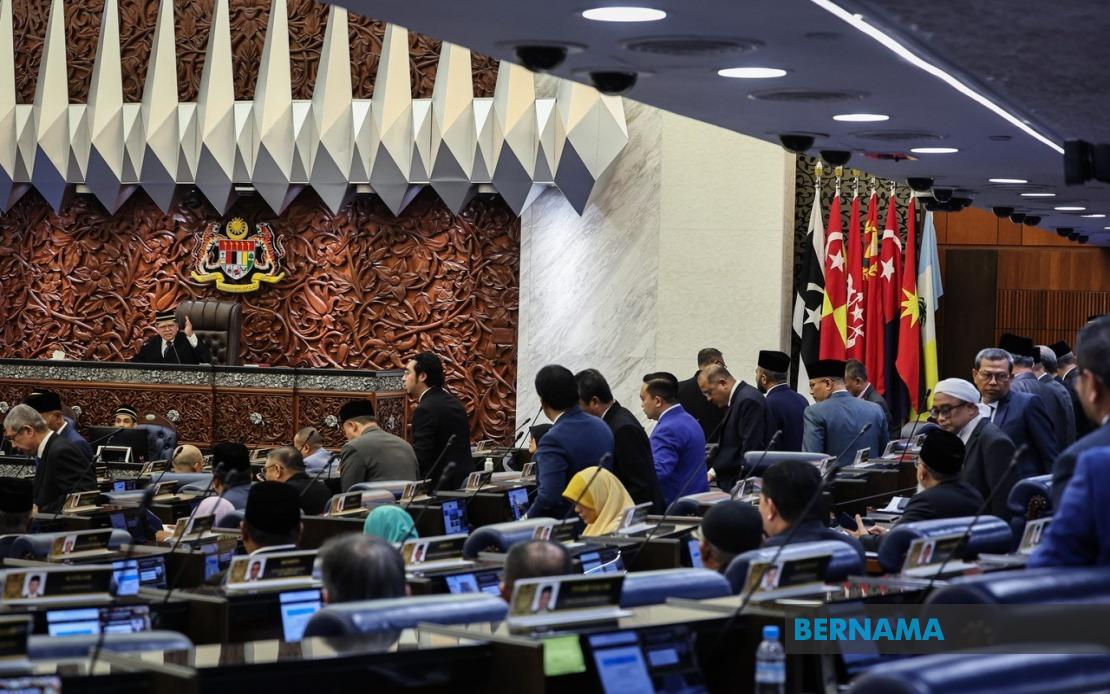
Parliament opened its doors to broad debate on the Royal Commission of Inquiry report concerning Lembaga Tabung Haji on August 11, with the chamber's presiding officer underlining the significance of the discussion for public interest and institutional transparency. Speaker Tan Sri Johari Abdul outlined that the special parliamentary sitting had been convened at the request of Prime Minister Datuk Seri Anwar Ibrahim, who submitted a formal notice triggering the procedural mechanism that enabled the gathering.
The constitutional framework governing such extraordinary sessions derives from Standing Order 11(3) of the Dewan Rakyat's Standing Orders, a provision designed to facilitate urgent national matters requiring legislative attention outside regular parliamentary schedules. The Speaker emphasised that his approval of the sitting was grounded in adherence to this established protocol, ensuring that the procedural steps followed parliamentary conventions precisely. This procedural clarity reflects the institutional importance accorded to the inquiry's findings and the government's commitment to parliamentary scrutiny of the matter.
The decision to allow a dedicated sitting for this purpose represented a significant commitment to legislative oversight. By invoking Standing Order 11(3), the Prime Minister signalled that the Royal Commission's conclusions warranted immediate and comprehensive examination by elected representatives. The Speaker's role in facilitating this debate underscores Parliament's fundamental function as a forum for accountable governance, where findings of national investigations can be subject to rigorous public discussion among lawmakers representing diverse constituencies and political perspectives.
The Royal Commission of Inquiry into Tabung Haji has attracted sustained public attention given the institution's significance as Malaysia's Islamic pilgrimage financing scheme serving millions of Malaysians. Any findings regarding the fund's management, governance structures, or financial handling carry implications not only for current pilgrims and account holders but also for broader questions about how state-linked entities operate under public scrutiny. The parliamentary debate thus represented an opportunity for legislators to interrogate the inquiry's conclusions and their implementation across government.
The participation of parliamentarians from both government and opposition benches reflected the cross-party importance of the matter. The Speaker's explicit reference to enabling "MPs from both sides" to engage with the report's key findings acknowledged that matters affecting national institutions and public welfare transcend partisan divisions. This inclusive approach to parliamentary debate strengthens the legitimacy of whatever conclusions or recommendations emerge from the discussion, as they represent consensus forged through representative democratic processes.
Transparency in governance emerged as a central theme in the Speaker's remarks, connecting the special sitting to broader institutional reform efforts underway in Malaysia. When public agencies and government-linked entities face investigation, subsequent parliamentary examination serves as a mechanism through which accountability mechanisms are strengthened. The dedication of legislative time to debate the Tabung Haji inquiry reflects an understanding that transparency requires not merely the production of investigative reports but their thorough examination within democratic institutions.
The timing of the sitting also carried significance for Malaysia's governance trajectory. Recent years have witnessed increased focus on institutional accountability following various investigations into state-linked enterprises and government agencies. The Tabung Haji inquiry represents part of this broader pattern, and Parliament's engagement with its findings demonstrates how investigative conclusions translate into legislative and executive action. The special sitting format underscores that such matters warrant more than cursory mention in ordinary parliamentary business; they demand dedicated debate time and focused attention.
For Malaysian pilgrims and Tabung Haji account holders, the parliamentary discussion carried practical implications. Any governance reforms or operational changes recommended by the inquiry would likely depend on legislative support and budgetary allocation. By enabling comprehensive parliamentary debate, the Speaker's decision ensured that affected stakeholders could anticipate how their interests might be addressed through legislative action. The transparency of the process itself provided assurance that policy responses would undergo public scrutiny before implementation.
The procedural precision emphasised by the Speaker also carried broader constitutional significance. In systems where parliamentary procedure sometimes becomes contentious, the Speaker's clarification that the sitting proceeded according to established Standing Orders reinforced respect for institutional rules. This adherence to documented procedures strengthens Parliament's institutional credibility and demonstrates that extraordinary sittings emerge through proper channels rather than executive discretion unconstrained by parliamentary protocol. Such procedural integrity proves essential for public confidence in legislative institutions.
Looking forward, the debate outcomes would likely shape public policy responses to the inquiry's findings. Whether Parliament would recommend legislative amendments, budgetary adjustments, or governance restructuring at Tabung Haji remained to be determined through the ensuing discussion. The special sitting format guaranteed that such consequential decisions would be made through transparent parliamentary processes rather than through administrative channels alone, embedding democratic oversight into the response to investigative findings.
The Speaker's emphasis on the sitting's significance for public interest reflected evolving expectations regarding governmental accountability. As Malaysian society demands greater transparency from state institutions, Parliament's willingness to dedicate special sittings to investigative reports demonstrates institutional adaptation to these expectations. The debate represented not merely a procedural formality but an affirmation that Parliament takes seriously its role as guardian of public interest in matters affecting government-linked institutions and public welfare.

