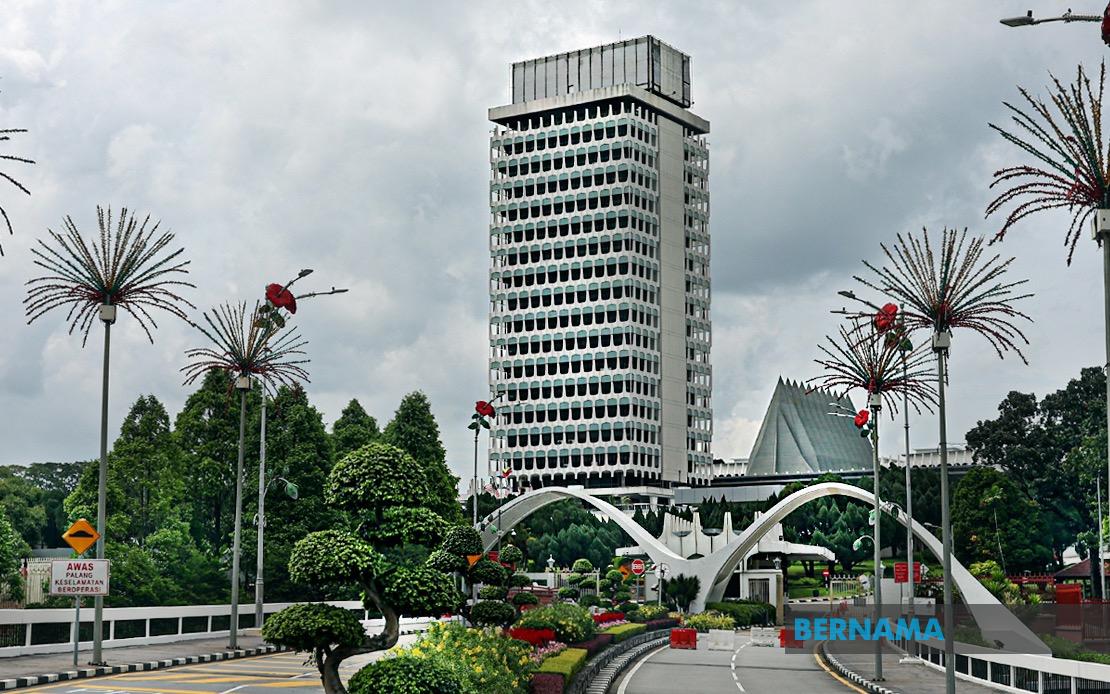
The second week of Parliament's current sitting has brought scrutiny of how federal funds flow to the states, with Prime Minister Datuk Seri Anwar Ibrahim using Tuesday's Ministers' Question Time to address long-running concerns about equitable resource distribution. In remarks that go to the heart of federalism in Malaysia, Anwar stated that the vast majority of states actually receive more in federal allocations than they contribute through tax revenue, a point he emphasised speaks directly to the developmental needs and welfare priorities of each jurisdiction. The clarification appears designed to counter persistent claims from certain state governments that they face systemic neglect or marginalisation in funding decisions.
The federal allocation framework operates on principles Anwar articulated as need-based rather than strictly revenue-proportional. When state administrations seek additional funding for development initiatives flagged by a Notice of Change, the process requires fresh negotiation before the Federal Government green-lights supplementary allocations or loans. This structured approach to funding requests reflects efforts to maintain control over fiscal commitments while remaining responsive to emerging state priorities. For Malaysian states and their development agencies, understanding this negotiation pathway has become increasingly important as infrastructure and social programmes demand sustained investment across the federation.
During the same question session, Anwar reinforced electoral rules that prohibit announcement of new projects or policies during election campaign periods, citing Section 24B of the Election Offences Act 1954. This reminder carries weight given Malaysia's complex electoral calendar and the intersection of federal and state election cycles. The Prime Minister's emphasis on legal compliance in this domain signals the administration's intent to maintain institutional discipline around campaign conduct, an issue that resonates with public concerns about government impartiality during elections.
Parliament's legislative agenda advanced significantly as members voted to pass three substantive bills addressing contemporary challenges. The Sexual Offences Against Children (Amendment) Bill 2026 represents renewed commitment to strengthening child protection mechanisms, while amendments to the Employment Insurance System (Amendment) Bill 2025 modernise workplace security provisions. Most notably, Parliament endorsed the Cybercrime Bill 2026, a sweeping measure that criminalises digital forgery—commonly known as deepfakes—and penalises dissemination of fabricated intimate imagery through sophisticated computer networks. For Malaysia's digital economy and millions of internet users, these provisions represent a significant expansion of legal protections against rapidly evolving forms of online harm.
The deepfake legislation carries particular relevance in Southeast Asia, where artificial intelligence-generated content poses mounting risks to reputation, electoral integrity, and personal safety. Malaysian lawmakers have moved to establish clear legal boundaries around synthetic media manipulation before the technology becomes ubiquitous, positioning the country ahead of several neighbouring jurisdictions in addressing this frontier threat. The cybercrime framework's specificity about computer systems reflects the technical sophistication required to combat organised exploitation of AI tools for malicious purposes.
Minister in the Prime Minister's Department Datuk Seri Azalina Othman Said advanced a parallel modernisation agenda concerning contract law. The government is developing entirely new legislation to recognise third-party rights and reform the commercial agency framework, with deliberate attention to artificial intelligence applications in contract administration. A completed Study of Contract Law Reform in Malaysia—encompassing policy analysis, international comparisons, and draft statutory language—has been circulated to parliamentarians for consideration. This foundational legal work acknowledges that Malaysia's commercial environment increasingly involves AI intermediaries and non-traditional parties, requiring doctrinal evolution to remain functional.
Economy Minister Akmal Nasrullah Mohd Nasir addressed public anxiety about essential goods availability and price stability, outlining the government's daily monitoring protocols for supply chains and commodity costs. Coordination with Petroliam Nasional Berhad and private sector partners focuses on maintaining energy security and ensuring that consumer purchasing power and industrial operations both remain viable amid global price volatility. For Malaysian households managing household budgets and businesses dependent on stable input costs, these assurances represent recognition that inflation disproportionately harms lower-income groups and economically vulnerable sectors.
Education initiatives drew parliamentary attention through Deputy Education Minister Wong Kah Woh's announcement of the MADANI Book Voucher programme 2026. Over 2.2 million students under the Ministry of Education will benefit from RM100 e-vouchers, supported by a RM221.6 million budget allocation. Redemption commenced last Wednesday and extends through October 31, making digital reading and learning materials accessible to a substantial student cohort. This programme exemplifies technology-enabled social spending, transforming printed subsidy systems into traceable digital transactions while maintaining equity objectives.
Communications Minister Datuk Fahmi Fadzil detailed progress on implementing the Online Safety Act 2025, with the regulatory framework now nearing completion. A supplementary regulatory instrument addresses private messaging features specifically, clarifying digital platform responsibilities for identifying and managing harmful content. The Malaysian Communications and Multimedia Commission is pilot-testing agentic artificial intelligence to streamline complaint processing and ease officer workload, reflecting how government itself adopts automation to improve service delivery. Simultaneously, social platforms receive encouragement to deploy AI for accelerated detection and removal of guideline-violating content, creating an ecosystem where technology itself becomes the enforcement mechanism.
These developments illustrate Malaysia's multi-front effort to harness artificial intelligence for public benefit while simultaneously managing its risks—from deepfakes to content moderation to contract administration. The legislative and administrative moves reflect recognition that digital transformation creates both opportunities and perils requiring proactive governance. For a regional economy increasingly integrated with global digital markets, Malaysia's approach to cyber law and content regulation influences not only domestic users but regional technology norms and cross-border business operations.
The current parliamentary sitting, scheduled to run 16 days from June 22 through July 16, continues to address standing priorities of federal fiscal management, child protection, employment security, and digital governance. Each week's deliberations shapes the regulatory and financial environment affecting Malaysian households, workers, students, and businesses. The breadth of topics—from inter-governmental funding formulas to cutting-edge synthetic media regulation—demonstrates Parliament's engagement with both constitutional fundamentals and technological frontiers that define contemporary governance challenges.

