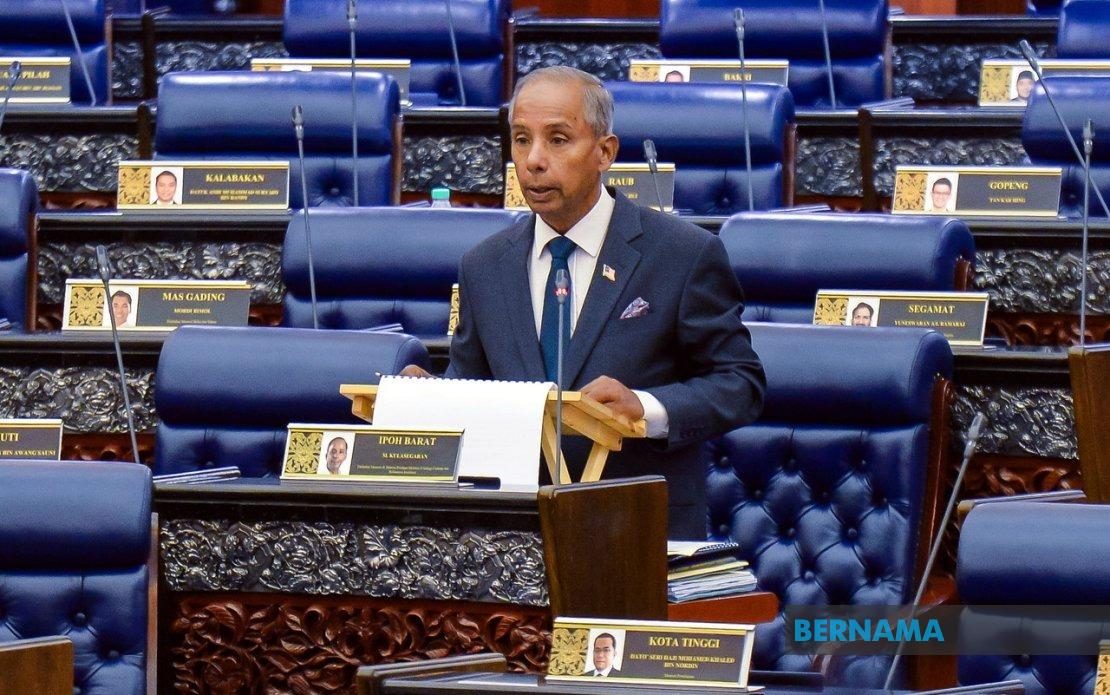
Malaysia's parliament has voted to strengthen protections for children by granting authorities the power to prosecute sexual offences against minors even when perpetrated beyond the nation's borders. The Dewan Rakyat passed the Sexual Offences Against Children (Amendment) Bill 2026 on June 30 following a day of substantive debate involving 25 lawmakers from both government and opposition benches, signalling broad parliamentary consensus on child protection matters.
The legislative amendment fundamentally reshapes Malaysia's approach to extraterritorial jurisdiction, addressing a significant gap in the nation's ability to hold accountable offenders who exploit the geographical distance between Malaysia and other countries to commit crimes with impunity. Previously, offenders with Malaysian nationality or permanent residence could potentially escape prosecution by committing abuse outside the country's territorial waters and airspace. This loophole has become increasingly concerning as child exploitation networks operate across borders with sophisticated coordination.
Deputy Minister in the Prime Minister's Department (Law and Institutional Reform) M. Kulasegaran emphasised during the bill's conclusion that the amendment targets a specific vulnerability in Malaysia's legal framework. Offenders maintaining connections to Malaysia—whether through citizenship, family ties, business interests, or prior residence—will no longer be able to leverage foreign jurisdictions as safe havens from Malaysian law enforcement. The deputy minister articulated that this expansion of legal reach represents a deliberate policy choice to protect vulnerable children and ensure accountability cannot be purchased through relocation.
Crucially, Kulasegaran clarified that Malaysia's new powers do not represent a unilateral assertion of jurisdiction over every child abuse case globally. The amendment operates within carefully defined boundaries that respect international law principles and the sovereignty of other nations. Malaysia will not automatically claim authority over offences merely because alleged perpetrators have tenuous Malaysian connections. Instead, the framework establishes a coordinated approach where the country where the abuse occurred retains primary investigative and prosecutorial authority under its own domestic statutes.
The mechanism for determining jurisdiction involves consultative processes between Malaysian and foreign authorities operating through established international legal channels. When cases generate reports or complaints in multiple jurisdictions simultaneously, investigators and prosecutors will engage in dialogue to identify the most appropriate venue for proceeding with charges. These determinations will rest on several practical and legal factors including the location where evidence is concentrated, accessibility of witnesses, the strength of Malaysian connections to the accused, and broader considerations of justice and victim protection.
This framework reflects evolving international best practices in combating transnational child exploitation. Many developed democracies including Australia, Canada, and several European nations have adopted comparable extraterritorial provisions after recognising that paedophiles increasingly travel to jurisdictions with weaker child protection laws or less robust enforcement mechanisms. The Malaysian amendment positions the nation alongside these countries in demonstrating commitment to international norms protecting children from sexual abuse regardless of geographical location.
The bill's passage with substantial parliamentary support indicates recognition across Malaysia's political spectrum that child protection transcends partisan divisions. The involvement of 25 MPs from multiple parties in debate and voting demonstrates this issue has mobilised lawmakers beyond typical coalition-opposition fractures. Such unity suggests public concern about child safety has reached sufficient intensity that legislators fear electoral consequences from appearing insufficiently committed to protecting minors from sexual predators.
For Malaysian families and child welfare advocates, the amendment offers expanded recourse against offenders who might previously have exploited jurisdictional gaps. A Malaysian national abusing children in Thailand or Cambodia, for instance, could now face prosecution in Malaysian courts even if the host country declines to pursue charges. This creates a secondary layer of accountability and deterrence, potentially discouraging would-be offenders from treating travel abroad as an opportunity for abuse.
Implementation will require significant cooperation between the Royal Malaysian Police, the Malaysian Attorney General's Chambers, and foreign law enforcement agencies. Investigators will need training in handling cross-border evidence gathering, managing international witness testimony, and coordinating with INTERPOL and other multilateral mechanisms. The amendment's practical effectiveness depends substantially on resource allocation and institutional readiness to manage complex international cases.
The amendment also reflects Malaysia's integration into global child protection frameworks. Regional organisations including ASEAN have increasingly emphasised cross-border cooperation against trafficking and exploitation. Malaysia's expanded jurisdiction aligns the country with regional and international pressure to criminalise conduct that harms children regardless of where it physically occurs, strengthening Southeast Asia's collective shield against predatory networks that exploit porous borders and jurisdictional inconsistencies.
Regional observers note that such measures carry particular relevance in Southeast Asia, where child exploitation networks have demonstrated sophisticated cross-border operations. The amendment positions Malaysia as a jurisdiction where extraterritorial accountability applies, potentially disrupting criminal networks that previously calculated risk based on geographical separation. However, the amendment's ultimate effectiveness will depend on consistent application, adequate funding for international investigations, and genuine commitment from authorities to pursue cases with limited obvious domestic constituency.

