Malaysia has taken a significant step toward professionalising its social work sector with the Dewan Rakyat's approval of the Social Work Profession Bill 2026, a legislative measure aimed at establishing formal regulatory mechanisms for a field long considered vital yet fragmented across multiple agencies and organisations. The bill passed with support from 23 Members of Parliament representing both government and opposition benches, signalling broad consensus on the need to standardise professional practice in a sector that touches some of society's most vulnerable populations. The legislation creates the Malaysian Social Work Profession Council, which will serve as the central regulatory body overseeing the registration, qualification standards, and ethical frameworks that currently lack formal integration across Malaysia's public and private social welfare landscape.
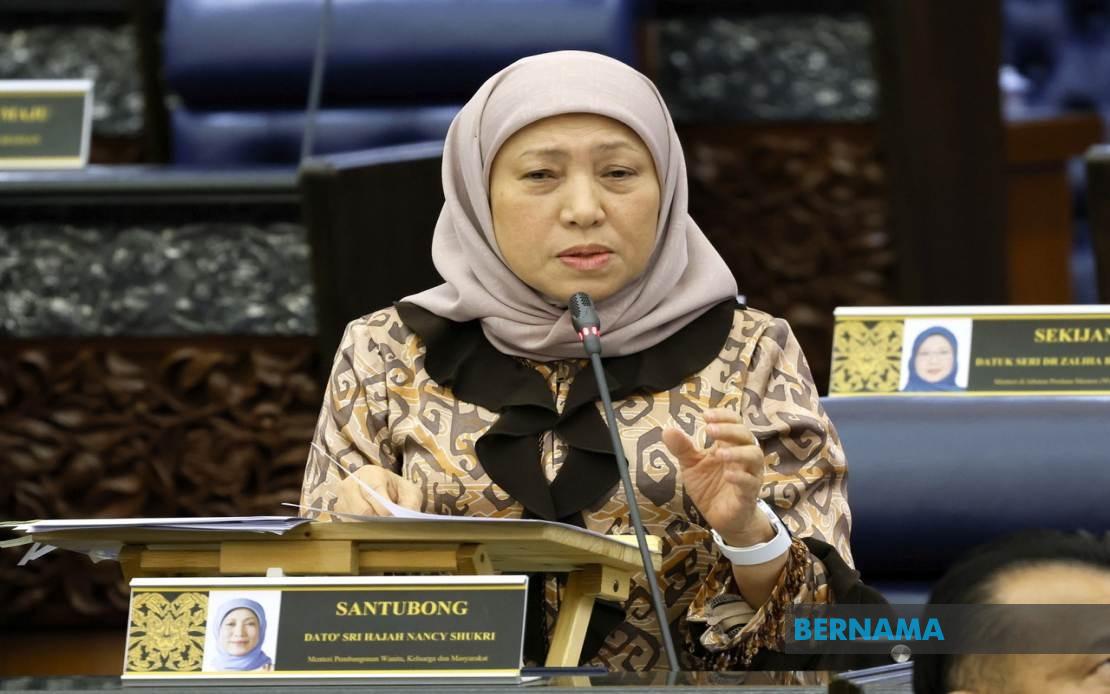
The phased implementation approach outlined by Women, Family and Community Development Ministry (KPWKM) Minister Datuk Seri Nancy Shukri acknowledges the complexity of coordinating across government bodies while moving decisively to regulate the private sector first. Initial requirements will mandate registration for all social workers employed in the private sector, non-governmental organisations, community-based organisations, corporate entities, and those operating independently, establishing a baseline of professional accountability where fragmentation has historically been most pronounced. Public sector social workers, by contrast, will only require registration if they engage in social work activities outside their official government responsibilities, a pragmatic concession reflecting the entrenched coordination challenges within the civil service and the existing supervisory mechanisms already in place across different ministries and agencies.
This differentiated regulatory approach reflects underlying institutional realities in Malaysia's welfare system. Public sector social workers already operate under various departmental codes of conduct, training standards, operating procedures, and ethical guidelines, with their professional activities monitored through hierarchical chains within their respective agencies. The transition toward comprehensive regulation of government-employed social workers would require complex inter-ministerial coordination that Nancy acknowledged remains a work in progress. Rather than delay the profession's formal recognition indefinitely, policymakers chose to prioritise bringing private practitioners under unified standards while committing to develop a roadmap for integrating public sector workers into the framework at a later stage.
The Council's mandate extends significantly beyond simple registration, encompassing the development of professional standards, qualification frameworks, and competency measures tailored to Malaysia's social work context. It will establish complaint mechanisms to address practitioner misconduct, draft guidelines protecting the safety and welfare of social workers themselves—a consideration reflecting growing awareness of burnout and workplace hazards in the field—and explore proposals including a national reciprocity plan that could facilitate professional mobility across state boundaries and between sectors. These functions position the Council not merely as a gatekeeping body but as an institution capable of advancing the profession's sophistication and coherence over time.
Opposition Members of Parliament raised substantive concerns during the debate that illuminate ongoing tensions in Malaysia's approach to professional regulation. Howard Lee from Ipoh Timor questioned why public sector social workers handling high-risk cases involving child protection, persons with disabilities, the elderly, and vulnerable families should be exempted from the same certification requirements imposed on private practitioners, arguing that service recipients deserve consistent professional standards regardless of employment sector. This critique reflects broader principles about equity in service quality and accountability, though the government's pragmatic response—that existing public sector supervision mechanisms provide comparable oversight—suggests prioritising incremental progress over comprehensive simultaneous reform.
Dr. Halimah Ali from Kapar advocated for targeted government support to ensure successful implementation, proposing special grants to NGOs, scholarships for aspiring social workers, and placement incentives in underserved rural areas. Such measures would address structural barriers that have historically made social work less attractive as a career path compared to other professional fields offering superior compensation and benefits. The challenge of attracting and retaining qualified practitioners becomes more acute in Malaysia's less economically developed regions, where need often exceeds local capacity, making Halimah's proposal particularly relevant to ensuring equitable service distribution.
Lim Lip Eng from Kepong framed his support around institutional quality, emphasising that professional recognition must be accompanied by an independent, transparent regulatory body featuring fair enforcement mechanisms and proportionate disciplinary procedures. This concern reflects experiences in other regulated professions where regulatory capture or inconsistent application of standards has undermined public confidence. The Council's independence and accountability structures will thus become crucial determinants of whether this legislation delivers genuine professional elevation or merely bureaucratic compliance.
The bill notably excludes volunteers and family caregivers from its regulatory scope, focusing instead on professional practitioners compensated for their services. This boundary, while administratively sensible, acknowledges that Malaysia's social welfare ecosystem depends heavily on voluntary contributions from civil society and community members whose participation would become untenable if subject to stringent professional requirements. Minimum wage provisions remain subject to existing labour laws rather than being incorporated into the social work-specific framework, ensuring that compensation standards cannot be circumvented through sectoral regulation.
Funding for the Council will derive from government appropriations rather than practitioner fees alone, a structural choice that could enhance the body's independence from market pressures while reflecting government commitment to the profession's public interest mission. However, the long-term sustainability of this funding model deserves attention, particularly as the Council assumes expanded regulatory responsibilities and handles increasing complaint volumes as professional consciousness grows.
The passage of this bill culminates efforts spanning more than a decade to secure legislative recognition for social work as a distinct profession rather than an ancillary activity within health, education, or welfare departments. For Malaysian social workers, particularly those in the private and NGO sectors, the legislation provides formal professional identity and protective standards. For vulnerable populations relying on social services, it establishes baseline expectations regarding practitioner qualifications and accountability. The staged implementation allows institutional learning and course correction, though it also creates a transition period where regulatory inconsistency may persist between sectors.
Regional implications deserve consideration as Malaysia implements this framework. Several Southeast Asian countries have grappled with similar professionalisation challenges, and Malaysia's approach—combining private sector regulation with deferred public sector integration and emphasising Council-driven standard development—may offer instructive lessons. The emphasis on developing Malaysian-contextualised qualification and competency frameworks rather than simply importing foreign standards reflects recognition that social work practice differs across cultural and institutional contexts.
For the social work profession and related fields, this legislation signals that Malaysia increasingly views professional regulation as extending beyond traditional sectors like medicine and law toward fields addressing fundamental social concerns. This broader regulatory impulse reflects growing awareness that vulnerable populations deserve consistent professional standards and that professionalisation, properly implemented, serves public protection rather than merely restricting market entry. The coming years will test whether the Council can deliver on this promise through capable, independent regulation that earns respect from practitioners and public alike.

