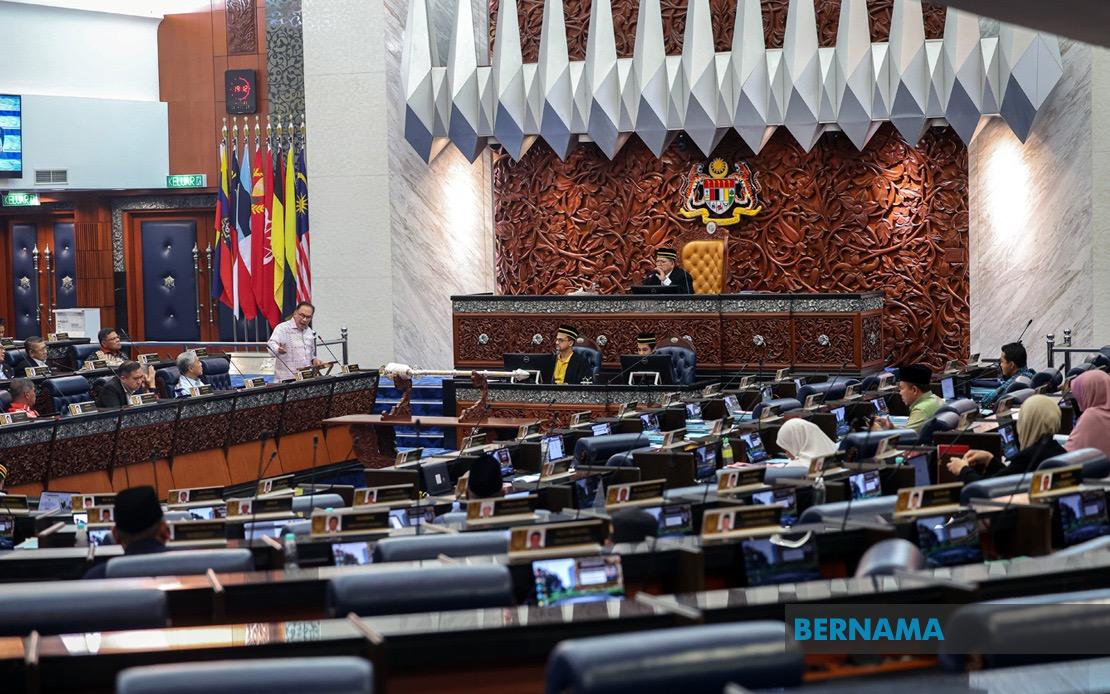
Malaysia's parliament has given the green light to channel RM14.5 billion in leftover proceeds from Malaysian Government Investment Issues issued over the first five months of 2026 into the Development Fund. The motion secured approval through a voice vote in the Dewan Rakyat, with contributions from lawmakers Datuk Seri Ismail Abd Muttalib and Datuk Zulkafperi Hanapi during the debate phase before the decision was made.
Deputy Finance Minister Liew Chin Tong clarified the mechanics underpinning the Development Fund, explaining that its capital base draws from multiple sources including allocations channelled from the Consolidated Revenue Account, the Consolidated Loan Account, recovered loan repayments, and assorted income streams connected to development activities. When unpacked further, the movements from the Consolidated Loan Account into the Development Fund typically encompass money raised through the sale of Malaysian Government Securities, MGII instruments, short-term Treasury Bills, and funds borrowed externally. This layered approach enables the government to segregate borrowing for productive infrastructure and development projects from the revenue side used to meet routine operational costs.
The RM95 billion total MGII issuance programme represents a significant financing operation underpinning Malaysia's economic agenda for 2026. Within this envelope, RM55 billion addresses the refinancing of earlier MGII instruments that are reaching maturity, preventing disruptions to the government's debt profile. An additional RM2 billion has been earmarked to partly cover redemptions of Malaysian Islamic Treasury Bills, shariah-compliant debt securities that appeal to investors with religious investment criteria. The remaining RM38 billion provides partial coverage for the fiscal deficit projected for 2026, reflecting the government's broader budgetary challenge in the face of competing spending demands.
Between January and May this year, gross MGII issuance hit RM40 billion according to Liew's parliamentary statement. However, once the government factored in RM25.5 billion required to service maturing MGII obligations, the net new proceeds eligible for transfer to the Development Trust Account came to RM14.5 billion. This distinction between gross and net issuance underscores how much of government borrowing activity involves rolling over existing debt rather than raising entirely fresh capital. The methodology ensures clarity on how much genuinely new money enters the system to fund development rather than simply replacing expiring instruments.
Under Malaysia's legal and constitutional framework, the government faces a strict operational boundary: borrowing is permissible exclusively to finance capital development expenditure that builds national infrastructure and productive assets. By contrast, ordinary operating expenditure covering salaries, maintenance, and routine administration must be met entirely through tax revenue and other non-debt revenue sources. Liew reinforced this principle during his parliamentary presentation, underscoring that this demarcation is fundamental to maintaining fiscal discipline and preventing unsustainable debt accumulation. The distinction reflects international best practices observed in responsible fiscal management, where governments attempt to match recurrent costs with current income and reserve borrowing for investments that generate future economic returns.
The parliamentary session also noted plans to seek approval for the final tranche of 2026 MGII proceeds, specifically those generated between June and December, during a subsequent parliamentary sitting. This phased approach allows lawmakers to maintain oversight of major financing decisions throughout the fiscal year rather than bundling everything into a single annual approval vote. The timeline suggests the government expects to complete its full MGII issuance programme across the entire twelve-month period, with the latter half's proceeds requiring similar parliamentary authorization and transfer mechanisms as those just approved.
Concern over potential crowding-out effects in domestic capital markets formed part of the parliamentary discussion, with Zulkafperi raising the prospect that heavy government borrowing might squeeze out private sector access to financing from major institutional investors. Liew responded by emphasizing that Malaysia has progressively trimmed annual new borrowing requirements relative to prior years, demonstrating a commitment to gradual fiscal consolidation. He characterized government security issuances, including MGII, as presenting genuine investment opportunities that permit large Malaysian financial institutions including the Employees Provident Fund and Retirement Fund Incorporated to deploy capital domestically and secure returns within Malaysia's financial system.
The deputy minister's argument highlights a nuanced reality affecting emerging markets like Malaysia: without sufficient domestic government debt instruments available for institutional investors, capital seeking yields may flow overseas, potentially weakening currency stability and increasing foreign exchange volatility. By maintaining a steady supply of attractively priced government securities, the administration provides local institutions an avenue to achieve investment objectives while simultaneously keeping substantial financial flows rooted within Malaysia's borders. This dynamic has grown more relevant as Malaysian pension and provident funds have accumulated larger asset bases requiring investment channels.
The approval process reflects parliament's core constitutional role in scrutinizing major fiscal and financial decisions affecting public resources. While parliamentary votes on technical budget matters frequently proceed swiftly through the chamber, the inclusion of member questions and ministerial responses ensures that significant financing manoeuvres receive documented public explanation. For Malaysian investors and citizens, such parliamentary machinery provides a formal record of government borrowing decisions and their intended deployment, contributing to financial transparency even as the actual operational details remain within executive purview.
For Southeast Asian observers tracking Malaysia's fiscal trajectory, the scale and composition of 2026 borrowing operations signal the government's continued reliance on issuance markets to bridge budgetary gaps. The emphasis on refinancing maturing obligations alongside new borrowing to address current-year deficits suggests no dramatic turnaround in the underlying fiscal balance. However, Liew's emphasis on year-by-year reductions in fresh borrowing, if sustained, could indicate gradual progress toward fiscal stabilization over the medium term, contingent on maintaining revenue discipline and curbing expenditure growth.

