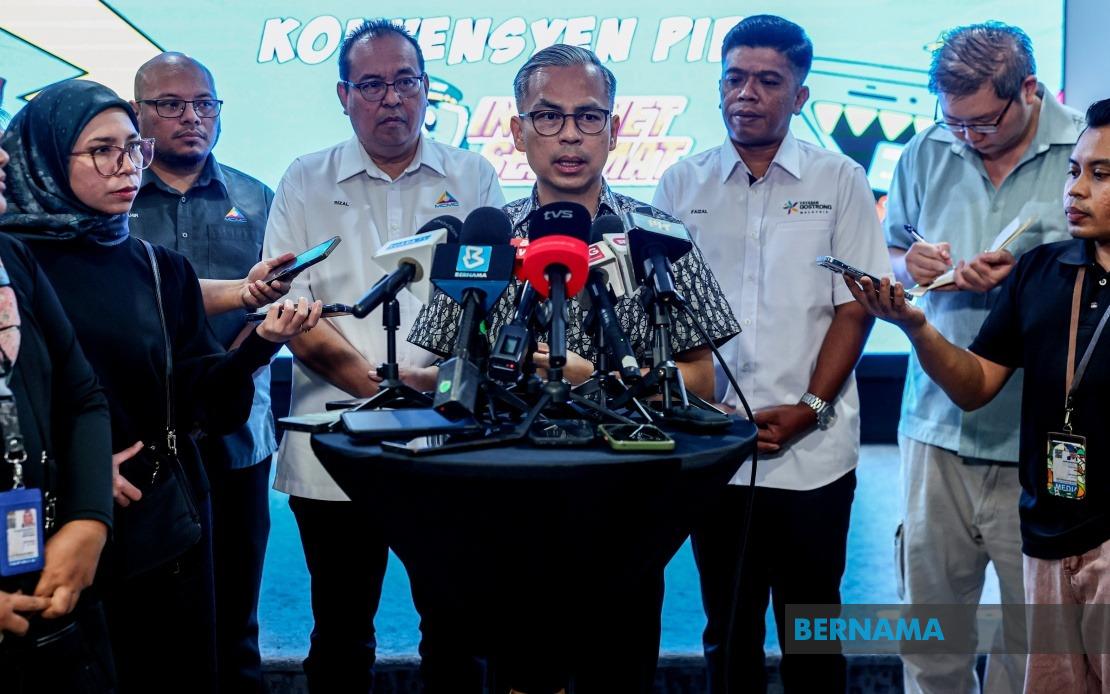
Communications Minister Datuk Seri Fahmi Fadzil has raised an increasingly pressing concern facing Malaysian families: the tendency of children to develop what amounts to emotional dependency on artificial intelligence systems. Speaking at the Kuala Lumpur Federal Territory Safe Internet PTA Convention 2026, Fahmi stressed that parents must remain vigilant about the nature of their children's digital interactions, particularly when young people begin treating AI chatbots as genuine confidants or romantic partners. The warning reflects growing unease among policymakers across the region about the psychological implications of treating non-human systems as friends.
The core of Fahmi's message centered on a fundamental distinction that many young users may overlook: artificial intelligence, despite its conversational sophistication, remains a machine designed by humans using human-generated data. When AI responds in ways that mimic human speech patterns and emotional understanding, it creates an illusion of genuine connection that can be misleading. Parents must understand this distinction and help their children recognize it as well. The risk lies not simply in time wasted on devices, but in the potential erosion of children's ability to form and maintain authentic human relationships, which remain essential for healthy psychological development.
Fahmi identified the sophistication of contemporary AI systems as the particular danger point. Modern language models can engage in extended conversations that feel remarkably human-like, complete with apparent empathy and personalized responses. This conversational ability, which represents significant technological achievement, paradoxically creates vulnerability in young users who lack the critical maturity to separate convincing simulation from genuine understanding. The minister noted that AI lacks the essential human quality of true comprehension—it operates within programmatic constraints rather than through the lived experience and emotional intelligence that characterize real friendships.
Accuracy and reliability present additional serious concerns that Fahmi highlighted. Artificial intelligence systems can generate false information presented with confident fluency, a phenomenon researchers term "hallucination." For young users still developing critical thinking skills, distinguishing between AI-generated facts and verified information poses a genuine challenge. Furthermore, the data upon which these systems train may be outdated, incomplete, or contain inherent biases. Parents must recognize that their children may be receiving guidance or information from AI sources that lack the accountability and expertise of trusted human advisors, whether teachers, counselors, or family members.
Rather than advocating for blanket prohibition of internet use—an approach the minister acknowledged as impractical and counterproductive—Fahmi recommended that parents implement thoughtful monitoring and control mechanisms. This balanced approach acknowledges that digital tools offer genuine educational and informational benefits while establishing guardrails against potential harms. Schools represent important partners in this endeavor, with educators positioned to help parents recognize warning signs of excessive or problematic AI engagement and to intervene constructively.
The minister also raised concerns about how AI's limitations intersect with language and cultural nuance, using cyberbullying within Tamil-speaking communities on TikTok as a concrete example. Automated content moderation powered by AI frequently fails to grasp the contextual meanings, cultural references, and linguistic subtleties that characterize harassment in non-English languages. This technical gap means that bullying—particularly in regional languages—slips through platform safeguards designed primarily around English-language detection. Fahmi has engaged directly with TikTok on this issue, recognizing that content moderation cannot be entirely automated when cultural and linguistic understanding matters fundamentally.
The regulatory framework now emerging in Malaysia represents an attempt to establish baseline standards for digital platform responsibility. The Child Protection Code and Risk Mitigation Code, recently introduced, establish expectations that social media companies will modify their systems to prevent fraud, online gambling, cyberbullying, and other predatory activities. These codes are not mere suggestions but carry legal weight, with the Malaysian Communications and Multimedia Commission actively negotiating implementation with major platforms including YouTube. The negotiation process, currently proceeding in Singapore, aims to establish timelines and technical standards that platforms must meet.
The compliance timeline announced by Fahmi reflects recognition that platforms require reasonable periods to adapt their systems without becoming permanent havens for harmful activity. However, the minister made clear that this grace period has limits. Once the Child Protection Code and Risk Mitigation Code achieve full implementation, regulatory enforcement will intensify substantially. Platforms failing to meet required standards will face court action and severe financial penalties, creating genuine legal consequences for non-compliance. This approach signals that Malaysia's government views platform accountability as enforceable policy rather than mere aspiration.
The Convention itself brought together nearly 500 stakeholders—parents, educators, school administrators, government representatives, and community leaders—reflecting the recognition that online safety requires coordinated action across multiple institutions. The GoStrong Malaysia Foundation's role in organizing this gathering indicates that civil society organizations have mobilized around digital safety concerns. The breadth of participation suggests that Malaysian parents and educators increasingly recognize AI and digital platforms as issues requiring active engagement rather than passive acceptance of whatever technologies companies choose to deploy.
For Malaysian parents and policymakers, the implications extend beyond individual household management. As AI systems become more sophisticated and ubiquitous, questions about appropriate developmental exposure become increasingly urgent. The patterns established in childhood—whether children learn to seek human connection and human expertise, or turn reflexively to AI systems for guidance and companionship—may shape their capacities for genuine human relationship throughout adulthood. Fahmi's intervention signals that government recognizes these stakes and sees protection of children's developmental wellbeing as a legitimate policy objective.
The intersection of AI advancement, platform responsibility, and child protection represents a genuine governance challenge with no straightforward technical solution. Education, monitoring, and institutional accountability must work together. Parents cannot rely solely on personal vigilance, nor can regulation alone address problems that ultimately involve choices families make about technology in their homes. The minister's approach suggests that Malaysia is moving toward a framework combining parental awareness campaigns, platform accountability measures, and school-based support—acknowledging that protecting children in the digital age requires sustained effort across multiple fronts rather than any single intervention.

