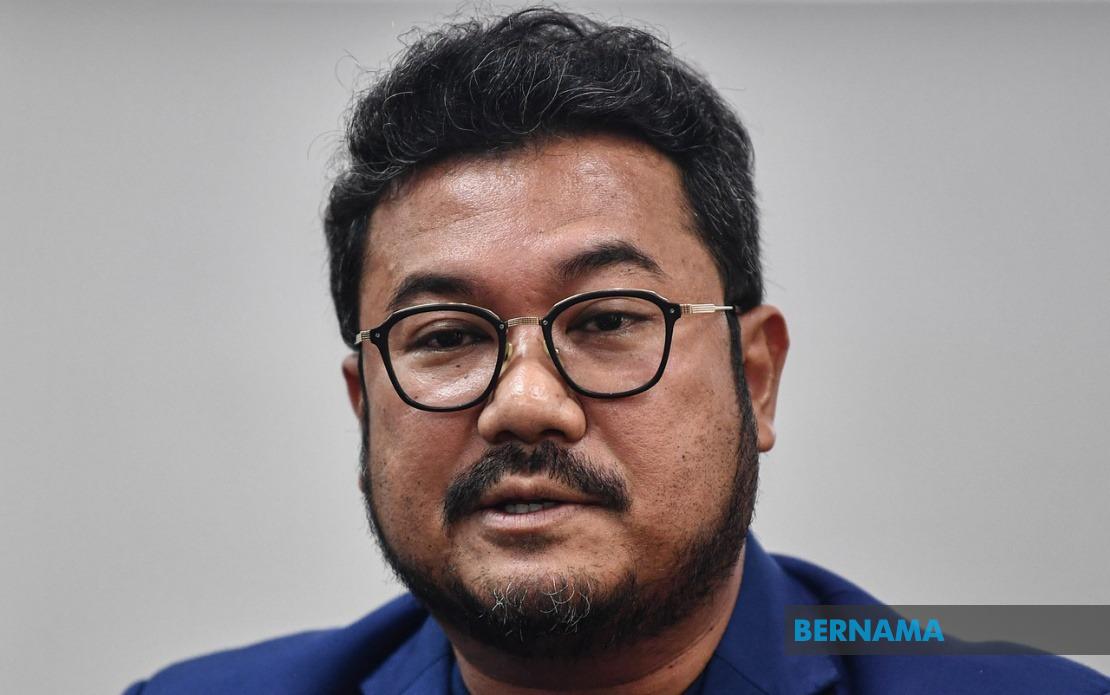
The Malaysian Paralympics Council president Datuk Seri Megat D Shahriman Zaharudin will contest the Seri Menanti seat in the 16th Negeri Sembilan state election under the Parti Peribumi Bersatu Malaysia banner. His candidacy was announced by Bersatu president Tan Sri Muhyiddin Yassin during the party's official candidate launch ceremony in Nilai on July 17, positioning him among 24 party nominees competing across the state.
Megat D Shahriman brings sporting credentials to his political candidacy, serving as president of the Negeri Sembilan Canoe Association in addition to his role leading the Malaysian Paralympic movement. His entry into electoral politics represents an attempt by Bersatu to leverage established community figures with grassroots networks and institutional credibility. The Paralympics Council position demonstrates his connections within Malaysia's disability sports community, a constituency that extends beyond traditional party voter bases.
Negeri Sembilan's 16th state election will be closely watched as a crucial test of Bersatu's standing within the broader Malaysian political landscape. The party, led by Muhyiddin, has been seeking to consolidate its position following internal challenges and shifting coalition dynamics. The state's electoral outcome could provide insights into whether Bersatu maintains sufficient ground organisation and voter appeal to perform competitively against established rivals.
The Election Commission has structured the electoral timeline to provide candidates adequate campaigning opportunity. Nomination day is scheduled for Saturday following the announcement, allowing formal registration of all contesting parties' nominees. This compressed timeline compresses the preparation phase, testing how efficiently campaign machinery can mobilise across constituencies.
Early voting will occur on July 28, accommodating voters unable to participate on the main election day. This staggered approach has become standard practice in Malaysian elections, recognising that certain voter segments—including healthcare workers, election officials, and those in institutional care—require alternative voting arrangements. The flexibility theoretically improves overall turnout by removing temporal barriers.
Polling day itself will take place on August 1, determining which coalition or party commands the state assembly majority and consequently forms the Negeri Sembilan government. The election carries implications beyond state-level governance, as Bersatu's performance will influence perceptions of its viability as a national political player. Strong results would strengthen Muhyiddin's negotiating position within federal politics, while poor outcomes might intensify pressure from rival factions or coalition partners questioning the party's relevance.
For Malaysian readers, Negeri Sembilan elections matter partly because the state serves as a testing ground for political strategies later deployed nationally. Electoral dynamics in smaller states often foreshadow broader patterns in voter sentiment. Additionally, Negeri Sembilan's geographic position between major population centres and its mixed urban-rural character make it representative of transitional Malaysia—areas experiencing development and demographic change that influence electoral calculations.
The inclusion of figures like Megat D Shahriman in candidate lineups reflects broader patterns in Malaysian politics where established institutional leaders transition into elected office. Such movements can strengthen party credibility by signalling access to respected community figures. However, they also raise questions about whether sports administrators possess the legislative experience and policy depth required for effective state assembly representation.
Bersatu's 24-candidate slate across Negeri Sembilan indicates substantial investment in the state contest. This represents a comprehensive effort to contest multiple constituencies rather than selective participation, suggesting the party believes it possesses sufficient organisational capacity to mount a competitive campaign. The breadth of candidacy also signals confidence in at least modest electoral performance, though it commits resources that might alternatively be directed to other priority states.
The coming weeks will reveal how effectively Megat D Shahriman can translate his Paralympics Council profile into electoral support. His campaign message and connection with Seri Menanti constituents will determine whether institutional recognition translates into voting intention. The parliamentary nature of Malaysian electoral politics means that even strong personal popularity might not overcome broader anti-incumbency sentiment or coalition dynamics operating at state level.

