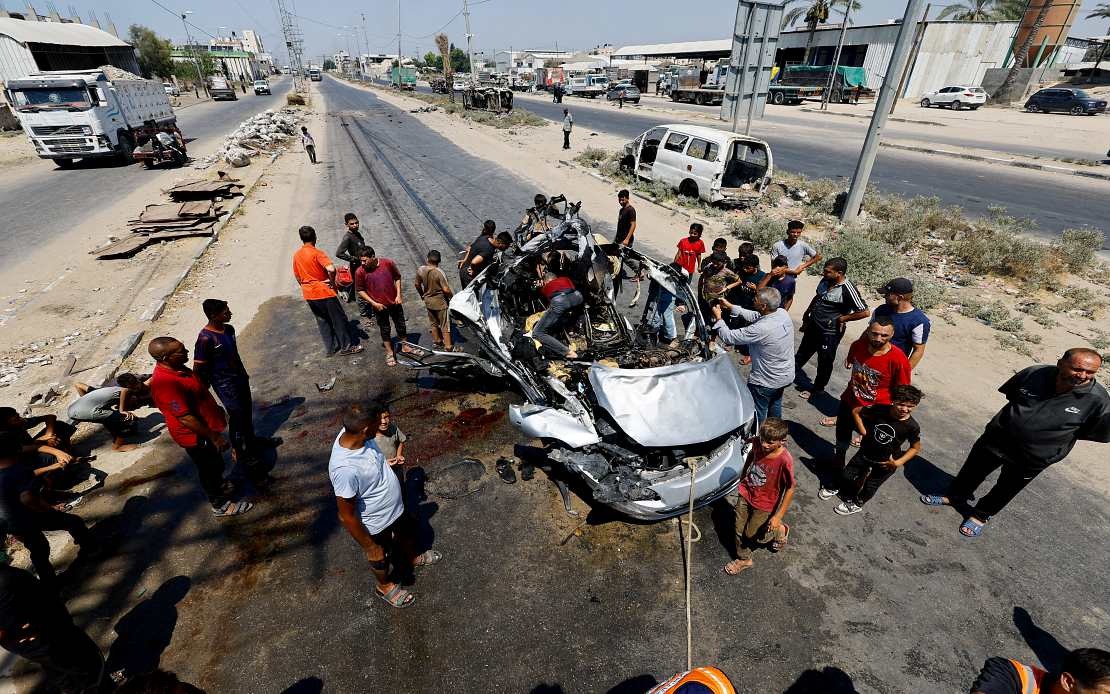
Palestinian leadership has publicly challenged Israel's commitment to the Gaza ceasefire framework, with presidential spokesperson Nabil Abu Rudeineh declaring on Monday that military operations are persisting despite the formal announcement of the second phase agreement. The characterisation of the situation as "an agreement on paper and death on the ground" encapsulates the Palestinian position that the diplomatic accord has failed to translate into meaningful protection for civilians or a genuine halt to hostilities.
The core complaint centres on the gap between what has been negotiated at the diplomatic level and conditions experienced by Palestinians in the affected territories. According to the Palestine News and Information Agency (WAFA), Rudeineh asserted that the ceasefire has neither achieved a comprehensive end to fighting nor safeguarded Palestinian populations from ongoing military action. This fundamental disconnect raises questions about the enforcement mechanisms underpinning the agreement and the ability of international mediators to ensure compliance from all parties.
Palestinian officials have highlighted what they characterise as systematic targeting of refugee camps and villages, which they argue represents a deliberate campaign to undermine Palestinian presence and resolve the refugee question through attrition rather than negotiation. The attacks on civilian infrastructure and populated areas, they contend, contradict the humanitarian principles that should guide any ceasefire agreement. This narrative, whether fully substantiated or not, reflects the deep mistrust that shapes Palestinian perspectives on Israeli military operations.
Rudeineh's statement carries implications for regional stability and the broader international diplomatic effort to resolve the Israeli-Palestinian conflict. His warning that Israel's continued operations could escalate tensions signals Palestinian frustration with what they perceive as ineffectual international intervention. The accusation that Israel is disregarding international diplomatic efforts suggests that even negotiated agreements may lack sufficient oversight or enforcement capacity.
The Palestinian leadership has issued a direct appeal to the United Nations Security Council to intervene decisively. This represents an escalation from diplomatic complaint to formal calls for international action, invoking the Security Council's mandate to address threats to international peace and security. However, the effectiveness of such appeals has historically been limited by the geopolitical dynamics within the Security Council itself.
A significant dimension of the Palestinian position involves their assertion that continued military operations reflect broader impunity for violations of international law and humanitarian principles. Rudeineh's emphasis on the correlation between lack of accountability and ongoing violations suggests that Palestinian leaders view the underlying problem as systemic rather than incidental. This framing shifts focus from individual incidents to what they describe as a pattern of conduct enabled by inadequate international enforcement mechanisms.
The Palestinian leadership has articulated a comprehensive vision for resolution that extends beyond the immediate ceasefire question. Their insistence on addressing the occupation itself, ceasing military aggression, and establishing an independent Palestinian state with East Jerusalem as its capital indicates that current ceasefire negotiations are viewed as temporary measures rather than genuine solutions. This perspective underscores the fundamental disagreement over the end-state that these agreements are meant to facilitate.
For regional observers and policymakers across Southeast Asia, the dynamics at play warrant careful attention. The Israeli-Palestinian conflict continues to generate regional tensions that extend beyond the immediate parties, influencing dynamics across the wider Middle East and creating ripple effects in international relations more broadly. Malaysian interests in regional stability and adherence to international law frameworks are implicated in how this situation evolves.
The Palestinian demand for international protection mechanisms reflects a recognition that bilateral arrangements have proven insufficient in previous iterations of conflict. The emphasis on UN Security Council responsibility suggests that Palestinian leaders believe the international system itself has obligations to ensure humanitarian standards are maintained during military conflicts. Whether such mechanisms can be effectively deployed remains a central challenge in contemporary conflict resolution.
Rudeineh's emphasis on the connection between occupation and regional instability articulates a Palestinian theory of conflict causation that treats the underlying political status as foundational to any sustainable peace. From this perspective, temporary ceasefires that do not address fundamental questions of sovereignty, territorial integrity, and self-determination are inherently unstable and prone to collapse. This analysis has implications for how the international community approaches not only this ceasefire but future negotiations over the conflict's ultimate resolution.
The credibility of international mediation frameworks is itself at stake in how effectively the terms of ceasefire agreements are enforced and monitored. Palestinian accusations of systematic non-compliance reflect doubts about the capacity of external actors to ensure equitable implementation. Whether independent verification mechanisms can be established and maintained during active conflict situations remains an open question with implications extending to other regional disputes.
Moving forward, the Palestinian position appears to condition further negotiations on demonstrable Israeli compliance with existing agreements and meaningful international enforcement. The refusal to accept paper commitments without corresponding implementation on the ground signals that Palestinian leadership views the credibility of future diplomatic efforts as dependent on the current accord's success. This dynamic creates pressure points for international mediators seeking to facilitate sustained negotiations.

