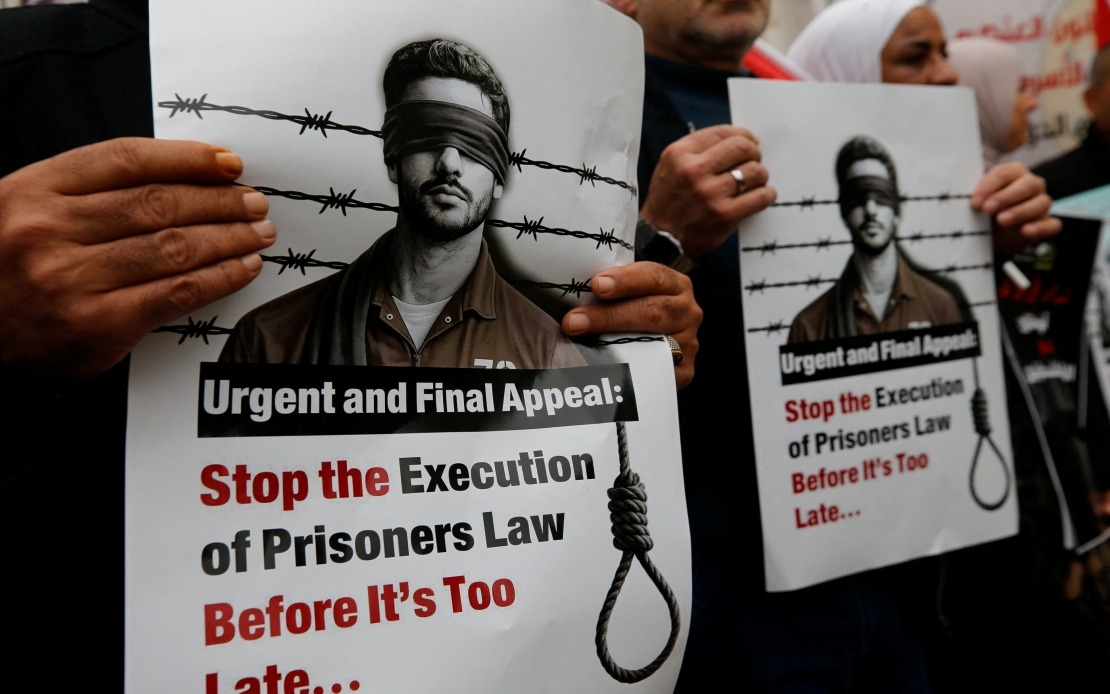
The Palestinian government has released a comprehensive report detailing allegations of widespread human rights abuses against Palestinian detainees in Israeli custody, raising concerns about detention practices that affect thousands of individuals across occupied territories. The Situation Report #92 from the Palestine Prime Minister's Office covers the period from June 22 to 29, 2026, and presents documented accounts of what Palestinian authorities characterise as systematic violations perpetrated against their citizens held in Israeli prisons.
According to the Palestinian administration's findings, more than 3,376 Palestinian detainees remain in custody under administrative detention orders, meaning they are held without formal charges or judicial trial proceedings. This administrative detention framework has long been controversial under international humanitarian law, with human rights organisations questioning its compatibility with due process standards. The report emphasises that this detention method disproportionately affects Palestinian civilians, separating families and disrupting communities across the West Bank and occupied Jerusalem.
Beyond the adult detainee population, the Palestinian government expresses particular concern about 360 Palestinian children currently held in Israeli facilities. The detention of minors raises additional safeguarding questions, particularly regarding their access to education, family contact, and age-appropriate care standards. The inclusion of children in administrative detention statistics underscores the breadth of the Palestinian claim regarding systemic detention practices affecting all demographic groups.
The Palestinian Authority's documentation identifies specific forms of abuse allegedly inflicted on detainees, including beatings, prolonged stress positions, electrocution, sleep deprivation, starvation, and sexual violence. These allegations reflect concerns long articulated by international human rights monitors regarding interrogation and detention methodologies. The report asserts that prison conditions themselves constitute abuse, citing inadequate provision of food and water, deliberate disease transmission, and systematic denial of essential medical treatment. Three pregnant Palestinian women currently detained reportedly face starvation and denial of prenatal healthcare alongside interrogation and physical abuse.
The cumulative toll extends beyond those currently incarcerated. The Palestinian government reports that hundreds of released detainees suffer severe physical and psychological trauma following their detention experiences, with some individuals dying shortly after release due to injuries sustained during their confinement. This assertion regarding post-release mortality and morbidity patterns underscores Palestinian claims that detention conditions exceed permissible standards under international conventions protecting detainees' rights.
Statistical data accompanying the report indicates that more than 9,500 Palestinian detainees have been recorded across the West Bank including occupied Jerusalem. This broader figure encompasses both those held administratively without trial and those prosecuted through military courts. The scale of detention figures suggests that incarceration constitutes a significant governmental control mechanism affecting Palestinian population management and social stability.
Beyond detention-specific allegations, the Palestinian report documents the broader humanitarian consequences of the conflict since early October 2023. According to Palestinian government figures, at least 73,054 Palestinians have been killed in Gaza, including 21,638 children, while 173,480 others sustained injuries. Additionally, 11,200 Palestinians remain classified as missing, 1,700 health workers have been killed, and 262 journalists and media workers have died. In the West Bank including occupied Jerusalem, Palestinian authorities record 1,175 Palestinian deaths including 246 children, with 12,919 injuries as of June 22.
For the specific reporting period of June 22 to 28, Palestinian documentation records 362 military assault incidents by Israeli forces, 47 shooting incidents excluding airstrikes, and 114 incidents attributed to settler attacks across the West Bank and occupied Jerusalem. This pattern of documented incidents contributes to the Palestinian narrative regarding continuous security operations and civilian vulnerability across occupied territories. The frequency of recorded incidents illustrates the intensity of military-civilian interactions characterising Palestinian-Israeli relations in these regions.
Simultaneously, the Palestinian Cabinet has reaffirmed institutional reform priorities focussing on governance modernisation and financial administration. President Mahmoud Abbas has approved amendments to the Value Added Tax law, enabling comprehensive institutional development within the Ministry of Finance and establishment of a Higher Council for Public Revenues. These financial administration reforms aim to align Palestinian governmental systems with international standards whilst combating tax evasion and smuggling to strengthen public service delivery.
Digital transformation initiatives complement financial modernisation efforts. The Palestinian Cabinet approved a General Policy for the Telecommunications and Information Technology Sector covering 2026–2028, targeting acceleration of digital governance and enhancement of government services through technology. The healthcare sector is undergoing parallel modernisation through replacement of paper-based insurance cards with smart card systems, improving data security and enabling future digital health service expansion. These administrative developments reflect Palestinian government efforts to strengthen institutional capacity and service provision despite the challenging security environment.
For Malaysian and Southeast Asian observers, these Palestinian detention allegations carry broader significance regarding international humanitarian standards and regional conflict dynamics. Malaysia, with its substantial Palestinian diaspora and stated commitment to Palestinian causes, maintains active diplomatic interest in Palestinian governance and humanitarian conditions. The detention figures and abuse allegations documented by Palestinian authorities contribute to ongoing international discourse about occupation-related practices and civilian protection standards. Understanding these Palestinian administrative and security challenges provides context for regional geopolitical positioning and humanitarian advocacy within Southeast Asia's diverse political landscape.

