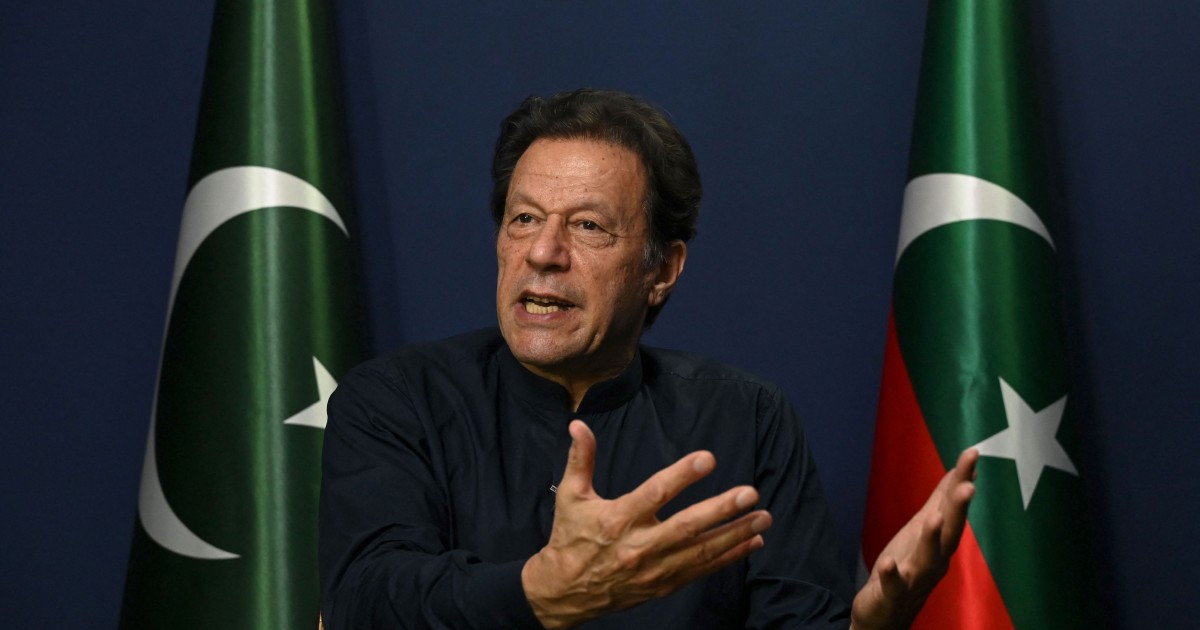
Pakistan's Supreme Court has intervened in the custody of former Prime Minister Imran Khan, directing that he be relocated from jail to a hospital facility. The landmark ruling came on Tuesday following sustained pressure from Khan's Pakistan Tehreek-e-Insaf party and his family, who have consistently voiced alarm about the ex-premier's deteriorating physical condition during his incarceration.
The court's decision represents a significant shift in the legal proceedings surrounding Khan, whose detention has become increasingly controversial within Pakistan and internationally. His party had repeatedly petitioned for his transfer, arguing that custodial conditions in jail were incompatible with his medical requirements. The Supreme Court's acceptance of these arguments signals judicial recognition of legitimate health and safety concerns that cannot be ignored regardless of the charges Khan faces.
Imran Khan's health situation has become a focal point of political debate in Pakistan, with his supporters and family members claiming he has suffered from various ailments while in detention. The conditions of Pakistani jails have long been subject to criticism from human rights organisations, which note that medical facilities often fall short of international standards. The transfer to hospital represents an acknowledgment that even high-profile political detainees require appropriate medical oversight.
The Pakistan Tehreek-e-Insaf party, which Khan founded and led until his arrest, has maintained a vigorous campaign highlighting what it describes as the deterioration of his physical health since his incarceration began. This advocacy extends beyond party politics into broader questions about prisoner welfare and the responsibility of the state to provide adequate healthcare to those in its custody, regardless of their political status or the gravity of charges they face.
Khan's case has drawn considerable international attention, particularly from countries and organisations concerned with democratic governance and rule of law in South Asia. The Supreme Court's intervention demonstrates that Pakistani institutions retain capacity to enforce checks on executive authority and ensure that detention procedures remain proportionate and humane. The decision may also reflect broader judicial concern about the conditions under which political opponents are held.
The transfer process itself carries implications for Khan's legal situation and his ability to prepare his defense. Hospital environments typically offer greater access to legal representatives, family members, and medical consultants compared to jail facilities, potentially strengthening his position in ongoing proceedings. Additionally, improved health outcomes may enhance his capacity to engage meaningfully with the judicial process.
This development arrives at a crucial juncture for Pakistan's political landscape, where the treatment of detained former leaders sets precedents for democratic governance. How authorities manage Khan's hospital custody will likely influence perceptions of judicial independence and the fairness of the legal system among both domestic observers and the international community watching Pakistan's institutional performance.
The ruling also highlights tensions within Pakistan's political establishment regarding the appropriate use of legal mechanisms to address political disputes. While Khan's opponents have pursued various charges against him, the Supreme Court's medical intervention suggests that institutional guardians recognise boundaries beyond which the state should not push, even in cases involving controversial political figures.
Family members of Khan have described witnessing visible changes in his appearance and behaviour during jail visits, concerns that have gained public visibility through media reporting. The Supreme Court's response validates these personal observations and demonstrates that judicial bodies can be moved to act when presented with credible evidence of potential harm to detainees under state custody.
Looking forward, the hospital transfer raises questions about the trajectory of Khan's various legal cases and the broader direction of Pakistan's political reconciliation. Whether this development signals a gradual normalization of relations between institutions and the opposition, or merely a temporary respite in a prolonged conflict, remains to be seen. The medical intervention, while welcome to Khan's supporters, may also establish a pathway for eventual resolution of the political tensions that have defined Pakistani politics since his 2022 arrest.
The Supreme Court's decision underscores that even in polarised political environments, institutions can maintain sufficient independence to enforce fundamental protections. For Malaysian observers of Pakistani politics, the case illustrates both the resilience and fragility of judicial systems in South Asia, where political pressures regularly test the boundaries of institutional autonomy and impartiality.

