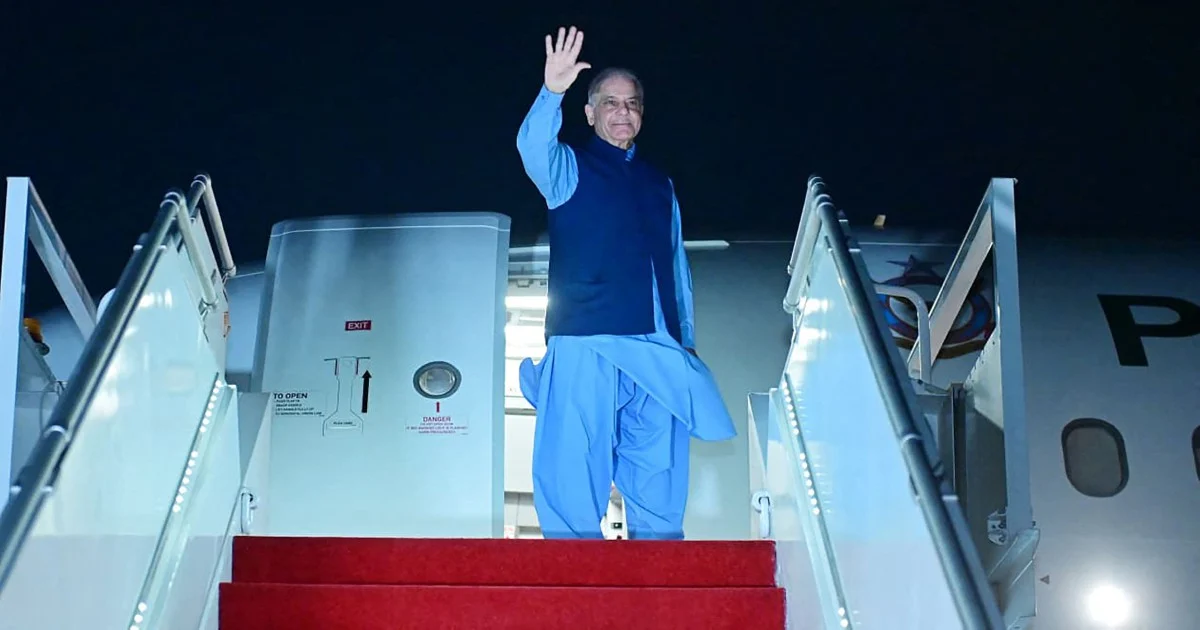
Pakistan's Prime Minister Shehbaz Sharif landed in Switzerland on Sunday to participate in technical-level talks between the United States and Iran, according to reports from local Pakistani media. The visit underscores Islamabad's active engagement in the increasingly complex geopolitical landscape of West Asia, where regional stability directly impacts Pakistan's own security and economic interests.
Pakistan occupies a distinctive position in Middle Eastern affairs, particularly as a majority-Muslim nation with substantial economic ties to the Gulf states and a history of diplomatic relationships spanning decades. Sharif's presence at these negotiations signals that Islamabad intends to play a constructive role in de-escalation efforts, despite the country's own internal challenges and limited capacity for direct intervention in regional conflicts.
The technical-level talks represent a lower-profile diplomatic channel compared to high-level ministerial meetings, often used to work through practical details and establish common ground without the public scrutiny that accompanies more formal engagements. Such discussions typically focus on mechanisms for implementation, verification procedures, and confidence-building measures that could eventually pave the way for broader political settlements.
For Pakistan, involvement in these conversations carries multiple implications. The country has long maintained a delicate balancing act between its Sunni-majority Gulf allies—particularly Saudi Arabia and the United Arab Emirates—and its neighbour Iran, with which it shares a 909-kilometre border. Any escalation of US-Iran tensions invariably affects Pakistan's regional dynamics, from sectarian tensions at home to implications for trade routes and energy security.
The Middle East conflict landscape has intensified markedly in recent years, with various proxy wars, drone strikes, and economic sanctions creating an unstable environment that threatens global commerce and regional prosperity. Pakistan, as a country with over 220 million people heavily dependent on regional trade and with significant diaspora populations across the Gulf, faces direct consequences from any prolonged instability in the area.
Historically, Pakistan has attempted to mediate in regional disputes when possible, leveraging its diplomatic relationships and geographic position. Prime Minister Sharif's participation suggests that Islamabad may be seeking to contribute expertise from its own experience managing tensions, or alternatively, to ensure that any emerging agreement takes into account Pakistani interests and regional stability considerations.
The timing of such negotiations also reflects broader international efforts to reduce tensions in West Asia following periods of heightened military posturing and economic disruption. Multiple countries have expressed interest in dialogue-based solutions, recognising that military escalation only deepens humanitarian crises and threatens global energy supplies and financial markets.
For Malaysian readers and Southeast Asian observers, Pakistan's diplomatic moves carry significance beyond South Asia. Regional conflict dynamics in the Middle East reverberate through the broader Islamic world and affect international relations more broadly. Any progress toward de-escalation benefits global trade, which remains crucial for Malaysia and other ASEAN economies reliant on regional commerce and stable shipping lanes through the Strait of Hormuz and surrounding waters.
Sharp divisions between the United States and Iran have created uncertainty in international markets and prompted various nations to seek diplomatic solutions. Pakistan's involvement reflects a recognition among participating countries that regional powers must be consulted and included in any sustainable peace architecture. Islamabad's technical teams likely bring insights into how sanctions regimes, military posturing, and proxy conflicts operate from a ground-level perspective.
The outcome of these technical discussions remains uncertain, but their occurrence indicates serious intent from multiple parties to explore non-military pathways forward. Success would require bridging fundamental disagreements about regional influence, nuclear capabilities, and the role of various state and non-state actors throughout the Middle East.
For Pakistan specifically, any breakthrough in US-Iran relations could reduce security threats from cross-border militant movements, stabilise energy prices affecting the country's import costs, and create opportunities for broader South Asian-Middle Eastern economic cooperation. Conversely, any breakdown in talks could intensify regional proxy conflicts in which Pakistani territory and citizens have previously become entangled.
%22%2F%3E%3C%2Fpattern%3E%3C%2Fdefs%3E%3Crect%20width%3D%22100%25%22%20height%3D%22100%25%22%20fill%3D%22url(%23ph5ljdug)%22%2F%3E%3Crect%20width%3D%22100%25%22%20height%3D%22100%25%22%20fill%3D%22url(%23ph5ljdup)%22%2F%3E%3Ctext%20x%3D%2250%25%22%20y%3D%2250%25%22%20text-anchor%3D%22middle%22%20dominant-baseline%3D%22central%22%20fill%3D%22rgba(255%2C255%2C255%2C0.95)%22%20font-family%3D%22Georgia%2C%20'Times%20New%20Roman'%2C%20serif%22%20font-weight%3D%22700%22%20font-size%3D%22151%22%20letter-spacing%3D%22-0.02em%22%3EMalaysian%3C%2Ftext%3E%3C%2Fsvg%3E)