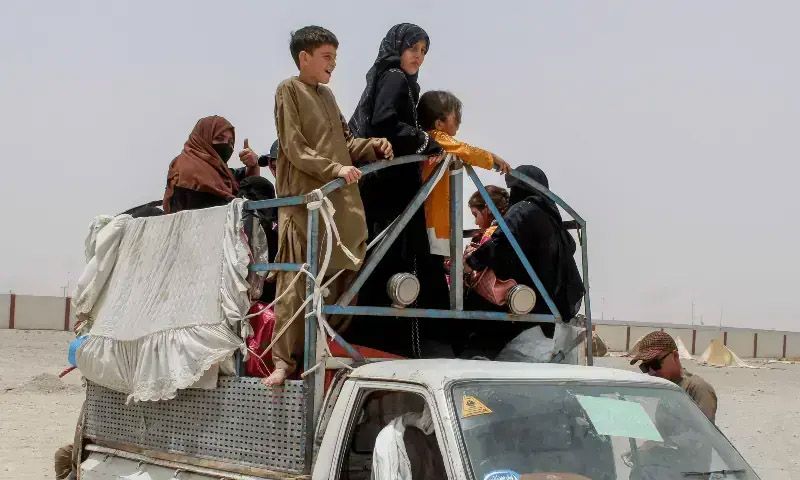
Pakistan's federal and provincial governments have completed the deportation of roughly 2.59 million Afghan nationals residing illegally in the country since the beginning of 2023, marking one of the largest mass deportation operations in the region's recent history. The initiative reflects Islamabad's hardened stance on illegal immigration and its determination to enforce stricter border controls and visa regulations across the country.
Punjab province, home to Pakistan's largest urban centres and economic hubs, has emerged as the primary focus of this enforcement drive. The province's home department has been operating 36 functional holding centres where detained undocumented Afghans are processed, registered, and prepared for repatriation. According to provincial records, Punjab alone has detained and processed approximately 138,342 Afghan nationals through these facilities, completing all necessary documentation before their transfer back across the border.
The scope of ongoing operations remains substantial, with authorities indicating that some 53 Afghan nationals currently remain in Punjab's holding centres awaiting final deportation procedures. This continuous flow suggests that the enforcement campaign has not reached conclusion and that additional sweeps are anticipated in the coming months. The presence of multiple holding facilities distributed across the province indicates the administrative infrastructure that Pakistan has assembled to manage what has become a logistical challenge of considerable magnitude.
Official government policy, as articulated by home department representatives, establishes an unambiguous position: any foreign national lacking valid visa documentation faces mandatory deportation. This stance eliminates discretionary interpretation and creates a standardised framework for immigration enforcement across all provincial jurisdictions. The policy represents a shift toward more rigid border management and reflects broader regional concerns about undocumented migration and its implications for social services, employment, and security.
The operational methodology employed by Punjab's foreign national security cell involves systematic surveys and examinations conducted in both commercial markets and residential neighbourhoods. These targeted sweeps have been designed to identify and apprehend individuals without valid travel documents or visa permits. Once detained, Afghan nationals are transferred to designated holding centres where they undergo formal registration processes, their documentation is completed, and arrangements are made for orderly repatriation.
Repatriation logistics centre on the Torkham border crossing, which serves as the primary official gateway between Pakistan and Afghanistan. This facility has been designated as the transit point through which deportees exit Pakistani territory and return to their country of origin. The establishment of a formalised repatriation mechanism suggests that authorities are attempting to manage the deportation process in a structured manner rather than through ad-hoc methods, though conditions at border crossings and holding facilities remain subject to international scrutiny.
For Malaysia and Southeast Asia, Pakistan's approach carries significant implications regarding regional approaches to undocumented migration and border enforcement. Many ASEAN nations contend with similar challenges related to irregular migration, and Pakistan's large-scale operation provides a case study in how governments implement comprehensive deportation policies. The scale of Afghanistan's displaced population—a consequence of ongoing conflict and economic collapse—continues to strain neighbouring countries, and Pakistan's response reflects the mounting pressure on host nations absorbing millions of refugees and undocumented migrants.
The involvement of the emergency hotline, numbered 15, represents an attempt to crowdsource immigration enforcement by encouraging public reporting of undocumented residents. Authorities have offered anonymity guarantees to callers, suggesting an effort to overcome community resistance to informing on neighbours and fellow residents. This approach reflects challenges that many nations face in building public cooperation for immigration enforcement, particularly in communities where undocumented migrants have established social and economic connections.
The humanitarian dimensions of such large-scale deportations merit consideration. Afghanistan's internal displacement crisis, exacerbated by Taliban rule since 2021, has left the country facing severe economic hardship and limited absorption capacity for returnees. Many deported Afghan nationals face uncertain prospects upon return, particularly if they possessed established livelihoods and family connections in Pakistan. The psychological and social impacts of forced displacement, combined with practical reintegration challenges, create ripple effects throughout affected communities on both sides of the border.
Pakistan's deportation campaign must also be understood within the context of its own internal challenges. The country hosts one of the world's largest refugee populations, with over 1.7 million registered Afghan refugees according to UNHCR data, alongside an estimated 0.9 million undocumented Afghans. The pressure on public services, labour markets, and security resources has prompted increasingly restrictive approaches. However, the distinction between registered refugees and undocumented migrants remains contested, with rights organisations frequently highlighting the precarious legal status of many Afghan nationals in Pakistan.
The federal government's coordination with provincial authorities, particularly Punjab, demonstrates an attempt to create unified enforcement across multiple governance levels. This institutional alignment is essential for managing large-scale deportations effectively, as immigration enforcement requires coordination between border authorities, holding facility operators, transport logistics, and reception points in Afghanistan. The apparent continuation of operations suggests that the Pakistani state views this initiative as a long-term commitment rather than a temporary enforcement surge.
Looking forward, the trajectory of Pakistan-Afghanistan migration dynamics will likely remain shaped by broader geopolitical developments, including the stability of Taliban governance, international humanitarian responses to Afghan displacement, and Pakistan's capacity to maintain such intensive enforcement operations. For neighbouring countries including those in Southeast Asia, Pakistan's experience underscores the challenges inherent in managing large undocumented populations and raises questions about the balance between enforcement and humanitarian obligations. The precedent established by this major deportation campaign may influence how other nations approach similar situations in the future.

