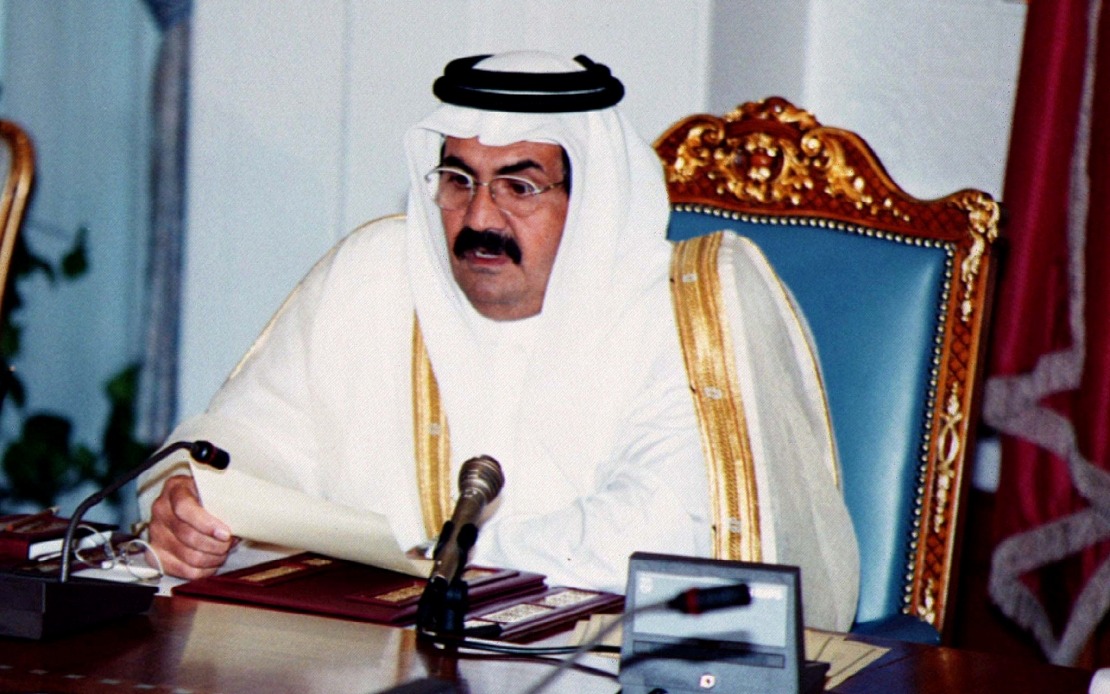
Senior delegations from Pakistan and the Maldives arrived in Qatar on Monday to express their condolences to Qatari Emir Sheikh Tamim Bin Hamad Al Thani and the royal family following the death of former Emir Sheikh Hamad Bin Khalifa Al Thani. The former leader, who shaped modern Qatar through nearly two decades of transformative governance, passed away at the age of 74 on Sunday, prompting an immediate outpouring of tributes from world capitals and regional governments alike.
Pakistan's Prime Minister Shehbaz Sharif led a high-level delegation on what he designated as a single-day official visit to Doha. Accompanying him was his brother Nawaz Sharif, a three-time former prime minister whose own political career spans decades of Pakistani governance, alongside Deputy Prime Minister and Foreign Minister Senator Ishaq Dar and Information Minister Attaullah Tarar. The composition of the delegation underscored the diplomatic significance Pakistan attached to honouring the late emir's memory and maintaining strong bilateral relations with Qatar during this period of transition for the Gulf monarchy.
The timing of these visits reflects the profound regional influence Sheikh Hamad exercised during his 18-year reign from 1995 until his voluntary relinquishment of power in 2013. His decision to step down represented a notable moment in Gulf politics, as few monarchs in the region have voluntarily ceded authority. This transition allowed his son, Sheikh Tamim, to assume leadership and continue the modernisation trajectory that had characterised the previous decades. The smooth succession demonstrated the institutional stability Qatar had achieved under Sheikh Hamad's stewardship.
Both South Asian nations formally designated Monday as a day of national mourning in recognition of Sheikh Hamad's contributions to international affairs and regional stability. Pakistan and India, despite their historical tensions, jointly acknowledged the late emir's significance to the broader Asian and Islamic world, a testament to the widespread respect he commanded across religious and geopolitical divides. Such coordinated expressions of grief are relatively uncommon and signal the exceptional stature Sheikh Hamad held in South Asian diplomatic circles.
Maldivian President Mohamed Muizzu characterised Sheikh Hamad's legacy as one that would endure for generations, emphasising the former ruler's lasting imprint on Qatar's development and his role as a broader advocate for Arab and Islamic interests. The Maldivian leader's decision to undertake the journey to Qatar personally reflected the importance the Indian Ocean nation places on maintaining close ties with wealthy Gulf monarchies that serve as crucial economic partners and sources of investment for Maldivian development initiatives.
International leaders have celebrated Sheikh Hamad's stewardship of Qatar's transformation from a relatively modest oil-producing state into a global economic and sporting powerhouse. Under his direction, the country underwent comprehensive modernisation across infrastructure, education, and financial sectors. His vision for Qatar as a bridge between East and West, combined with significant investments in global cultural and sporting institutions, fundamentally altered the nation's international profile and elevated its diplomatic influence well beyond what its population size would typically command.
Bangladeshi Prime Minister Tarique Rahman, in his formal condolence message to Sheikh Tamim, specifically highlighted Sheikh Hamad's contributions to regional peace initiatives, economic development frameworks, educational advancement, and international cooperation mechanisms. These policy domains captured the breadth of the former emir's ambitions and the comprehensive approach he adopted toward national development. His emphasis on education, in particular, resulted in the establishment of Education City, a major hub for higher learning that attracted world-renowned universities to Doha and symbolised Qatar's commitment to building human capital as the foundation for long-term prosperity.
The succession of high-level visits underscores how Sheikh Hamad's influence extended far beyond Qatar's borders. His willingness to engage with international partners on complex geopolitical matters, coupled with Qatar's strategic location as a regional economic hub, granted him outsized influence in Middle Eastern diplomacy. The deliberate visits by multiple heads of government and state to offer respects serve as informal acknowledgments of his diplomatic legacy and signal to current Qatari leadership that the international community remains invested in the Gulf state's continued stability and prosperity.
For Malaysia and other Southeast Asian nations observing these developments, the farewell to Sheikh Hamad carries implications for regional trade relationships and investment flows. Qatar's sovereign wealth fund has historically demonstrated interest in Southeast Asian markets, and changes in leadership, even when succession appears secure, can sometimes prompt reassessment of investment priorities and diplomatic strategies. Malaysian policymakers and business leaders will likely monitor how the new Qatari administration approaches regional engagement in the coming months.
The scale and solemnity of the international response to Sheikh Hamad's death reflects a broader appreciation for his role in positioning Qatar as an indispensable player in regional and global affairs. His tenure witnessed Qatar's emergence as a significant investor in international media, sports, and cultural institutions, including ownership stakes in major European football clubs and substantial holdings in global real estate markets. This outward-looking investment strategy created networks of mutual interest that extended Qatar's soft power and influence across continents.
Sheikh Tamim, who has now led Qatar for over a decade, inherits a well-established institutional framework and international reputation painstakingly constructed by his predecessor. The diplomatic visits and condolence messages serve not only to honour Sheikh Hamad's memory but also to reaffirm international confidence in Qatar's continued trajectory under current leadership. The seamless succession represents a stabilising factor in a region often characterised by unpredictable political transitions, and the international community's ceremonial recognition of this transition reinforces expectations of continuity in Qatar's foreign policy and economic engagement strategies.

