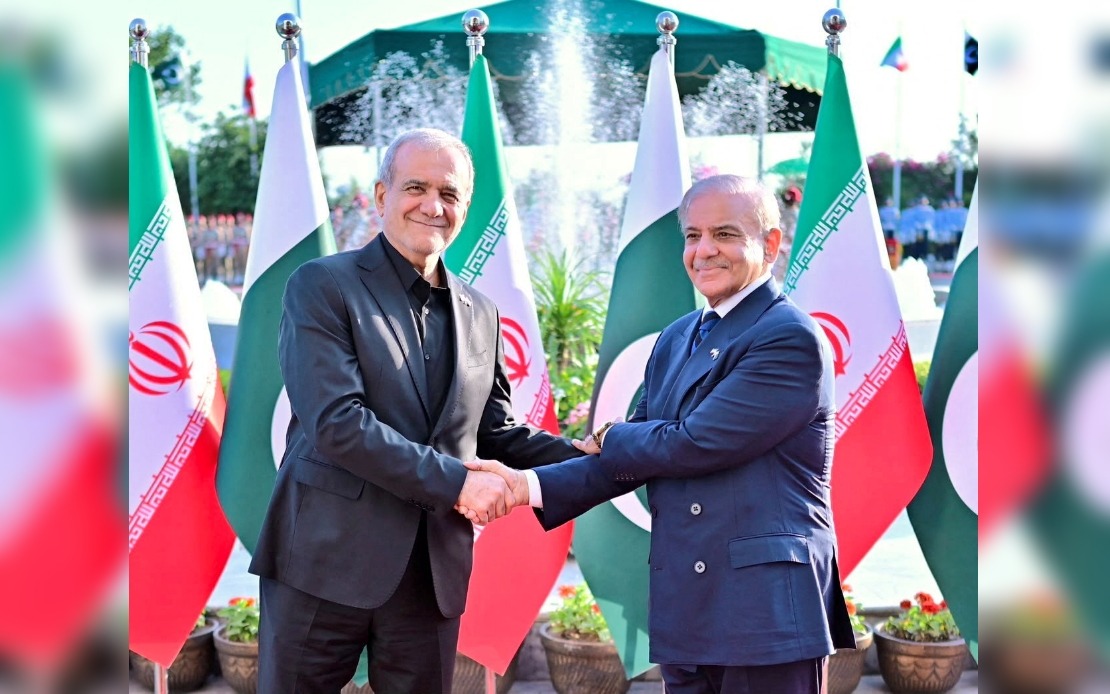
Pakistan and Iran are jointly exploring the restoration of the Islamabad-Tehran-Istanbul (ITI) freight train corridor, a multilateral transport initiative aimed at deepening trade links and improving connectivity across South Asia, the Middle East and beyond. The two countries held detailed discussions on the matter during a meeting between Pakistan's Railway Minister Muhammad Hanif Abbasi and Iranian Interior Minister Eskandar Momeni in Islamabad on Wednesday, with both sides expressing optimism about the project's strategic and commercial potential.
The ITI cargo service represents a critical piece of regional infrastructure architecture for the broader South and Central Asian landscape. When operational, the rail corridor connects Pakistan's capital with Tehran and then Istanbul, creating a land route that bypasses maritime chokepoints and offers shippers faster, more economical passage. Beyond the three named countries, the restored corridor would theoretically enable seamless trade flows into Central Asian markets, the Russian Federation and ultimately the European Union—a geographic reach that explains why both Islamabad and Tehran view its rehabilitation as essential to their economic strategy.
According to a statement from the Pakistani government, both nations concurred that reopening the ITI passage would substantially expand bilateral commerce between Pakistan, Iran and Türkiye whilst simultaneously strengthening Pakistan's trading access to markets further north and west. The corridor's revival would particularly benefit Pakistani exporters seeking alternatives to congested Suez Canal routes and offer Iranian trade partners a southern gateway to South Asian consumption patterns. For Ankara, the link reinforces Türkiye's historic role as a bridge between Asia and Europe.
However, the corridor's history reveals the practical obstacles confronting such ambitious infrastructure schemes in the region. The ITI service initially resumed operations in December 2021 after having been suspended for a decade, suggesting that previous geopolitical or economic circumstances had rendered the route unviable. That brief operational window proved short-lived when the corridor was forced to suspend services again in 2022, a shutdown attributed to multiple logistical and operational challenges that planners and operators had evidently underestimated. The reasons remain partly opaque, though analysts have pointed to security concerns, customs delays and technical incompatibilities between national rail systems as contributing factors.
Pakistan's contribution to revitalising the corridor centres on a substantial infrastructure overhaul of its Main Line-3 (ML-3), the principal rail axis traversing Sindh and Balochistan provinces and constituting the country's primary railway artery into Iranian territory. Abbasi outlined an ambitious modernisation schedule whereby construction work would commence in the current financial year, targeting completion by December 2029. This six-year timeline reflects both the magnitude of the upgrading task and the sequencing constraints inherent in major civil works across Pakistan's railway network.
Iran, for its part, is racing ahead with parallel modernisation efforts on its side of the border. Momeni informed Pakistan that the Zahedan–Mirjaveh railway line, which forms Iran's leg of the transit route, is expected to achieve modernisation status within the coming month. This accelerated timeline from the Iranian side underscores Tehran's eagerness to activate the corridor and its willingness to complete domestic preparations swiftly. However, Iranian officials have made clear that Iran's readiness to dispatch freight trains depends critically on Pakistan executing its own cross-border rail segment with matching urgency.
Specifically, Momeni pressed Pakistan to complete construction of the standard-gauge rail line connecting Mirjaveh to Taftan in Balochistan province. This section forms the crucial bridge between the modernised Iranian railway and Pakistan's upgraded ML-3, and without it, freight trains cannot operate seamlessly across the international boundary. The Iranian position essentially establishes a conditional timeline: Tehran is prepared to move forward once Pakistan's portion reaches operational standards compatible with Iranian rolling stock and operational procedures.
For Malaysian and Southeast Asian observers, the ITI corridor's restoration carries significant implications. Many regional exporters currently rely on lengthy maritime routes or congested overland passages through China to reach European and Central Asian markets. A functioning Islamabad-Tehran-Istanbul link would offer manufacturers in Malaysia, Singapore and Thailand alternative logistics pathways, potentially reducing shipping times and costs for goods destined for European distribution hubs. This alternative would prove especially valuable during periods when traditional maritime routes face disruption or geopolitical tension.
Moreover, the corridor's success would test regional cooperation frameworks in South and Central Asia more broadly. Infrastructure projects spanning multiple nations require sophisticated legal arrangements, compatible technical standards, regular diplomatic engagement and demonstrated commitment even when short-term returns prove modest. The ITI initiative thus serves as a litmus test for whether Pakistan, Iran and Türkiye can sustain collaborative infrastructure development despite the considerable political and security challenges each nation individually confronts.
The security environment across the proposed route merits close attention. Balochistan remains Pakistan's most restive province, with separatist insurgencies and criminal networks occasionally targeting infrastructure and transport convoys. Any freight corridor operating within or near contested territory must incorporate substantial security expenditures and operational protocols that can withstand disruptions. Similarly, the security situation in eastern Iran and western Afghanistan adds further complexity to maintaining reliable cross-border rail operations.
From an economic perspective, the ITI corridor's viability depends on generating sufficient cargo volumes to justify operational expenses and justify shipper confidence in reliability and delivery schedules. Pakistani businesses must perceive the route as genuinely cheaper and faster than alternatives; Iranian exporters must trust that the facility will function consistently; Turkish operators must see reasonable profit prospects. Bridging these expectations requires not merely physical infrastructure completion but also transparent pricing, consistent customs procedures and professional management standards that have historically challenged similar regional initiatives.
The timeline established during the Abbasi-Momeni talks suggests both sides recognise that delay invites irrelevance. With Pakistan targeting 2029 for Main Line-3 completion and Iran promising Zahedan–Mirjaveh modernisation within weeks, the corridor enters a critical implementation phase. Success would vindicate regional connectivity aspirations and position Pakistan as a genuine transit economy. Failure would reinforce skepticism about whether South Asian and Middle Eastern nations can sustain cooperative infrastructure projects, a lesson that would extend far beyond the three countries directly involved.

