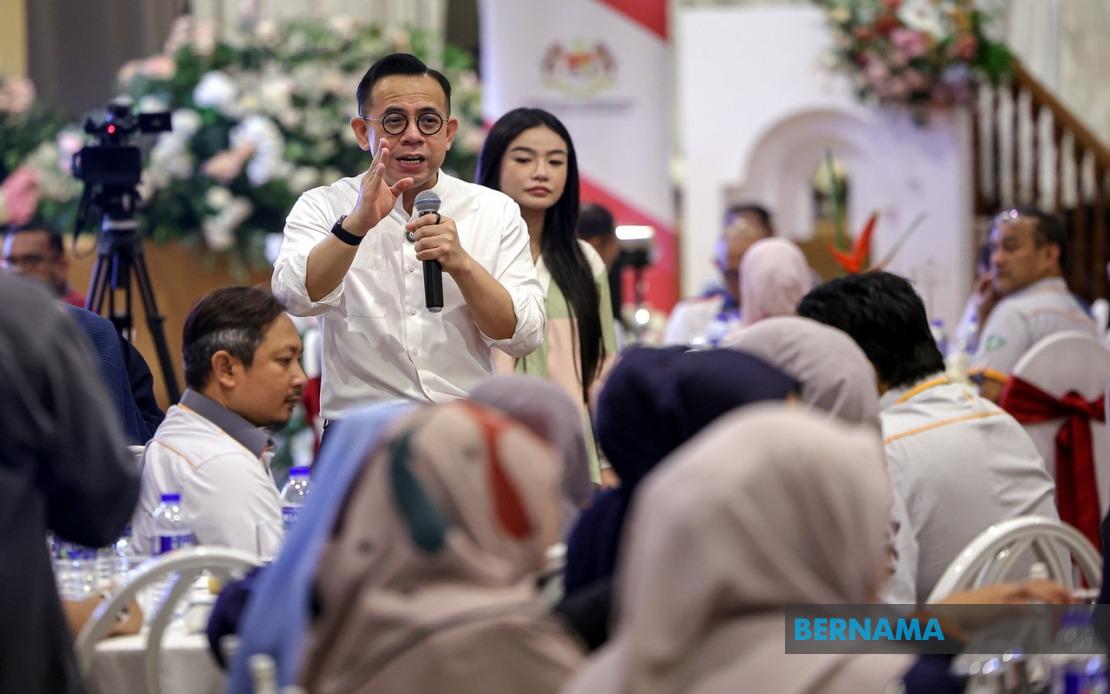
Pakatan Harapan's campaign strategy for the 16th Negeri Sembilan state election hinges on a distinctive positioning: that its manifesto represents not aspirational rhetoric but rather a continuation of programmes already demonstrated to work on the ground. Speaking in Seremban on July 21, Penang DAP chairman Steven Sim made this argument directly to reporters, emphasising that voters should evaluate the coalition's promises against the tangible outcomes already delivered by the Aminuddin Harun-led state administration.
The 10 key commitments outlined in PH's manifesto function, according to Sim, as an evolutionary step forward rather than a radical departure from existing policy. This framing carries strategic weight in state politics, where incumbency and demonstrable governance typically outweigh opposition rhetoric. By anchoring campaign pledges to existing programmes with measurable results, PH aims to neutralise the opposition's ability to dismiss manifesto commitments as unrealistic or uncosted. The approach reflects a broader confidence in the current state government's administrative record.
Sim's observation that "anyone can come up with a manifesto" underscores a critical distinction in Malaysian electoral discourse. The difference between announcement and implementation has become increasingly central to voter decision-making, particularly in states where coalitions have served multiple terms. Negeri Sembilan voters have nearly a decade of PH governance to evaluate, providing a baseline against which new promises can be measured. The coalition's strategy appears to bet heavily on this institutional memory, arguing that past performance is the most reliable predictor of future delivery.
The federal government's commitment to supporting economic development should PH retain control of Negeri Sembilan adds another layer to the coalition's campaign. Sim, who holds the portfolio of Entrepreneur Development and Cooperatives Minister at the federal level, explicitly pledged his ministry's continued collaboration with the state government. This intergovernmental alignment signals to voters that a PH state administration can expect favourable treatment from the federal centre, potentially unlocking resources and programmes that an opposition state might struggle to access. For economically conscious voters, this prospect holds material significance.
Among the manifesto's specific commitments is the establishment of a youth entrepreneurs fund (TUB), designed to nurture young business founders across Negeri Sembilan. This initiative falls squarely within KUSKOP's jurisdiction, making it a credible pledge backed by ministerial authority and existing administrative machinery. The inclusion of such targeted programmes suggests PH's manifesto has been constructed with input from relevant federal agencies, reducing the risk of announcement-only politics. Youth economic empowerment carries particular weight in Malaysian politics, where demographic trends and graduate unemployment remain persistent concerns.
The emphasis on tangible benefits "truly felt by the people of Negeri Sembilan" reflects a deliberate rhetorical choice distinguishing PH's campaign from competitors. Rather than celebrating statistical improvements in GDP growth or infrastructure investments, Sim insisted that meaningful governance must translate into lived experience. This populist framing addresses a persistent criticism of incumbent administrations: that growth statistics mask stagnant wages, rising costs of living, and unequal distribution of economic gains. By committing to felt rather than merely counted benefits, PH positions itself as attuned to household-level struggles.
Negeri Sembilan's electoral calendar—with early voting set for July 28 and polling day on August 1—creates a compressed campaign window. Within this abbreviated timeframe, parties must establish clear differentiation and mobilise their base effectively. PH's emphasis on track record and continuity suits an incumbent coalition that has already held power and can point to concrete achievements. Opposition parties must instead construct narratives around unfulfilled promises or missed opportunities, a more challenging argumentative position when voters can directly observe state infrastructure and services.
The state's economic performance emerges as a central battleground in this election. Sim's reference to sustaining "the state's strong economic performance" suggests that Negeri Sembilan has fared reasonably well under PH stewardship, at least by comparative standards. Whether voters perceive this performance as strong enough, and whether they credit the state government or external factors such as national economic trends, will substantially influence electoral outcomes. The Menteri Besar's administration appears confident enough in this record to make it a cornerstone of campaign messaging.
From a Southeast Asian perspective, Negeri Sembilan's election carries implications beyond the state itself. Malaysia's federal system distributes power across multiple centres, meaning state elections test and refine coalition dynamics and administrative competence in ways that affect national governance. A decisive PH victory would reinforce the coalition's claim to electoral strength and sound governance, while an opposition victory would represent a significant shift in peninsular political geography. The manifesto's emphasis on delivery rather than disruption suggests PH believes its safest path to re-election runs through emphasising continuity and proven management rather than proposing radical change.

