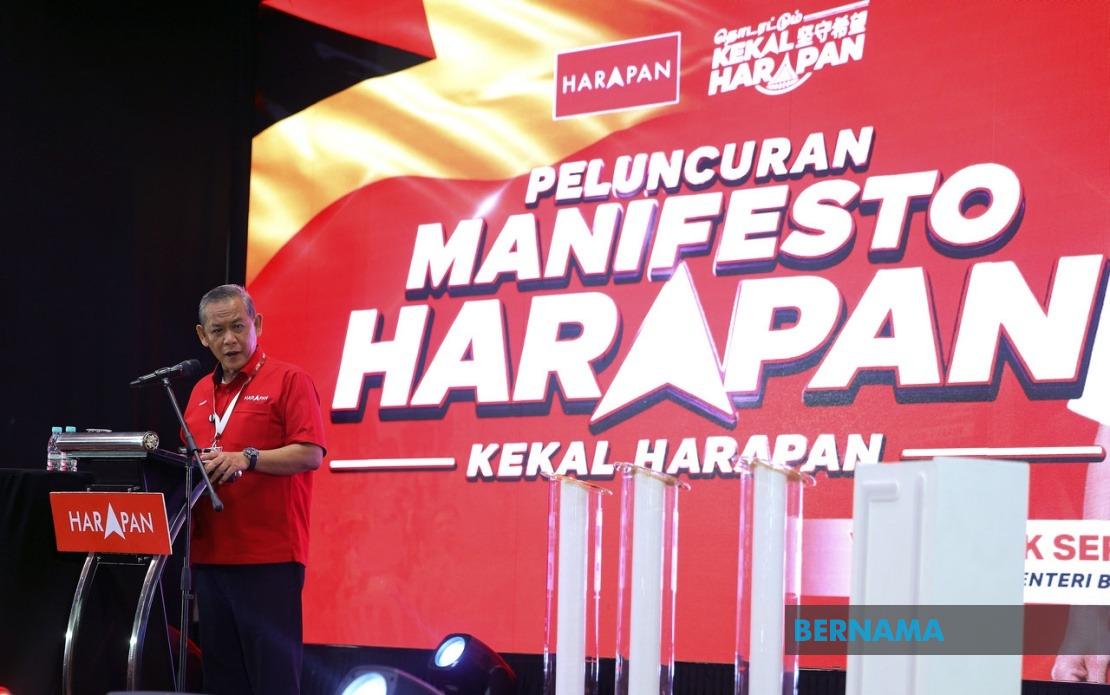
Pakatan Harapan has set out its electoral platform for the 16th Negeri Sembilan state election, rolling out a comprehensive 10-point manifesto that prioritises economic growth, social welfare and institutional reform. Unveiled by Negeri Sembilan PH chairman and Menteri Besar Datuk Seri Aminuddin Harun in Seremban, the initiative carries the banner 'Negeri Sembilan Kekal Harapan', signalling the coalition's intent to maintain its grip on the state administration by anchoring its campaign on continuity and progressive governance.
At the heart of PH's pitch lies a commitment to establishing a administration characterised by stability, transparency and responsiveness to citizens' needs. This foundational pledge reflects broader anxieties about governance standards across Malaysian states and offers voters a referendum on institutional conduct. For a state like Negeri Sembilan, where local governance directly influences economic competitiveness and quality of life, the emphasis on clean administration carries particular weight in differentiating the coalition from rivals.
The economic dimension of the manifesto addresses one of Malaysia's persistent structural challenges: the shortage of quality, well-remunerated employment opportunities outside major metropolitan areas. By earmarking 30,000 high-income jobs as a target, PH is tackling underemployment and wage stagnation that have driven migration towards the Klang Valley and Selangor. This pledge resonates with Negeri Sembilan's young professionals and mid-career workers seeking career advancement without geographic displacement. The commitment to building a competitive economy suggests sectoral diversification beyond traditional industries, though specifics remain forthcoming.
Housing affordability represents another flashpoint in Malaysian politics, and PH's promise to construct 20,000 affordable units addresses a critical gap in the state's property market. Combined with initiatives to untangle land disputes, this strand of the manifesto tackles regulatory and infrastructural obstacles that have constrained the housing supply. For lower and middle-income families in Negeri Sembilan, this plank offers tangible relief from escalating property costs and the bureaucratic friction that often accompanies land transactions.
Education features prominently, with the coalition pledging universal access to quality schooling. In the Malaysian context, where educational outcomes correlate strongly with intergenerational mobility and economic prospects, this commitment reflects understanding that state governments shape educational experiences through infrastructure investment, teacher deployment and curriculum support. The manifesto's inclusion suggests PH perceives education as a mobility lever and differentiator on the campaign trail.
The strengthening of the People's Wellbeing Scheme represents continuity of social provisioning that has become routine across Malaysian state administrations. This programme, if expanded, could alleviate poverty and vulnerability among marginal populations, though effectiveness depends on implementation rigour and resource allocation. Such welfare commitments signal solidarity with lower-income constituencies and compete with opposition narratives around subsidy and redistribution.
Sectoral development—particularly tourism and cultural heritage—signals PH's view that Negeri Sembilan possesses comparative advantage in experiential and heritage-based tourism. Maklumat historical sites, artisanal traditions and natural attractions could generate employment and tax revenue if properly marketed and developed. This reflects recognition that diversifying away from traditional sectors requires investment in experiential economy infrastructure.
Modernising agriculture and fortifying food security address rural and smallholder concerns, particularly relevant in a state with significant agricultural communities. Climate variability and international market volatility have pressured farming incomes, making institutional support through technology adoption and supply-chain integration valuable for rural constituencies. The food security angle also resonates with consumers worried about supply disruptions and import dependency.
The Felda Development Plan integration signals engagement with a significant landholder and rural economic actor. Coordination between state and federal schemes around Felda estates reflects political pragmatism and recognition that economic development requires multi-level government cooperation. For smallholders and Felda settlers, such synergy could improve productivity and market access.
Youth, women and family empowerment suggests PH's attention to demographic shifts and changing social expectations. These constituencies have grown politically assertive and economically significant; policies targeting their specific needs—skills training, entrepreneurial support, childcare, workplace equality—carry electoral weight among younger voters and working parents.
Healthcare and infrastructure modernisation round out the manifesto, touching on service delivery expectations that voters increasingly treat as baseline rather than discretionary. Quality healthcare, particularly preventive services and emergency response, remains a state-level function where performance variation is visible and consequential. Infrastructure upgrades affect daily life and business competitiveness.
Interfaith unity emerges as a values-based commitment reflecting Malaysia's plural society and PH's positioning as an inclusive coalition. This pledge signals intent to govern for all communities and avoid polarising rhetoric, though whether such commitments translate into substantive policy remains open.
The manifesto's breadth suggests PH is attempting to construct a cross-cutting coalition encompassing urban professionals, rural smallholders, young families and established businesses. Whether these disparate priorities can be reconciled in actual governance remains the central test facing the coalition in Negeri Sembilan's electoral contest.

