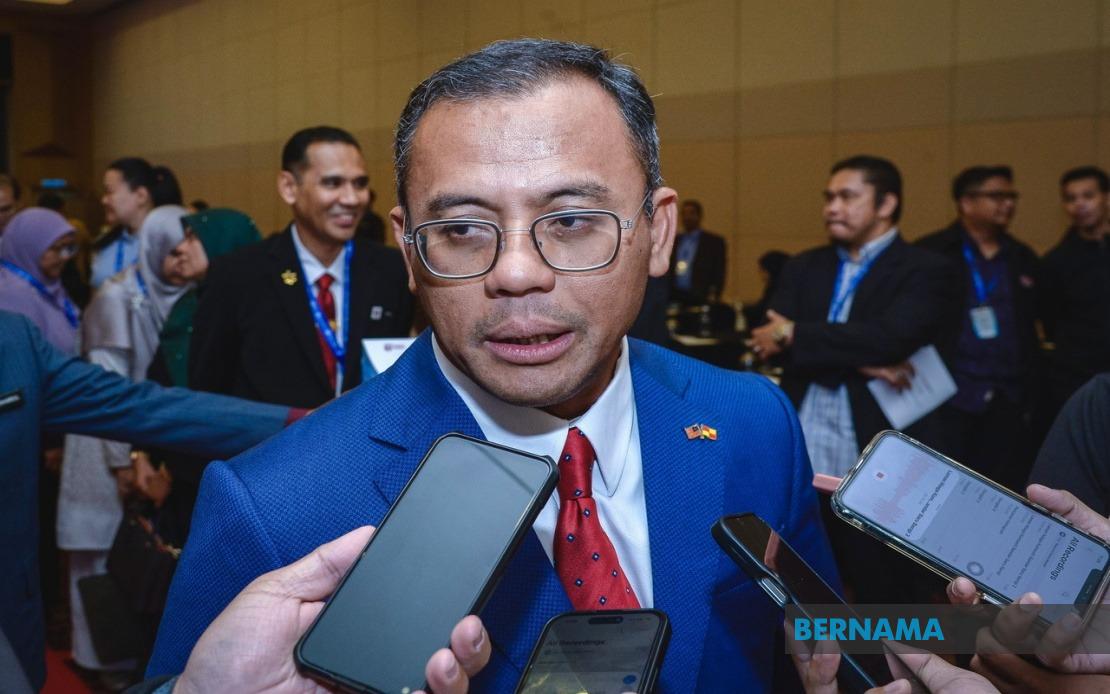
Pakatan Harapan has signalled flexibility in its approach to potential political alliances, indicating that it would evaluate cooperation opportunities with any party or coalition that shares its commitment to political stability and public welfare. Speaking after opening the Ecology International Conference II here, Datuk Seri Amirudin Shari, a Pakatan Harapan Presidential Council member and PKR vice-president, outlined the coalition's framework for assessing such partnerships, emphasising that these two guiding principles would determine any future alignment.
The Selangor Menteri Besar's remarks come amid recent speculation about possible collaboration between the state-level Pakatan Harapan machinery and Bersatu, Malaysia's newer Malay-Muslim party. However, Amirudin firmly rejected suggestions that any formal or informal understanding had been reached, stressing that no substantive discussions or decisions involving such cooperation have occurred at the Selangor level. He characterised the recent reports as reflections of broader political rumours rather than indicators of concrete negotiating positions.
Amirudin's carefully calibrated statement reveals an important dynamic within Malaysia's evolving political landscape. Rather than closing the door on potential partners, Pakatan Harapan appears to be laying out conditions under which it would consider pragmatic realignments. This flexibility contrasts with the more rigid factional posturing that has characterised Malaysian politics in recent years, suggesting that the coalition recognises the fluid nature of electoral mathematics and the necessity of maintaining multiple options as the political calendar becomes crowded with impending contests.
The Selangor leader acknowledged that any serious deliberations on cooperation arrangements would need to transcend state-level calculations and receive approval from the coalition's central leadership. He indicated that while discussions might percolate upwards from regional chapters, the ultimate decision-making authority rests with the national party structures of Pakatan Harapan. This hierarchical gatekeeping suggests that the leadership is keen to avoid the kind of freelancing that could undermine coalition coherence or appear to contradict publicly stated positions.
The timing of Amirudin's comments is significant, arriving as Malaysian politics confronts an unusually compressed electoral cycle. The upcoming general election looms large in strategic calculations, while state contests in Melaka and potentially other jurisdictions provide intermediate proving grounds for different political configurations. For coalitions like Pakatan Harapan, which has experienced internal tensions and regional variations in electoral strength, the question of whether to pursue narrow alliance strategies or seek broader cooperation becomes paramount.
The reference to Bersatu and Perikatan Nasional in Amirudin's remarks carries particular resonance given the complex history of these entities. Bersatu emerged as a splinter formation and has jockeyed for positioning within Malaysia's Malay-Muslim political space, sometimes aligning with and sometimes opposing Pakatan Harapan depending on circumstantial advantages. For Selangor specifically, where Pakatan Harapan maintains firm control and considerable electoral dominance, the calculus differs markedly from more contested states where coalition partners might fear marginalisation.
The principle of evaluating cooperation "rationally at the central level, taking into consideration factors such as the timing of elections" reflects a sophisticated understanding of electoral dynamics. Amirudin's language suggests that Pakatan Harapan leadership recognises that the optimal timing, scope, and nature of any alliance would depend on multiple intersecting variables—some within the coalition's control and others determined by external circumstances. This pragmatism stands in contrast to ideological rigidity, positioning the coalition as politically mature and strategically adaptable.
For Southeast Asian observers and Malaysian voters, Amirudin's articulation of openness while maintaining caution illustrates how contemporary Malaysian coalition politics operates. Parties maintain public postures of principle while privately exploring possibilities, using careful language to signal both flexibility and discipline. The distinction Amirudin drew between "external ideas or views" emerging from "political realignments at the national level" and actual party decisions suggests that the coalition is monitoring and processing various scenarios without committing prematurely to any particular direction.
The broader context of these remarks involves questions about whether Malaysian politics is moving towards greater consolidation around fewer, larger coalitions or whether the current fragmentation will persist or intensify. Pakatan Harapan's openness to cooperation signals a belief that scale and cohesion matter in the electoral arena, particularly when confronting rival coalitions that might themselves pursue merger strategies. For smaller or regionally concentrated parties, the prospect of formal or informal cooperation with a major coalition could determine their political relevance and ministerial prospects.
Selangor's prominence in this discussion underscores the state's outsized importance within Malaysian politics. As the wealthiest state, the most urbanised, and the most ethnically diverse, Selangor serves as a bellwether and testing ground for political strategies. If Pakatan Harapan manages to retain and deepen control in Selangor while experimenting with novel coalition configurations, such success could embolden similar approaches elsewhere. Conversely, any misstep in managing coalition relationships could ripple across the federation.
The emphasis on the people's interests and political stability as foundational principles carries ideological weight beyond mere political rhetoric. These concepts have become rallying points for Malaysian coalitions seeking to distinguish themselves from rivals accused of pursuing narrow factional or personal gain. By fronting these principles, Pakatan Harapan positions itself as the custodian of broader national welfare rather than a collection of self-interested parties.
Moving forward, the Malaysian political environment will likely test whether Pakatan Harapan's stated openness translates into concrete agreements or whether it remains aspirational positioning. The coalition faces the challenge of maintaining internal unity and member party interests while pursuing potential external partnerships. Amirudin's assurance that decisions will be made centrally and rationally provides some reassurance to Pakatan Harapan members that opportunistic or destabilising alliances will not be pursued without deliberation. For voters across Selangor and Malaysia more broadly, the question remains whether such cooperation, should it materialise, would genuinely serve their interests or primarily benefit participating parties.

