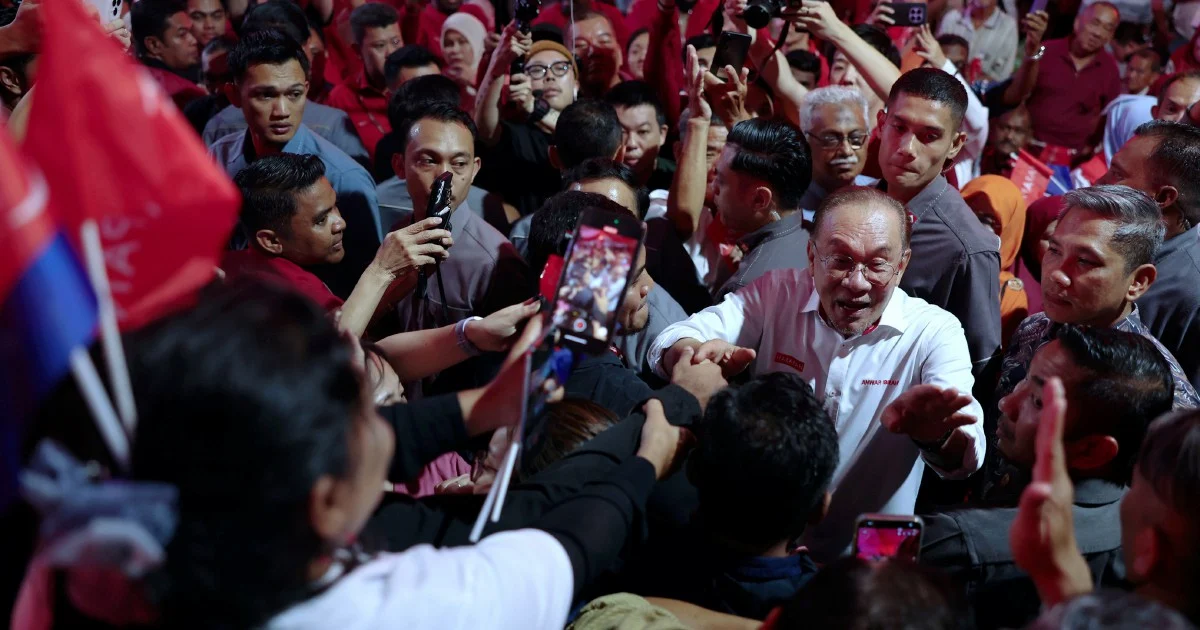
Pakatan Harapan formally presented its complete slate of 56 candidates for the Johor state election scheduled for July 11, marking a critical phase in the coalition's strategy to capture Malaysia's second-largest state by population. The announcement, made by coalition chairman Datuk Seri Anwar Ibrahim in Tangkak, represents PH's most comprehensive push yet to break Barisan Nasional's longstanding dominance in the southern peninsula.
Johor holds outsized importance in Malaysian politics beyond its 56 state assembly seats. As home to nearly 4.9 million people and a crucial economic corridor linking the capital to Singapore, control of the state carries significant weight in national political calculations. The incumbent Barisan coalition has governed Johor for decades, making any substantial PH gains a potential watershed moment for the nation's opposition forces. The state's electorate has demonstrated increasing pragmatism in recent years, voting across coalition lines despite their historical preference for established parties.
The candidate selection process reflects PH's attempt to balance regional representation with electoral viability. The coalition encompasses three major parties—PKR, DAP, and Amanah—each with distinct support bases and geographical strengths. Negotiations over seat allocation and candidacy often consume weeks of intense internal debate, with concerns over succession planning, loyalty, and community representation all competing for influence. The final roster emerging from these deliberations signals PH's assessment of where gains are most achievable and which incumbents remain vulnerable.
Johor presents distinct electoral demographics that differ markedly from federal territories or northern states. The presence of significant Malay-Muslim populations in rural constituencies requires coalition messaging that addresses community concerns while maintaining credibility on Islam and Bumiputera issues—areas where traditional parties have long held rhetorical advantages. Urban centres like Johor Bahru and Skudai contain younger, more diverse voters oriented toward economic performance and delivery rather than ethnic or religious messaging.
Anwar's personal leadership of the announcement underscores the strategic importance PH assigns to the election. As PKR president and Prime Minister, his visible engagement signals that victory in Johor would constitute a significant political achievement with implications extending to federal-level positioning. The coalition's messaging has consistently framed the election as a referendum on governance and economic management, attempting to shift discourse away from identity-based politics where opposition movements historically struggle against established coalitions.
The timing of the election announcement—coming weeks after the Dewan Rakyat session that revealed internal government tensions—suggests both opportunity and vulnerability for the ruling coalition. Economic pressures on household incomes, concerns over rising living costs, and perceptions of unequal development have created potential openings for opposition messages centring on competence and fairness. However, the ruling coalition retains control over state machinery, developmental announcements, and media access—advantages that historically prove decisive in state-level contests.
PH's candidate selections will receive intense scrutiny from political analysts and rival camps in the coming weeks. Questions will inevitably arise regarding the chemistry between party representatives on joint tickets, the credibility of new entrants challenging sitting representatives, and whether marginal constituencies have been adequately resourced. The choice between incumbency-based candidates versus fresh faces capable of attracting swing voters will be dissected within party rooms and among political observers assessing PH's strategic acumen.
The broader context includes Johor's specific relationship with federal politics. A strong PH performance could reshape state-federal dynamics, particularly given the complex relationship between Johor and the current federal administration. Conversely, a decisive Barisan victory would consolidate the ruling coalition's narrative that opposition momentum has peaked, dampening suggestions of fundamental realignment in Malaysian politics. The state therefore functions as a proxy for broader questions about the durability of PH's 2018 breakthrough and whether the coalition can consolidate or expand support beyond its initial coalition-building period.
Rural-urban representation remains an unresolved tension within PH structures. While DAP performs strongly in urban constituencies, PKR maintains deeper rural networks, and Amanah holds pockets of strength in conservative Muslim communities. The candidate slate must therefore reflect compromises between these competing strengths, potentially resulting in some contested seats where coalition unity remains fragile. Campaign dynamics will reveal whether internal coherence holds or whether rifts surface during the intense seven-week campaign period.
The economic dimension cannot be overlooked. Johor's position as an industrial hub and manufacturing centre means voters remain attuned to employment trends, industrial policy, and regional development initiatives. Both coalitions will necessarily engage extensively on economic governance, infrastructure plans, and skill development programmes. PH's challenge involves convincing voters that opposition governance would enhance rather than disrupt the economic stability many Johoreans value despite frustrations over cost-of-living pressures.
Media coverage and social discourse will intensify significantly once campaigning formally commences. The 56-candidate roster provides the framework for what promises to be a heavily contested election reflecting Malaysia's evolving political landscape. How successfully PH deploys its candidates, whether coalition messaging resonates beyond urban strongholds, and whether Barisan effectively mobilises traditional support bases will ultimately determine Johor's political direction and ripple effects across Malaysia's political establishment.