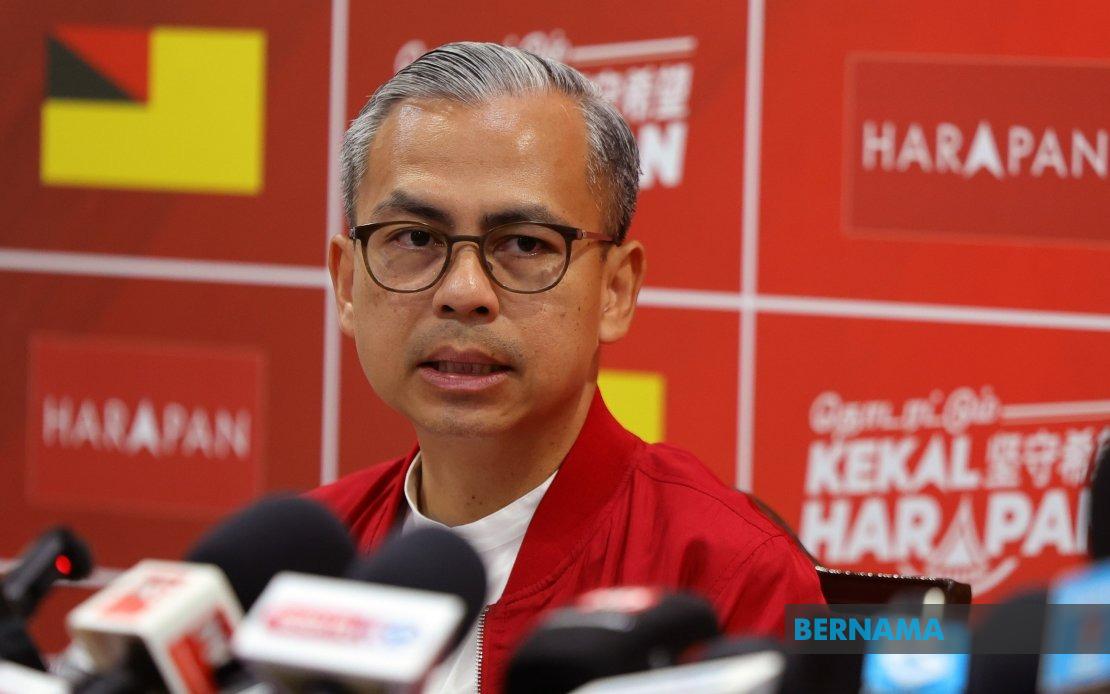
Pakatan Harapan has firmly rejected the notion that any single political group can claim exclusive representation of Malaysia's Malay-Muslim electorate, characterising such framing as fundamentally at odds with the nation's plural character. The coalition's communications director Datuk Seri Fahmi Fadzil made the assertion during campaigning for the Negeri Sembilan state election, emphasising that attempts to create this impression during the electoral contest misrepresent political reality on the ground.
Fahmi's intervention addresses a recurring campaign tactic in Malaysian politics: the assertion by competing parties that they alone can advocate for specific ethnic or religious communities. Speaking alongside Khalid Abdul Samad, communications director of coalition partner Amanah, and Negeri Sembilan DAP secretary Cha Kee Chin, Fahmi pointed to the presence of prominent Malay-Muslim figures within Pakatan Harapan's leadership structure as concrete evidence disproving the exclusionary narrative. His rhetorical questions—invoking his own standing and Khalid's credentials—underscored that the coalition's composition already embodies the religious and ethnic diversity its rivals claim it lacks.
The timing of these remarks reflects the intensifying campaign environment ahead of Negeri Sembilan's polls, scheduled for early voting on July 28 and general polling on August 1. During such contests, political messaging often sharpens, and opposition parties frequently deploy communal appeals designed to consolidate support among particular demographic groups. Fahmi's counter-narrative suggests that Pakatan Harapan recognises the electoral potency of such claims and is determined to contest them vigorously rather than cede ground on the question of Malay-Muslim interests and welfare.
Central to Pakatan Harapan's defence is its argument that exclusionary identity politics produces societal fractures rather than solutions. Fahmi articulated a vision of unity built on shared principles and mutual benefit rather than ethnic or religious chauvinism, proposing that Malays, Chinese, Indians and all Malaysians should mobilise around common aspirations for justice and progress. This framing attempts to reposition the coalition as championing a more enlightened form of politics—one grounded in civic values rather than narrow communal interests—contrasting it implicitly with opponents who traffic in divisive messaging.
The coalition has sought to substantiate its claims through administrative accomplishments in Negeri Sembilan under the leadership of Menteri Besar Datuk Seri Aminuddin Harun. Fahmi cited a notable expansion in mosque construction and a dramatic increase in zakat collection revenue, which has grown by nearly two-and-a-half times relative to the previous administration's record. These metrics, Fahmi argued, constitute tangible proof that Pakatan Harapan's governance has prioritised Islamic institutional development and the welfare mechanisms central to Malay-Muslim community life.
The significance of these figures warrants closer examination within the Malaysian political context. Mosque development and zakat management touch on matters fundamental to Islamic practice and communal support systems, making them visible and resonant indicators of government responsiveness to religious constituencies. By emphasising improvements in these domains, Pakatan Harapan confronts head-on the allegation that it marginalises Islamic interests—a particularly damaging charge in a country where Islam holds constitutional prominence and religious credentials carry substantial electoral weight.
Yet the coalition faces an uphill challenge in shifting perceptions, particularly in light of sustained opposition messaging that portrays Pakatan Harapan as insufficiently attentive to Malay-Muslim sensibilities. The charge that the coalition has sidelined religious interests gained traction during earlier political cycles and continues to surface in various guises. Fahmi's acknowledgment that Pakatan Harapan must "work harder to engage voters" reflects this awareness; the coalition apparently feels compelled to undertake sustained, proactive communication to counter the negative impressions that have accumulated.
The broader implications for Malaysian democracy merit consideration. When parties across the political spectrum resort to claims of exclusive representation of particular communities, they risk normalising a form of electoral competition premised on ethnic and religious fragmentation rather than policy platforms and performance records. This dynamic can undermine the development of cross-communal political coalitions and reinforce zero-sum attitudes toward governance. Pakatan Harapan's explicit articulation of an alternative vision—one centring inclusive governance and shared values—represents an attempt to break this mould, though success depends on whether voters perceive it as genuinely distinct from competitors' messaging.
For Malaysian observers, the Negeri Sembilan contest offers a microcosm of these broader tensions within the nation's political system. The state has been governed by the Unity Government, encompassing Pakatan Harapan and other partners, since the 2023 general election shifted the national political landscape. The upcoming election will provide evidence of whether voters in the state view the Unity Government's inclusive framework favourably or whether oppositional messaging resonates more powerfully. The results may well influence how national political parties calibrate their community engagement strategies in subsequent contests.
Fahmi's insistence that Malaysia's constitutional and demographic character demands pluralistic rather than exclusionary politics reflects a worldview that seeks to align party strategy with the nation's founding principles. Yet translating such aspirations into durable political advantage requires not merely rhetorical commitment but sustained demonstration through governance outcomes. The coalition's cited achievements in mosque building and zakat collection represent steps in this direction, but whether they suffice to overcome entrenched perceptions remains an open question as the Negeri Sembilan campaign enters its critical phase.

