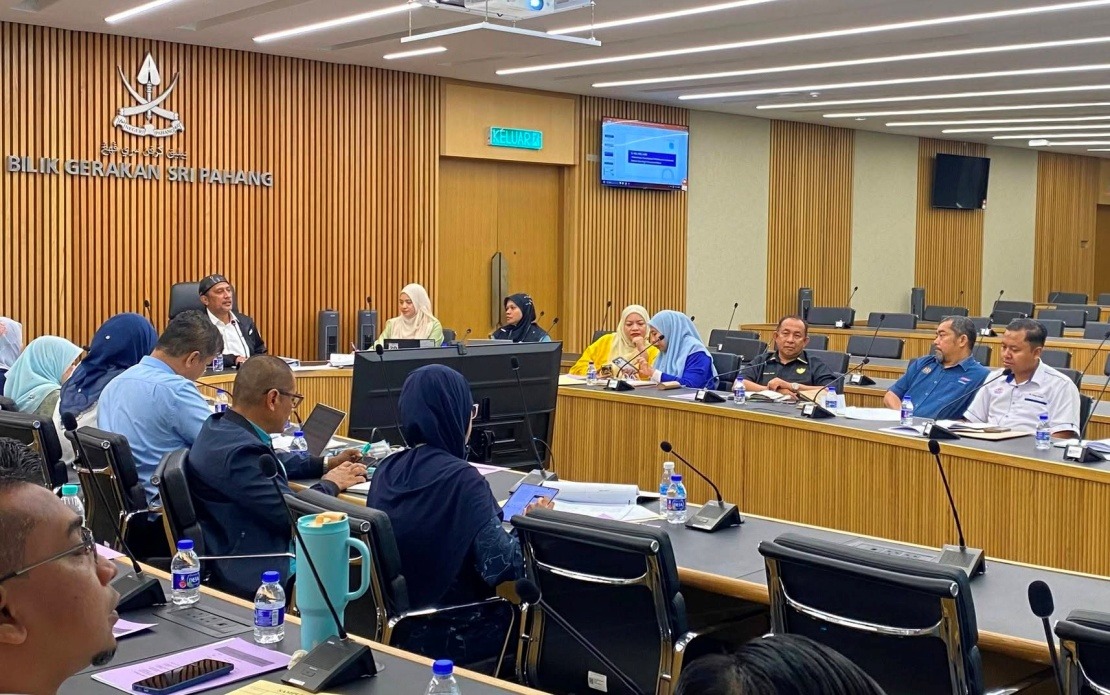
The Pahang state government has committed to involving multiple agencies in addressing a long-standing land dispute affecting the Orang Asli community in Kampung Sungai Cot, located in the Maran district. The initiative will bring together the Department of Orang Asli Development (JAKOA), the Pahang Land and Mines Office (PTG), and local land administrative bodies to examine potential pathways forward. State Islamic Religious Affairs, Rural Development and Orang Asli Affairs Committee chairman Datuk Seri Syed Ibrahim Syed Ahmad made the announcement, signalling a collaborative approach to what has become a contentious property matter involving overlapping claims and competing land use approvals.
The roots of this dispute trace back several years, with 12 Orang Asli individuals originally asserting rights to cultivate land in the area based on formal submissions to JAKOA. Complicating matters considerably, the same parcel was subsequently granted approval to a private company through a decision made by the State Executive Council on November 4, 2015. This dual approval system created the central conflict now requiring intervention from state authorities seeking to untangle the competing interests and establish whose claims hold greater weight under existing legal frameworks.
According to Syed Ibrahim, subsequent investigations by JAKOA narrowed the active claimants to six individuals who continue to pursue their case through the federal agency. During consultation sessions, these individuals contended that the disputed land constitutes their ancestral territory, a designation carrying significant weight within Malaysia's indigenous land rights framework. However, state authorities acknowledged that documentary verification of these ancestral claims proved problematic. The existing records maintained by relevant agencies did not contain sufficient corroborating evidence to substantiate the historical connection these claimants asserted, creating a factual gap that complicates resolution efforts.
The Pahang government's statement emphasised that handling of the matter would remain grounded in legal principles while employing consultative dialogue to identify solutions benefiting all stakeholders. This measured rhetoric reflects the sensitivity surrounding Orang Asli affairs, particularly given heightened scrutiny of indigenous land rights across Southeast Asia. The approach acknowledges competing legitimate interests—protecting native customary rights while honouring earlier administrative decisions that granted land to commercial operators—without dismissing either party's position outright.
Broader context reveals that Pahang maintains 264 registered Orang Asli villages housing over 90,000 residents, making the state a significant centre of indigenous population in Peninsular Malaysia. The state government has already formalised land ownership for the Orang Asli community spanning 16 villages under Section 76 of the National Land Code, demonstrating some institutional capacity to resolve such matters. Additionally, 30 villages have achieved gazetted status under protective provisions of the Orang Asli Act 1954 and related legislation, securing recognition and varying degrees of tenure security.
The processing pipeline for additional land claims reveals the scale of unresolved disputes across the state. Currently, 75 applications seeking gazettement for Orang Asli communities are in various stages of advancement. Of these, 31 have completed initial assessment and await consideration by the State Executive Council, while 44 applications remain suspended pending resolution of overlapping land claims—a category likely encompassing the Kampung Sungai Cot situation. A further 143 applications sit at preliminary measurement stages conducted by JAKOA, indicating substantial backlog and demonstrating systemic challenges in processing indigenous land claims efficiently.
The Maran dispute illustrates recurring tensions within Malaysia's land administration where historical indigenous presence encounters modern bureaucratic processes and commercial development interests. JAKOA's involvement signals that federal authorities recognise the case's significance and the necessity of federal-state coordination on indigenous matters. The agency's preliminary discussions with claimants and documentation of their positions represent procedural steps toward establishing a factual record, even if comprehensive historical verification remains elusive given gaps in official records.
Such disputes carry implications extending beyond Pahang's borders, as they reflect broader questions about how Malaysia protects indigenous land rights while maintaining legal certainty for commercial operators. The Maran case will likely influence how authorities approach similar overlapping claims elsewhere in the peninsula, potentially establishing precedents for balancing native customary rights against prior administrative allocations. The consultative approach Syed Ibrahim highlighted may offer a template, though success will depend on whether negotiated solutions can satisfy both indigenous claimants and project holders without requiring either party to sacrifice fundamental interests.
For the Orang Asli community nationwide, the outcome carries significance regarding confidence in government mechanisms for land claim resolution. Multiple ongoing applications demonstrate that many communities remain engaged with formal processes despite historical frustrations with documentation requirements and bureaucratic timelines. The state government's acknowledgement of the Kampung Sungai Cot issue and commitment to multi-agency review indicates receptiveness to indigenous concerns, though tangible progress toward resolution will ultimately determine whether this initiative delivers meaningful results or merely represents procedural accommodation without substantive change.
The involvement of PTG and the Land and District Office alongside JAKOA should theoretically streamline decision-making by concentrating relevant expertise and authority within a coordinated review process. Previous experience suggests that land matters involving overlapping claims require sustained engagement and willingness to explore creative solutions—whether through land exchanges, financial compensation, or hybrid arrangements granting partial rights to multiple parties. The coming months will clarify whether Pahang's multi-agency approach can convert bureaucratic coordination into actionable outcomes that adequately address Orang Asli land security concerns while maintaining broader administrative stability.

