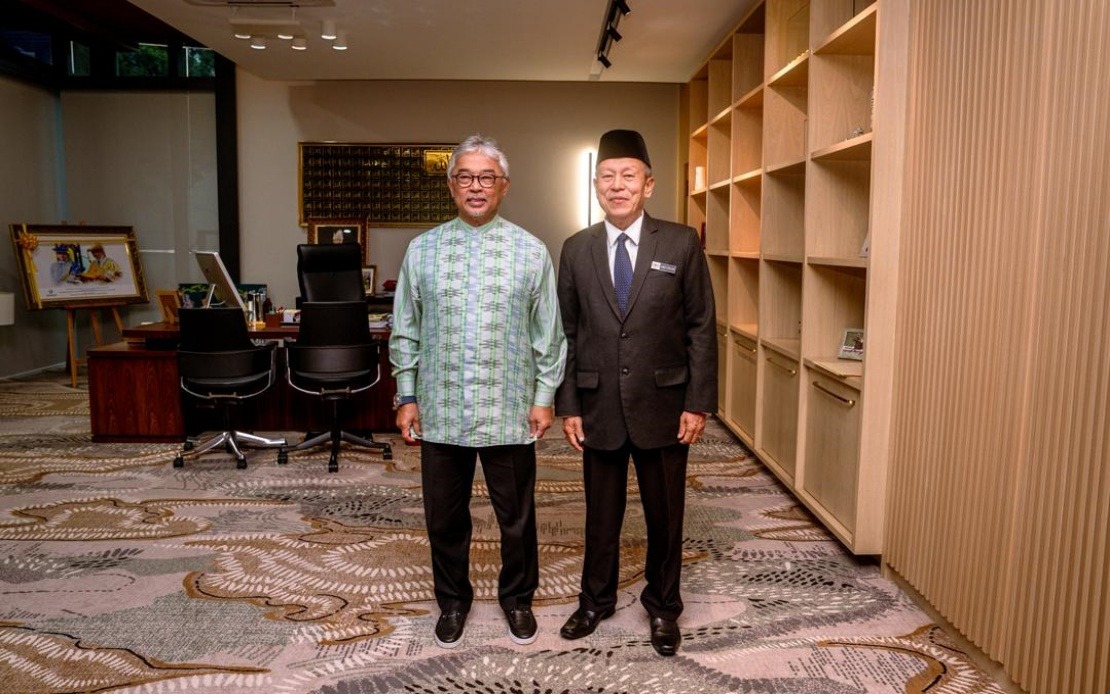
The Sultan of Pahang, Al-Sultan Abdullah Ri'ayatuddin Al-Mustafa Billah Shah, met with Malaysian Anti-Corruption Commission chief commissioner Datuk Seri Abd Halim Aman at Shahzan House in Ampang on June 18, underscoring the royal institution's engagement with the country's anti-graft efforts. The hour-long session represented a formal acknowledgement of the MACC's pivotal role in Malaysia's governance framework and provided a platform for the commission to outline its strategic direction to a senior member of the constitutional monarchy.
The briefing offered the MACC an opportunity to detail its operational achievements and institutional priorities to one of the country's most influential figures. Given the Sultan of Pahang's position within Malaysia's system of constitutional monarchy and his relevance to federal affairs, the audience signaled institutional alignment around anti-corruption objectives at a time when public trust in enforcement agencies remains contested. The meeting's focus on integrity and accountability reflects a broader push across government institutions to demonstrate commitment to fighting graft.
According to the commission's statement, the discussion encompassed multiple dimensions of anti-corruption work. Beyond updating the Sultan on recent developments within the agency, the MACC highlighted its strategic initiatives aimed at fortifying integrity across government and public institutions. This presentation of concrete measures rather than abstract principles suggests the commission sought to demonstrate tangible progress in what remains a challenging operational environment where political sensitivities often complicate enforcement.
Governance and corruption prevention emerged as central themes during the engagement. These topics carry particular weight in Malaysia, where high-profile cases have periodically shaken public confidence in institutions and where questions about the consistency of enforcement have periodically surfaced. By bringing such concerns directly to the palace, the MACC appeared to be reinforcing that anti-corruption work enjoys support from Malaysia's highest ceremonial and constitutional authorities, potentially lending weight to ongoing investigations and initiatives.
The MACC's emphasis on building public confidence in its operations reflected recognition that institutional legitimacy extends beyond legal authority. Public perception of fairness, consistency, and impartiality shapes whether citizens view the agency as a genuine guardian against graft or as a politically weaponized instrument. By securing an audience with the Sultan, the commission essentially positioned itself as working within Malaysia's constitutional framework and earning endorsement from non-partisan authority structures.
Datuk Seri Abd Halim's expression of gratitude toward Al-Sultan Abdullah acknowledged the symbolism and practical importance of royal support for anti-corruption mechanisms. The MACC chief's explicit appreciation for the Sultan's concern regarding ongoing efforts suggested that the agency views high-level institutional backing as valuable to its mandate. In Malaysia's political ecosystem, such gestures matter considerably, particularly in contexts where enforcement agencies sometimes face criticism from actors whose interests may be affected by investigations.
The Sultan's willingness to dedicate substantial time—an hour—to the briefing signaled institutional seriousness about accountability and governance standards. For a constitutional monarch, such engagement with specific enforcement agencies reflects a deliberate choice to remain informed about mechanisms designed to uphold public trust and institutional integrity. This reflects the broader role that Malaysia's monarchy plays in constitutional affairs beyond ceremonial functions.
For the MACC, the meeting represented a strategic communication effort extending beyond operational briefings. Publicizing the audience conveyed to stakeholders, critics, and the public that the commission operates with understanding and support from institutions embedded in Malaysia's constitutional architecture. Such visibility can strengthen the agency's hand when navigating politically sensitive investigations or when defending its operational independence against actors who question its impartiality.
The timing of the engagement also merits consideration. As Malaysia continues navigating complex questions about governance standards and institutional accountability, formal interaction between constitutional authorities and enforcement agencies reinforces that combating corruption remains a shared institutional priority. This matters in a context where anti-corruption work sometimes faces accusations of selective application or political motivation, particularly when high-profile figures become subjects of investigation.
For Southeast Asian observers watching Malaysia's institutional development, such meetings reflect the region's broader tension between strengthening enforcement mechanisms and managing the political pressures that inevitably accompany genuine anti-corruption work. Malaysia's approach—channeling anti-corruption efforts through established institutions and securing visible support from constitutional authorities—represents one model for attempting to depoliticize enforcement while maintaining institutional legitimacy.
Looking forward, the substantive outcomes of the MACC's initiatives discussed during the audience will likely prove more significant than the meeting itself. Royal blessing matters symbolically, but citizens ultimately judge anti-corruption agencies by whether they pursue cases fairly and whether their work produces genuine accountability for wrongdoing. The Sultan's engagement thus represents necessary institutional foundation-building, but the real test of the MACC's effectiveness will emerge through its enforcement record and public reception of specific cases and outcomes.


%22%2F%3E%3C%2Fpattern%3E%3C%2Fdefs%3E%3Crect%20width%3D%22100%25%22%20height%3D%22100%25%22%20fill%3D%22url(%23ph2fjo2g)%22%2F%3E%3Crect%20width%3D%22100%25%22%20height%3D%22100%25%22%20fill%3D%22url(%23ph2fjo2p)%22%2F%3E%3Ctext%20x%3D%2250%25%22%20y%3D%2250%25%22%20text-anchor%3D%22middle%22%20dominant-baseline%3D%22central%22%20fill%3D%22rgba(255%2C255%2C255%2C0.95)%22%20font-family%3D%22Georgia%2C%20'Times%20New%20Roman'%2C%20serif%22%20font-weight%3D%22700%22%20font-size%3D%22194%22%20letter-spacing%3D%22-0.02em%22%3ETeacher%3C%2Ftext%3E%3C%2Fsvg%3E)