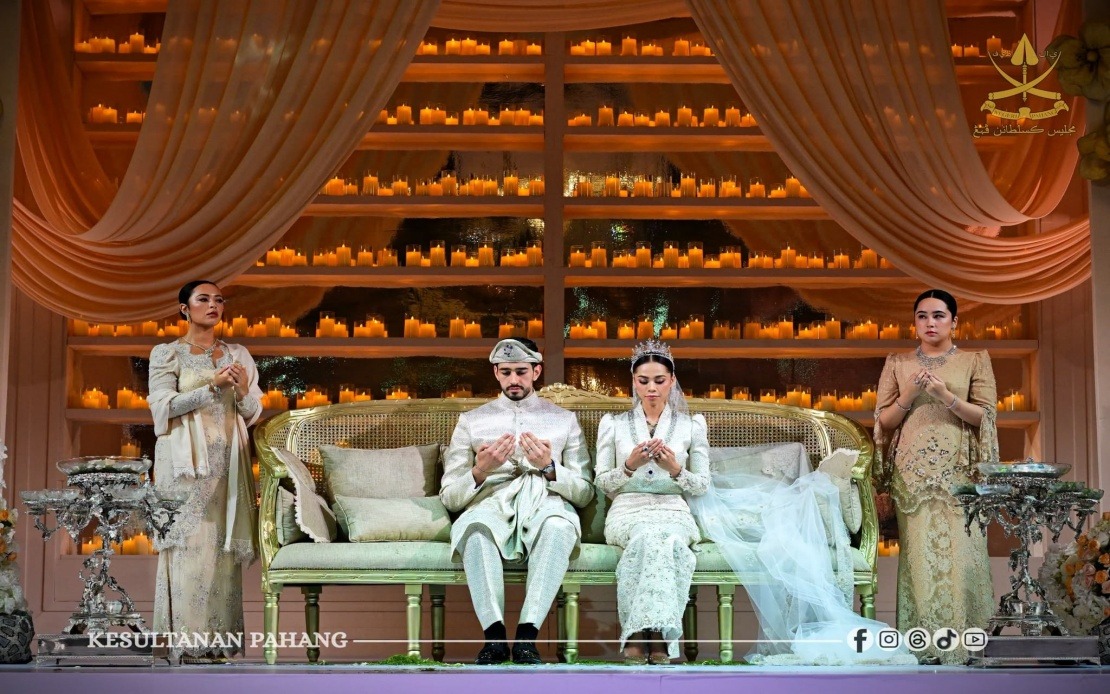
Pahang's reigning monarch, Sultan Al-Sultan Abdullah Ri'ayatuddin Al-Mustafa Billah Shah, graced the wedding reception of his daughter Tengku Puteri Raja Tengku Puteri Ilyana Alia and her husband Christopher Lionel Froggatt at a Kuala Lumpur hotel on August 8, marking a significant occasion in the state's royal calendar and affirming the continued prominence of the Pahang sultanate in Malaysia's constitutional monarchy.
The Sultan's presence underscored the importance placed on this union, arriving alongside the Regent of Pahang Tengku Hassanal Ibrahim Alam Shah and multiple members of the extended royal household, signalling broad family support for the marriage. The composition of the Sultan's entourage reflected the traditional structure of Pahang's court, with both senior and junior siblings accompanying him to witness the ceremonial proceedings.
Beyond the immediate royal family, the occasion drew representation from significant political and international circles. Pahang Menteri Besar Datuk Seri Wan Rosdy Wan Ismail attended as the state's chief administrator, while the presence of Shaikh Mohammed Hamad Tahnoon Al Nahyan, acting as representative of the President of the United Arab Emirates, indicated the international dimension of the marriage. Such cross-border attendance reflects both the growing interconnectedness of Southeast Asian and Gulf diplomatic circles and the cosmopolitan networks often maintained by Malaysia's royal families.
The wedding ceremonies adhered closely to established Malaysian royal protocols and Islamic traditions, demonstrating the ceremonial precision that characterises state-level royal functions. The newlyweds assumed prominent positions on the dais, establishing the focal point for the elaborate sequence of rituals that would follow throughout the reception. This formal arrangement ensured that all attendees could witness the symbolic stages of the celebration while maintaining the hierarchical structure integral to royal proceedings.
The 'Istiadat Menyuap Nasi Semangat' ceremony, which opened the formal proceedings, carried particular significance as a blessing ritual traditionally performed at royal celebrations. Tengku Puteri Seri Lela Wangsa Tengku Tan Sri Meriam Sultan Ahmad Shah's role in conducting this ceremony emphasised the active participation of female members of the royal household in maintaining and transmitting cultural traditions within the monarchy. This practice reinforces women's ceremonial authority within the palace structure, a meaningful aspect of how modern Malaysian royalty navigates tradition.
Following this opening ritual, the 'Istiadat Bersanding dan Merenjis' took centre stage, with Sultan Al-Sultan Abdullah himself performing the ceremonial water sprinkling over the couple. This act of the reigning monarch participating directly in the blessing demonstrated his personal involvement in celebrating his daughter's marriage and represented a poignant moment of familial and dynastic significance. Family members subsequently participated in the same ritual, progressively involving the wider royal household in the ceremonial blessing of the union.
The Sultan's performance of the 'Istiadat Meletakkan Panca Bicara'—a gesture designed to bestow blessings and honour upon the newlyweds—carried profound symbolic weight within the context of Malaysian royal custom. This particular ritual, performed by the Sultan as the ceremony's apex, conveyed his formal endorsement and paternal blessing of the marriage. The deliberate ordering of these ceremonies, with increasingly weighty rituals culminating in the Sultan's gesture, reflected a carefully structured progression designed to magnify the occasion's importance and solemnity.
The involvement of Pahang Mufti Datuk Dr Asmadi Mohamed Naim in concluding the ceremonies with a prayer grounded the proceedings firmly within Islamic tradition, ensuring that the wedding celebrations, while ceremonially elaborate, remained firmly anchored to religious observance and spiritual blessing. This integration of religious and royal elements has long characterised Malaysian state functions, particularly those involving the sultanate, reflecting the constitutional role of Malay rulers as protectors of Islam in their respective jurisdictions.
The wedding represents a continuation of the Pahang sultanate's profile as an active and engaged institution within Malaysia's constitutional framework. The Sultan's visible participation in his daughter's marriage ceremonies, alongside the attendance of state officials and international dignitaries, demonstrates how modern Malaysian royalty balances traditional ceremonial roles with contemporary global connections. Such occasions, while ostensibly private family matters, function as significant moments in the monarchy's public life, reinforcing both institutional continuity and the enduring relevance of traditional practices within Malaysia's multicultural, modern society.

