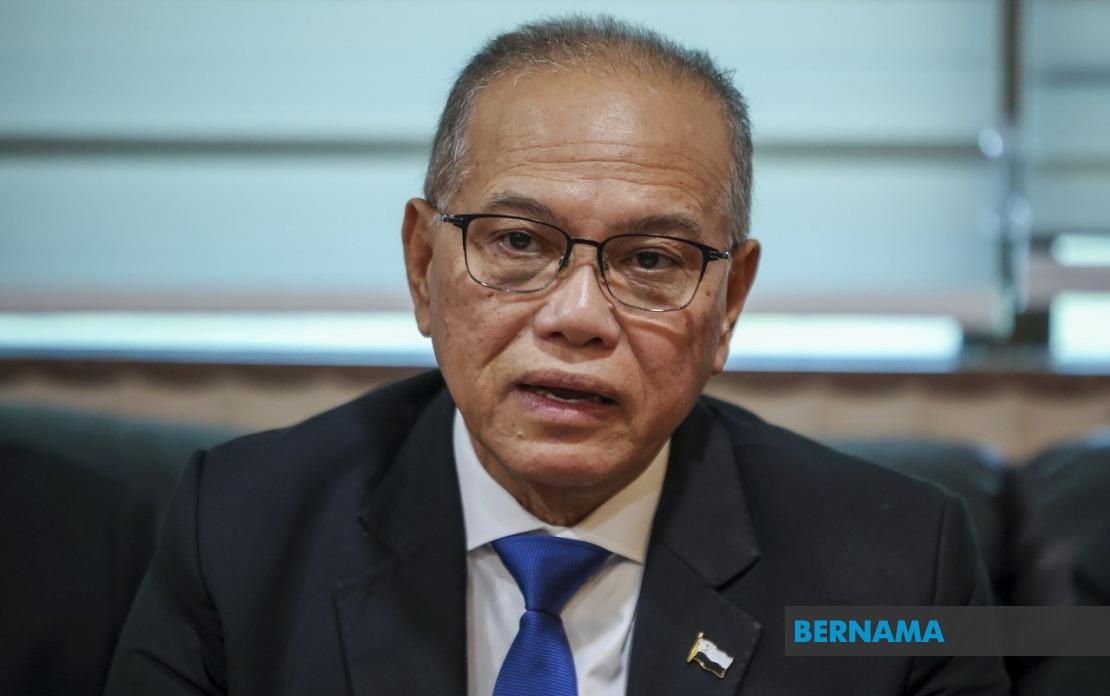
Pahang's financial performance through late August demonstrates the state government's sustained momentum in revenue generation, with collection figures suggesting the administration remains well-positioned to meet or exceed its annual fiscal objectives. Speaking during a state legislative assembly session at Wisma Sri Pahang, Menteri Besar Datuk Seri Wan Rosdy Wan Ismail disclosed that the RM921.72 million collected to date represents 72 per cent of the state's RM1.279 billion revenue target for 2026, indicating consistent progress in the opening months of the financial year. The quarterly revenue position reflects the state government's confidence in its economic forecasting and collection mechanisms, benchmarks that become increasingly important as Malaysian states compete for investment and development opportunities in a tightening fiscal environment.
The backdrop to Pahang's revenue success is a state economy demonstrating tangible expansion. The Menteri Besar highlighted that Pahang's gross domestic product reached RM71 billion in 2025, an improvement from RM68.8 billion the previous year, signalling sustained economic momentum across the state's key sectors. This GDP growth, though measured in absolute terms, reflects the diversification efforts Pahang has pursued in recent years, moving beyond its traditional reliance on resource extraction and agriculture towards manufacturing, tourism, and services. For Southeast Asian observers, Pahang's trajectory matters because the state commands significant land area, port infrastructure at Kuantan, and strategic positioning along major trade corridors connecting Thailand and Singapore.
Investment inflows into Pahang have strengthened considerably, providing further evidence of business and investor confidence in the state's direction. As of August 2026, the state government reported committed investments totalling RM11.47 billion, while realised investments—capital actually deployed on the ground—had reached RM1.044 billion. The distinction between committed and realised investment figures is analytically important; committed investments represent pledges and signed agreements that may take months or years to materialise, whereas realised investments demonstrate concrete economic activity occurring within Pahang's borders. The substantial gap between these figures suggests a pipeline of future development, though the state administration will need to maintain regulatory clarity and infrastructure readiness to ensure committed capital translates into jobs and economic contribution.
Wan Rosdy's comments were delivered in response to a question from Datuk Mohd Sharim Md Zain, an assemblyperson representing the Chini constituency, who sought updates on the state government's economic performance and implementation of the Pahang 1st agenda. The structured parliamentary exchange reflects the growing sophistication of state-level fiscal accountability in Malaysia, where legislators increasingly scrutinise revenue collection and investment outcomes. For Malaysian readers, this pattern of questioning and detailed response signals a state administration confident enough in its numbers to defend them publicly, though investment analysts would note that sustained scrutiny of how realised investments compare to committed figures remains warranted.
The strong revenue position has enabled Pahang's leadership to channel resources towards direct public benefit initiatives. The state government has allocated a combined RM173.93 million to the Makmur Pahang Initiative (IM Pahang) across the 2024 to 2026 period, a programme designed to deliver tangible improvements in citizens' living standards. The year-on-year increase in IM Pahang allocations is particularly noteworthy: the programme received RM38.8 million in 2024, RM50.54 million in 2025, and RM84.59 million in 2026. This escalating commitment suggests either rising revenues enabling increased social spending or a deliberate shift in budget priorities towards direct welfare, a pattern evident across several Malaysian states as electoral competition intensifies.
The Menteri Besar signalled intentions to deepen the Makmur Pahang Initiative further, announcing plans to increase allocations through the upcoming state budget presentation. This forward-looking statement carries implications beyond Pahang itself. Malaysian state governments typically use budgets delivered in the latter half of the calendar year to outline spending priorities for the ensuing twelve months, and statements about intention to boost social programmes often precede formal budget announcements. For Pahang residents and investors, such commitments merit monitoring to see whether rhetoric translates into budgetary flesh when the formal allocation documents are tabled.
The overall narrative presented by Wan Rosdy emphasises financial stability as the foundation for sustained development and social investment. By highlighting the state's strong revenue position, growing investment pipeline, and expanding economic output, the Menteri Besar constructs a framework within which public expenditure on welfare programmes appears sustainable rather than discretionary. This framing carries political weight in a Malaysian context where questions about fiscal prudence and long-term sustainability increasingly shape public perception of state administrations. A state that can demonstrate robust revenue growth and investor confidence faces fewer questions about the wisdom of allocating resources to direct public benefit.
Pahang's revenue and investment metrics carry significance beyond state boundaries. As a state with substantial land area, port facilities, and geographic position bridging peninsular Malaysia and East Coast economic corridors, Pahang's economic health influences broader Malaysian competitiveness. The state's ability to attract committed investment of RM11.47 billion suggests confidence among domestic and international investors in Pahang-based opportunities, whether in manufacturing, logistics, tourism, or emerging sectors. Conversely, the state's task involves converting this investor interest into realised economic activity, employment creation, and tax contributions that sustain the revenue performance Wan Rosdy highlighted.
Looking forward, several factors merit observation regarding Pahang's fiscal trajectory. The state must sustain revenue collection momentum through the remainder of 2026, a task complicated by global economic uncertainties and potential shifts in commodity prices affecting some of Pahang's traditional income sources. The administration must also ensure that the committed investment pipeline translates into realised capital, a process requiring effective coordination between state government agencies, private investors, and federal authorities managing infrastructure and regulatory frameworks. Additionally, the success of initiatives like Makmur Pahang will depend on effective implementation and genuine improvement in living standards, factors that determine whether fiscal performance translates into citizen satisfaction and political durability.
For Malaysian policymakers and regional observers, Pahang's demonstrated financial position offers a case study in how state-level fiscal management contributes to broader economic resilience. The state's progression from announced targets to mid-year revenue reality, combined with its capacity to allocate increasing resources to social programmes, suggests administrative systems functioning reasonably well. However, sustained economic growth, investment realisation, and revenue collection will require continued policy focus, infrastructure investment, and institutional adaptation. The coming months will reveal whether Pahang can maintain the trajectory Wan Rosdy outlined or whether external pressures and implementation challenges will test the state government's financial management capacity.

