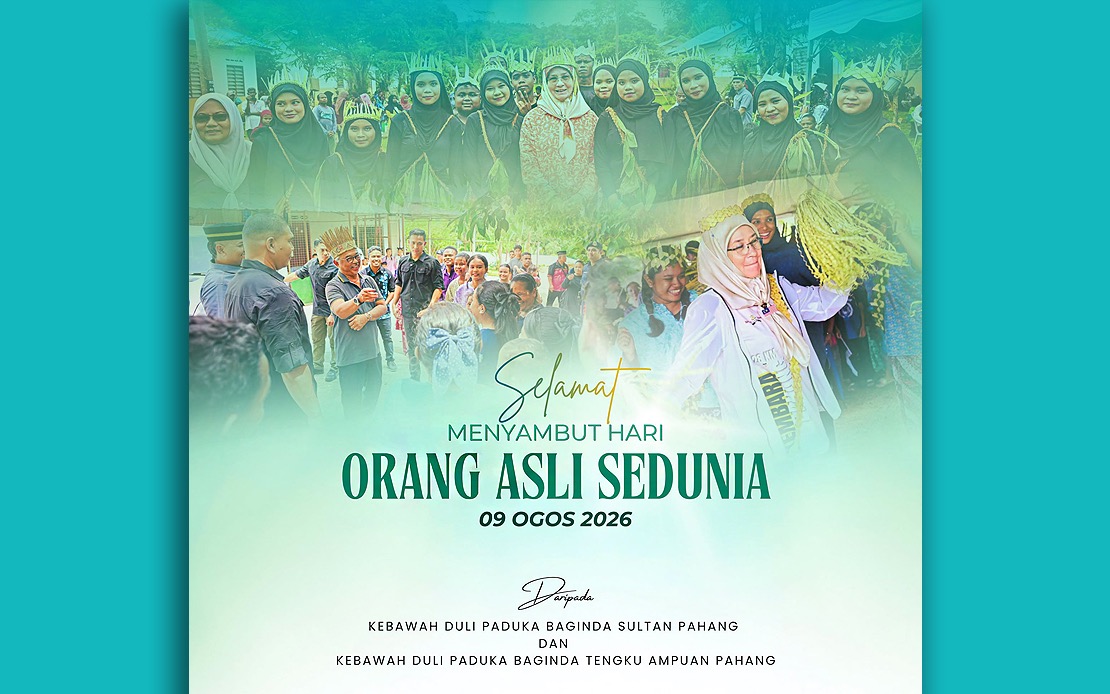
The Sultan of Pahang, Al-Sultan Abdullah Ri'ayatuddin Al-Mustafa Billah Shah, and Tengku Ampuan Pahang Tunku Azizah Aminah Maimunah Iskandariah have publicly recognised the invaluable contributions of Pahang's Orang Asli communities, acknowledging their role as custodians of the state's cultural identity and traditional heritage. Speaking through an official statement on the Kesultanan Pahang's social media channels, the royal couple emphasised that indigenous knowledge systems and practices form an essential part of Pahang's broader cultural fabric and must be actively preserved for future generations.
The royal acknowledgment carries particular significance at a time when indigenous communities across Malaysia face mounting pressures from urbanisation, land encroachment, and economic marginalisation. By positioning Orang Asli heritage as a shared state asset rather than a peripheral concern, the Pahang palace has signalled a commitment to mainstream indigenous concerns within broader development discourse. This framing aligns with international recognition of indigenous peoples' rights, particularly as Malaysia approaches the 2026 observance of the International Day of the World's Indigenous Peoples.
A central pillar of the royal couple's statement focuses on expanding concrete opportunities for Orang Asli advancement across multiple domains. Education emerges as a priority area, reflecting persistent disparities in school enrollment and completion rates among indigenous children compared to national averages. The commitment to educational access addresses a foundational barrier that has historically limited economic mobility and social integration for many Orang Asli families across Pahang's rural and forested regions.
Beyond schooling, the palace has flagged economic development as a critical intervention point. This encompasses both the creation of income-generating opportunities suited to indigenous contexts and the removal of structural barriers that prevent Orang Asli entrepreneurs from accessing capital, markets, and business networks. Skills training and human capital development represent complementary strategies to equip community members with competencies demanded by contemporary labour markets, whether in formal employment or self-employment ventures.
Crucially, the royal statement insists that such development must not come at the expense of cultural identity and customary practices. This reflects a recognition that rapid modernisation, whilst economically beneficial in some respects, has historically eroded indigenous languages, knowledge systems, and social structures among other Malaysian Orang Asli populations. The commitment to preserving heritage whilst pursuing economic advancement represents a delicate balance that requires deliberate policy design and genuine community consultation.
The timing of this statement, linking support to the 2026 International Day of the World's Indigenous Peoples, positions Pahang within a global movement affirming indigenous rights and sovereignty. International frameworks, including the United Nations Declaration on the Rights of Indigenous Peoples, have increasingly influenced national approaches to indigenous affairs across Southeast Asia. By explicitly tying local royal commitment to this international calendar, Pahang's palace signals alignment with contemporary standards for indigenous rights governance.
For Malaysian readers and policymakers, the statement underscores growing recognition that indigenous communities represent neither historical relics nor obstacles to development, but rather stakeholders whose participation and consent are essential for sustainable progress. This philosophical shift has practical implications for land rights conversations, environmental conservation initiatives, and resource management decisions that disproportionately affect Orang Asli populations in Pahang's interior regions.
The royal couple's emphasis on unity, respect, and cooperation provides a framework for community-state relations that acknowledges indigenous peoples as integral to Pahang's social fabric rather than marginal populations requiring charitable interventions. This approach suggests movement away from patronising development models toward genuine partnership models that recognise Orang Asli agency and decision-making authority.
Implementing these commitments will require coordinated action across state government agencies, civil society organisations, and Orang Asli community leaders themselves. Education initiatives must overcome infrastructure and resource constraints in remote areas. Economic programmes must be designed with genuine input from indigenous entrepreneurs and reflect actual market opportunities within Pahang's geographic and economic context. Cultural preservation efforts require investment in language documentation, traditional knowledge recording, and community-led heritage initiatives.
The palace's public articulation of these priorities also creates a benchmarking opportunity for civil society monitoring and community accountability. As Pahang advances toward 2026, specific metrics around educational attainment, household income improvements, and cultural programme participation can measure whether royal commitments translate into meaningful material improvements for Orang Asli families across the state. Such accountability mechanisms strengthen the credibility of development pledges and help ensure resources reach intended beneficiaries effectively.

