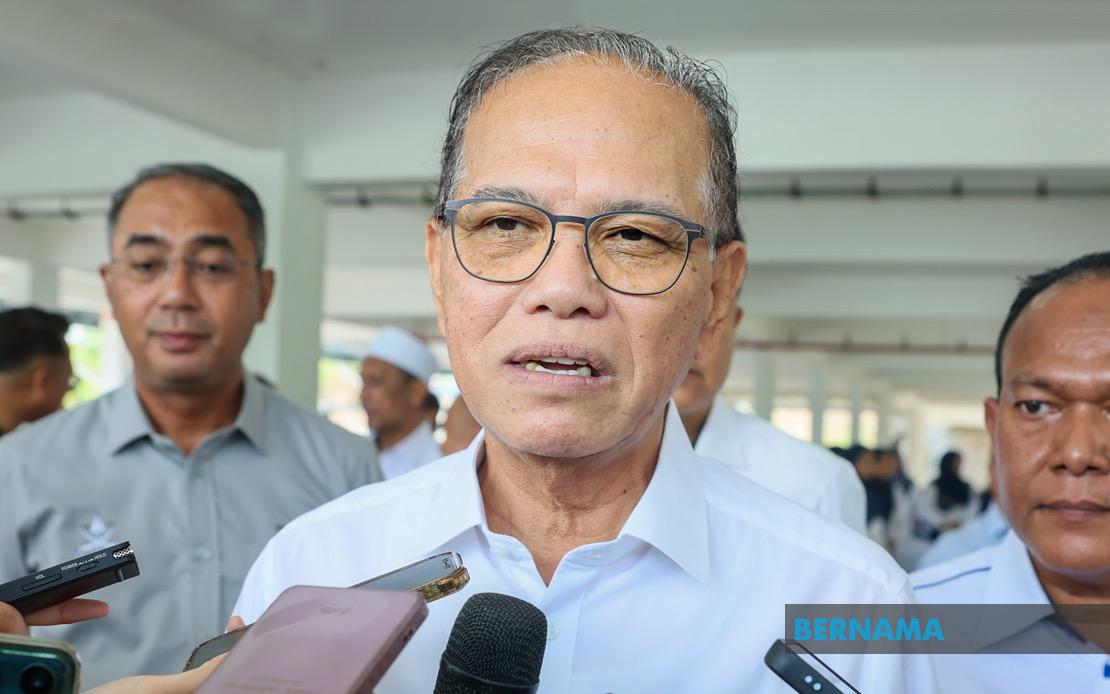
Pahang's Menteri Besar Datuk Seri Wan Rosdy Wan Ismail has made an impassioned plea for Orang Asli youths across the state to consider vocational and technical education as a viable pathway to improved economic prospects and social mobility. Speaking at a graduation ceremony in Kuantan, Wan Rosdy underscored the gravity of educational challenges within indigenous communities, particularly the alarming rates at which students leave school without completing their qualifications. His intervention reflects growing recognition among state leadership that systemic barriers to education disproportionately affect Orang Asli populations and that targeted encouragement towards skills-based training could yield transformative outcomes.
The Menteri Besar's remarks carry particular weight given Pahang's substantial Orang Asli population, estimated at approximately 90,000 individuals scattered across rural and semi-rural communities throughout the state. This demographic concentration underscores the scale of the educational challenge and the potential ripple effects that improved TVET uptake could generate across extended family networks and village structures. By elevating the visibility of this issue at an official state level, Wan Rosdy has signalled that addressing Orang Asli educational disparities forms part of broader state development priorities.
A central theme of Wan Rosdy's message involved reframing Technical and Vocational Education and Training not as a fallback option for those unable to pursue conventional academic routes, but as a legitimate and increasingly valuable qualification pathway. The evolving economic landscape across Malaysia and Southeast Asia has substantially elevated demand for skilled workers in construction, manufacturing, hospitality, and renewable energy sectors. This shift in labour market dynamics means that TVET graduates now command competitive wages and career advancement opportunities comparable to, and sometimes exceeding, those available to conventional degree holders. By emphasising this reality, Wan Rosdy sought to dismantle entrenched cultural perceptions that may steer Orang Asli families away from vocational options.
A particularly strategic dimension of Wan Rosdy's advocacy involved his explicit hope that YP Advanced Skills graduates returning to their indigenous villages would serve as visible success models for younger community members. This approach recognises the powerful influence of peer and familial role models within tight-knit communities where educational decisions are frequently made within family contexts rather than through individual aspiration alone. When successful graduates reintegrate into their home villages, they provide tangible evidence of vocational training's benefits and can actively recruit younger relatives into similar programmes, creating self-reinforcing cycles of educational engagement.
The convocation ceremony itself, held at the Sultan Haji Ahmad Shah Silver Jubilee Hall, celebrated 388 graduates across various TVET disciplines offered by YP Advanced Skills. This substantial graduate cohort demonstrates the institution's capacity to deliver training at scale and suggests that sufficient infrastructure exists to accommodate expanded Orang Asli enrolment. Wan Rosdy's recognition of YP Advanced Skills' success in producing graduates characterised by strong ethical foundations and high employment readiness signals official approval of the training model and may encourage other state institutions to emulate its approach when serving indigenous learners.
The employment flexibility that TVET qualifications provide represents another crucial advantage that Wan Rosdy highlighted during his remarks. Unlike narrowly specialised degree programmes, vocational certifications and diplomas equip graduates with practical competencies directly applicable to self-employment ventures. For Orang Asli communities historically engaged in agricultural, forestry, or artisanal livelihoods, this adaptability proves particularly valuable. A graduate with construction or electrical installation credentials can readily establish contracting businesses serving rural development projects, thereby transforming individuals from wage labourers into entrepreneurs controlling their economic destinies.
Wan Rosdy's encouragement for graduates to continue to higher-level qualifications when feasible reveals sophisticated understanding of educational progression pathways. Rather than treating TVET as a terminal qualification, he positioned it as a foundational stepping stone from which motivated students could advance to degree-level studies or specialised postgraduate credentials. This progression model has gained traction internationally and within Malaysia's educational ecosystem, with many universities now recognising TVET diplomas as valid entry credentials for degree programmes. For Orang Asli students, this flexibility removes the pressure of making irreversible educational choices at younger ages and permits incremental advancement calibrated to individual circumstances and capabilities.
The dropout challenge within Orang Asli communities reflects intersecting factors including geographic remoteness limiting school access, economic necessity requiring adolescent labour, and historical underinvestment in indigenous educational infrastructure. These systemic barriers cannot be resolved through exhortation alone, yet state-level advocacy by figures like Wan Rosdy contributes to shifting institutional priorities and securing resources for targeted interventions. When a Menteri Besar publicly emphasises TVET uptake among indigenous populations, corresponding budget allocations, scholarship programmes, and partnership arrangements with training providers become more politically feasible.
From a Southeast Asian perspective, Malaysia's experience with indigenous TVET participation holds relevance for neighbouring countries facing similar demographic and development challenges. Thailand, Indonesia, and the Philippines all maintain substantial indigenous populations with comparable educational disparities. The Malaysian approach of promoting skills certification through dedicated institutions like YP Advanced Skills, coupled with state-level political support, offers a replicable model. Regional policy forums increasingly facilitate sharing of such best practices, and Malaysia's emphasis on indigenous TVET participation may influence development strategies across the Association of Southeast Asian Nations.
The economic implications of expanded Orang Asli TVET participation extend beyond individual graduates to benefit regional labour markets and developmental outcomes. Skilled indigenous workers contribute to infrastructure projects, manufacturing productivity, and service sector expansion that drive broader economic growth. Conversely, sustained educational exclusion perpetuates cycles of poverty and marginalisation that generate long-term social costs through healthcare burdens, reduced tax contributions, and limited consumer purchasing power. State investments in TVET accessibility therefore represent not merely equity interventions but economically rational policies generating returns across multiple fiscal domains.
Looking forward, Wan Rosdy's advocacy suggests that Pahang may pursue dedicated TVET pathways specifically designed for Orang Asli learners, potentially incorporating flexible scheduling, enhanced financial support, or culturally adapted curricula acknowledging indigenous knowledge systems alongside technical competencies. Such targeted interventions, if implemented thoughtfully, could substantially elevate programme relevance and completion rates. The challenge lies in ensuring that support mechanisms enhance rather than segregate indigenous learners, and that employers actively recruit TVET graduates from Orang Asli backgrounds without discrimination.

