Pahang has emerged as the employment leader across Malaysia's east coast region, achieving a labour force participation rate of 65.3 per cent during the first quarter of 2026, significantly outpacing its neighbours. The state has simultaneously maintained a remarkably low unemployment rate of 1.9 per cent, signalling robust job market conditions and strong workforce engagement that positions Pahang as a benchmark for regional economic health.
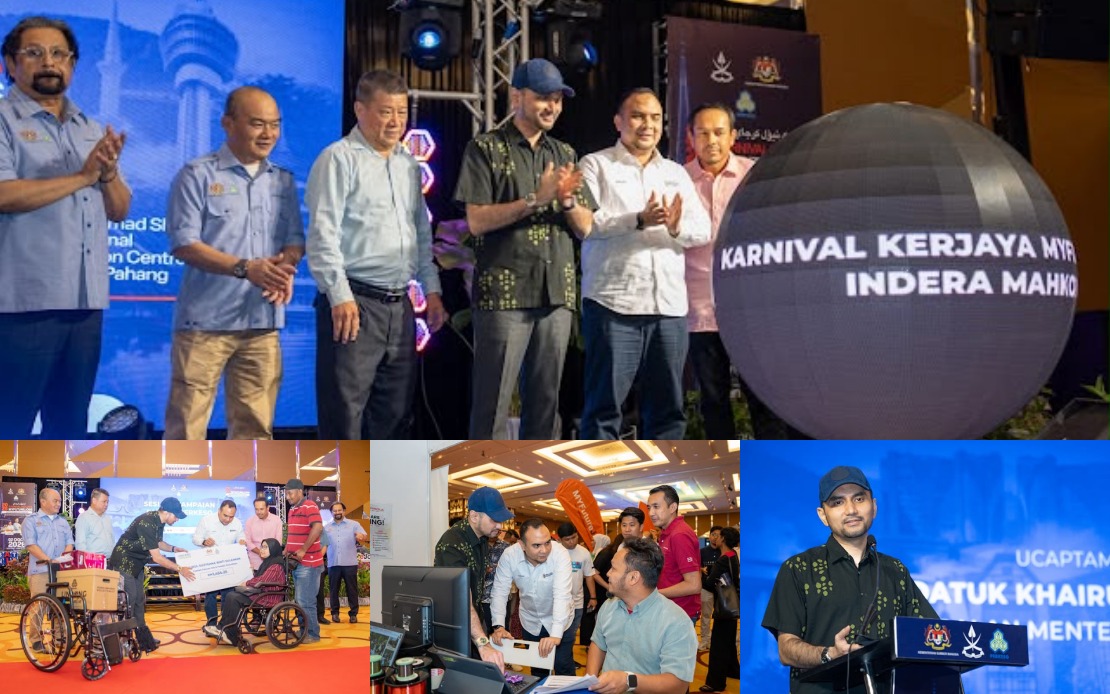
The impressive employment metrics reflect the tangible impact of coordinated government initiatives designed to bridge the gap between job seekers and employment opportunities. Speaking at the inauguration of the Indera Mahkota MyFutureJobs Career Carnival 2026 in Kuantan, Deputy Human Resources Minister Datuk Khairul Firdaus Akbar Khan underscored the administration's sustained commitment to generating pathways into employment across the state. The carnival itself exemplified this commitment, offering 6,000 job vacancies sourced from 30 employers operating across diverse sectors ranging from manufacturing to services and technology.
The MYFutureJobs programme, administered by the Social Security Organisation (PERKESO), has emerged as a cornerstone mechanism for translating policy into concrete employment outcomes. Since the platform's inception in 2023 through July 24, 2026, a cumulative total of 26,877 job seekers in Pahang successfully transitioned into employment through this conduit. The scale of intervention becomes clearer when examining PERKESO's operational footprint across the state: the organisation has orchestrated 1,277 separate interview sessions and career carnival events, while simultaneously advertising more than 10,000 distinct job vacancies through its digital portal. By 2026 alone, the platform had attracted 11,857 registered job seekers, demonstrating sustained interest and awareness of these employment pathways.
Beyond the immediate mechanics of job matching, the government recognises that sustainable employability hinges upon skill alignment with evolving industry demands. Consequently, the employment framework encompasses comprehensive training and capability-building programmes designed to equip workers with competencies relevant to contemporary sectoral requirements. Deputy Minister Khairul Firdaus explicitly encouraged continued worker participation in these developmental initiatives, positioning skill enhancement not as a one-time intervention but as an ongoing professional necessity. This pedagogical approach acknowledges the accelerating pace of workplace transformation and the consequent need for adaptability among the workforce.
The policy infrastructure supporting employment generation extends beyond PERKESO's institutional machinery. The Sahabat MADANI initiative, launched during the Kuantan carnival by the Prime Minister's political secretary Datuk Ahmad Farhan Fauzi, represents an integrated community mobilisation strategy that operates in concert with formal job-placement mechanisms. Rather than functioning as a conventional volunteer cadre, Sahabat MADANI is conceptualised as a grassroots movement that establishes meaningful connections between government institutions and local communities, thereby creating multiple channels through which employment information and other public services can permeate rural and geographically isolated populations.
The philosophy underpinning Sahabat MADANI reflects broader governance thinking regarding inclusive development and social cohesion. Ahmad Farhan articulated a vision of volunteerism rooted in humanitarian values—emphasising mutual respect, collective welfare, and compassionate service delivery. The initiative deliberately targets marginalised demographic segments, recognising that communities in peripheral areas often lack equitable access to employment networks and opportunity information that residents of metropolitan centres take for granted. By establishing Sahabat MADANI as a decentralised information and advocacy network, policymakers aim to democratise opportunity distribution.
Recruiting a volunteer force to accomplish these objectives has proceeded apace, with Pahang achieving its target of enlisting 2,000 Sahabat MADANI members. However, Ahmad Farhan signalled that institutional ambitions extend beyond this baseline threshold, encouraging exponential expansion of the volunteer cohort. The political secretary explicitly framed volunteers as dual-function agents: simultaneously custodians of grassroots community welfare and organic intelligence sources through which the administration receives real-time feedback regarding citizen experiences and local governance priorities. This conception of volunteering integrates social service provision with political accountability mechanisms.
The achievement of high labour force participation and low unemployment in Pahang must be contextualised within broader Southeast Asian economic dynamics. The region continues experiencing structural economic transitions as globalisation reshapes sectoral composition, with particular pressure on traditional manufacturing and increasing demand for service and digital economy competencies. Malaysia's position as a developed nation aspirant necessitates workforce capabilities commensurate with high-value-added economic activities. Pahang's success in maintaining low unemployment whilst achieving elevated participation suggests that integrated approaches combining job matching, skills development, and community mobilisation can yield tangible results even amid sectoral transformation.
The replicability of Pahang's employment success across other Malaysian states and indeed throughout the region hinges substantially upon adequate institutional capacity and resource allocation. PERKESO's operational scale—organising over a thousand career interventions annually across a single state—demands considerable investment in human resources, technology infrastructure, and venue facilities. Scaling these activities to achieve equivalent participation rates across all Malaysian states would require proportional expansion of institutional capacity and potentially new funding mechanisms. Policymakers examining Pahang's model would therefore need to assess both the transferability of specific interventions and the resource prerequisites for implementation.
The emphasis on skills development alongside job placement reflects recognition that employment quantity, whilst important, must be accompanied by employment quality and stability. Training programmes that enhance worker productivity and career progression prospects contribute to wage growth and reduced turnover, generating positive multiplier effects throughout the economy. For Pahang specifically, the integration of skills development with job carnival events creates opportunities for employers to identify candidates with both immediate job-readiness and developmental potential, improving matching efficiency. This dual focus on immediate employment and long-term capability development represents sophisticated workforce development practice.
Looking forward, Pahang's employment trajectory will likely remain subject to broader Malaysian macroeconomic conditions, global trade dynamics, and sectoral evolution. The current strength of labour force participation and minimal unemployment arguably position Pahang advantageously to absorb future economic shocks, as high workforce engagement provides resilience and adaptability. However, sustaining these metrics will require continued investment in the institutional infrastructure and programmes that have generated current success. The visibility accorded to employment initiatives through high-level government participation—evidenced by attendance of both ministerial and Prime Minister's office representatives—suggests that policymakers recognise employment as a central governance priority with both economic and political dimensions.
The convergence of MYFutureJobs and Sahabat MADANI represents an experimental governance model wherein formal employment systems are supplemented by community-based mobilisation and volunteerism. Should this integrated approach continue yielding positive outcomes across employment metrics, the framework may inform workforce development strategies elsewhere in Malaysia and potentially across the ASEAN region. Pahang's experience demonstrates that achieving low unemployment requires neither passive labour market dynamics nor top-down mandates alone, but rather deliberate institutional orchestration combined with grassroots community engagement and individual participant agency.

