Pahang's state administration has committed substantial financial resources to accelerate sports development across three key disciplines, allocating RM3.5 million in the current fiscal year as part of a strategic push to elevate the state's competitive standing in Malaysian sports. The funding distribution—RM2 million for football, RM1 million for netball, and RM500,000 for sepak takraw—underscores a deliberate approach to nurturing athletic talent from grassroots level upward, with the ultimate goal of producing nationally competitive athletes who can bring recognition to the state.
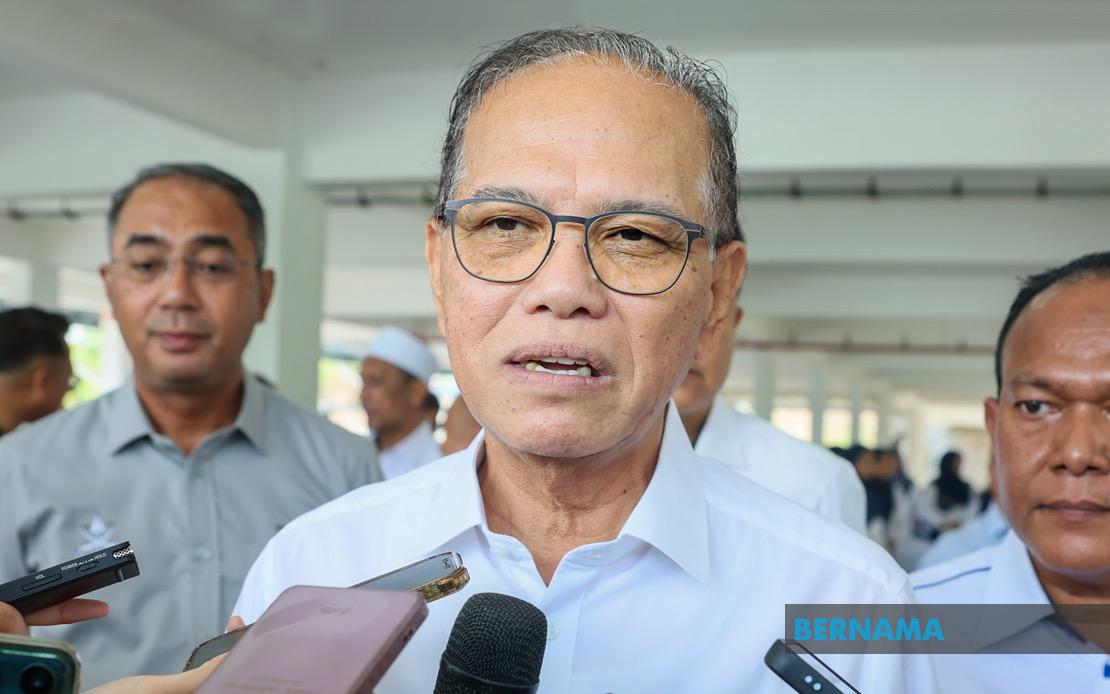
Menteri Besar Datuk Seri Wan Rosdy Wan Ismail framed the initiative as fundamental to Pahang's broader sporting aspirations, emphasizing that the state government views systematic talent development as essential to bridging the performance gap with long-established sporting powerhouses elsewhere in Malaysia. His remarks, delivered at the closing ceremony of the Pahang 1st Netball League Championship held at the Pahang Sports Complex in Kuantan on July 5, reflected conviction that sustained investment and serious implementation would be required to establish Pahang as a formidable force in national competitions.
The financial commitment carries particular significance for netball, a sport where Pahang has identified growth potential. The state government has already signaled its intention to increase netball funding by an additional RM500,000 in the following year, bringing the total allocation to RM1.5 million. This escalation suggests confidence in the sport's trajectory within the state and recognition that building competitive depth in niche sporting disciplines can yield outsized returns in terms of national medal counts and sporting prestige.
Football's dominant share of the allocation—RM2 million—reflects the sport's entrenched popularity and infrastructure base across Malaysia generally, but also signals that Pahang views football as its primary vehicle for achieving state-level sporting prominence. The amount allocated must be understood within the context of Malaysian football's competitive intensity and the substantial investment required to field competitive teams at district, state, and potentially professional levels. The funding will likely support infrastructure development, coaching quality, and participation programmes designed to widen the talent pipeline.
Beyond the immediate financial figures, Wan Rosdy articulated a philosophy of total commitment, cautioning that sports development initiatives undertaken without genuine seriousness or implemented half-heartedly would prove counterproductive. This language signals that the state government views the RM3.5 million not merely as budgetary allocation but as demonstration of institutional will—a signal to athletes, coaches, and administrators that sustained support would follow successful implementation. The framing also implicitly acknowledges that Malaysian state governments compete for sporting prestige, with success in national championships serving as measure of administrative competence.
The event where the announcement was made—the closing ceremony of the Pahang 1st Netball League Championship—drew 42 teams, with Semambu emerging as champions and claiming RM10,000 in prize money. The competition's scale and scope illustrate the existing grassroots infrastructure upon which the new funding allocation will build. Netball's traditionally strong female participation base makes it strategically valuable for state governments seeking to demonstrate commitment to gender-inclusive sports development, a consideration that may explain the planned expansion of netball funding despite its currently smaller allocation relative to football.
Wan Rosdy framed sports development through a broader social lens, identifying athletics as a platform for fostering community unity, cooperation, and discipline across diverse demographic backgrounds. This conceptualization reflects longstanding Malaysian government rhetoric regarding sports' role in nation-building and social cohesion, though it also carries practical implications: youth engaged in organized sports programs represent investments in character development and social stability, outcomes that justify public expenditure beyond purely competitive sporting metrics.
The timing and scale of Pahang's commitment must be considered within Southeast Asia's increasingly competitive sporting landscape. As regional economies have grown and governments have elevated sports policy priority, Malaysian states face pressure to demonstrate domestic sporting capability while competing for recognition within ASEAN sporting forums. Pahang's initiative, while modest in absolute terms, reflects participation in this broader dynamic of state-level sporting investment and rivalry for national athletic prestige.
Sepak takraw's allocation of RM500,000, while substantially smaller than football and netball, deserves analytical attention as it represents state government support for a distinctly Southeast Asian sporting tradition. Sepak takraw enjoys cultural significance across Malaysia and the broader region, and state-level investment in the discipline supports preservation and development of indigenous sporting practices alongside participation in globalized sports like football and netball. The allocation thus carries implicit recognition of cultural continuity as sports policy objective.
For Malaysian sports administrators and aspiring athletes in Pahang, the allocation signals a shift in state government priorities toward systematic talent development and competitive improvement. Historically, Malaysian sports development has concentrated in certain states, creating regional disparities in facility access, coaching quality, and competitive opportunity. Pahang's investment—if sustained and effectively implemented—could contribute to geographic redistribution of sporting capability and reduce concentration of athletic talent and resources in established sporting centers.
The announced increases and sustained funding commitments suggest that the Pahang state government views sports development as a multi-year strategic priority rather than a one-off budgetary gesture. The planned RM500,000 netball increase for the following year indicates planning horizons extending beyond immediate fiscal year constraints, though actual realization of these commitments will depend on subsequent budget cycles and political circumstances. Such forward planning, while subject to revision, demonstrates governmental intention to build institutional sporting capacity incrementally.
Moving forward, success metrics for Pahang's sporting investment will likely encompass national championship medals, athlete development trajectories, and enhanced participation in grassroots programs. The state government has effectively staked administrative credibility on improved sporting performance, making future years' outcomes politically significant. Whether the allocation proves adequate to achieve stated ambitions of elevating Pahang to par with dominant states remains contingent on implementation quality, coaching infrastructure, and competitive environment factors beyond budgetary allocation alone.

