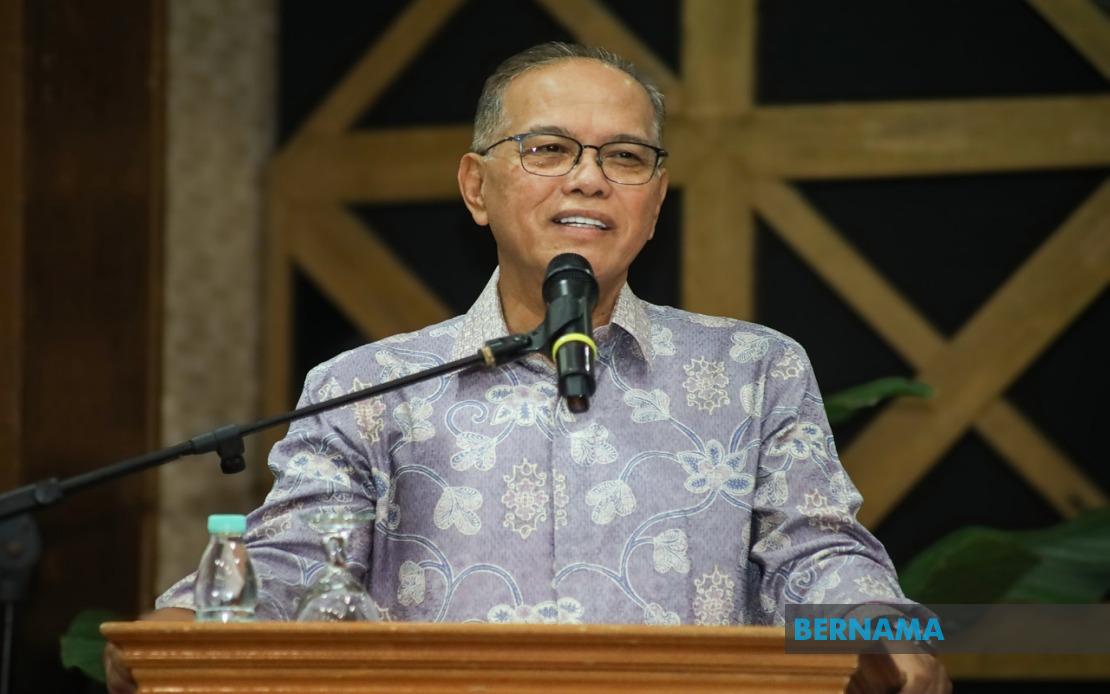
Pahang's state government is taking a forward-looking approach to workforce development, committing more than RM5 million in funding this year specifically designed to bolster its Technical and Vocational Education and Training (TVET) sector. Menteri Besar Datuk Seri Wan Rosdy Wan Ismail unveiled the investment during remarks at the 50th anniversary celebration of Politeknik Sultan Haji Ahmad Shah (POLISAS), signalling the state's determination to position itself competitively within Malaysia's evolving economic landscape.
The funding addresses multiple dimensions of TVET capacity-building across Pahang. Resources are being directed towards infrastructure modernisation and the expansion of training facilities operated under the Pahang Skills initiative, as well as programmes focused on talent identification and development through TVET Pahang. Additionally, a portion of the allocation is dedicated to establishing and enhancing the Pahang Rail Academy, reflecting the state's interest in supporting infrastructure-linked employment sectors that align with broader national development priorities.
Wan Rosdy articulated a strategic philosophy that distinguishes Pahang's approach from reactive policymaking. Rather than waiting passively for foreign direct investment or industrial development to materialise and subsequently scrambling to source qualified personnel, the state is deliberately building its human capital foundation in advance. This proactive positioning reflects a recognition that when multinational corporations or major industrial players evaluate potential investment locations, workforce readiness and educational infrastructure quality rank among decisive factors.
The logic underpinning this investment philosophy carries particular resonance for Southeast Asian readers familiar with regional competition for manufacturing and technology hubs. States that can demonstrate an existing pipeline of trained technicians, engineers, and skilled workers hold substantial competitive advantage over those requiring years to develop such capacity. Pahang's willingness to front-load educational expenditure suggests confidence that future economic growth will justify present outlays, while simultaneously reducing the period between initial investment announcements and productive capacity coming online.
Politeknik Sultan Haji Ahmad Shah, the institution hosting the Menteri Besar's remarks, exemplifies the track record that Pahang is attempting to build upon and extend. Since its establishment in 1976, the polytechnic has graduated approximately 60,000 individuals across technical disciplines, creating a significant alumni network embedded throughout Malaysian industries. Wan Rosdy identified POLISAS as a crucial strategic partner in Pahang's broader TVET ecosystem development, acknowledging that institutional continuity and reputation matter substantially when young Malaysians and their families evaluate educational pathways.
Beyond expanding physical infrastructure, the Menteri Besar emphasised the critical importance of strengthening connections between educational institutions and private industry partners. Classroom learning divorced from practical application and real-world workplace demands produces graduates whose qualifications, while formally recognised, may lack relevance to actual employer needs. By cultivating deeper partnerships between POLISAS and other TVET providers with employers across manufacturing, construction, hospitality, and technology sectors, Pahang aims to ensure that curriculum design remains responsive to market signals and that students graduate with competencies directly valued by hiring organisations.
The state's broader budgetary priorities, which Wan Rosdy outlined, position TVET within a comprehensive development strategy encompassing education, economic diversification, social welfare, infrastructure modernisation, and promotion of Islamic values. This multi-sectoral framing indicates that TVET funding represents part of a coordinated approach rather than an isolated initiative. Educational capacity-building is recognised as mutually reinforcing with infrastructure investment, since transportation networks, healthcare facilities, and economic opportunities collectively influence whether skilled workers remain in Pahang or migrate to other states offering superior overall quality of life.
Looking beyond state-level initiatives, Wan Rosdy publicly appealed to the federal government to extend special consideration to Pahang through Budget 2027. The Menteri Besar highlighted Pahang's substantial geographic expanse as justification for elevated development allocations, framing the appeal in terms of demographic equity and developmental need rather than factional politics. This regional advocacy reflects ongoing tensions within Malaysia's federal structure regarding resource distribution, with peripheral states arguing that their size and population warrant proportionately larger budgetary shares.
The specific mention of Budget 2027 indicates that state-level planning horizons extend several years into the future, with education and TVET investments embedded within medium-term fiscal frameworks. By publicly signalling budgetary priorities months ahead of legislative tabling in November, Wan Rosdy attempts to shape federal decision-making while simultaneously preparing Pahang's own constituents for the specific allocations that will be announced when the state budget is formally presented to the State Legislative Assembly.
For Malaysian readers and policymakers elsewhere in Southeast Asia, Pahang's TVET investment model offers instructive lessons regarding the sequencing of economic development. The assumption that capital accumulation and industrial expansion automatically generate skilled workforce availability has proven repeatedly incorrect across the region; instead, successful development states typically invest in human capital formation in advance of or concurrent with capital stock expansion. Pahang's RM5 million commitment, while significant at the state level, reflects a recognition that competitive advantage increasingly derives from education and skills rather than from natural resource endowments or geographic positioning alone.

