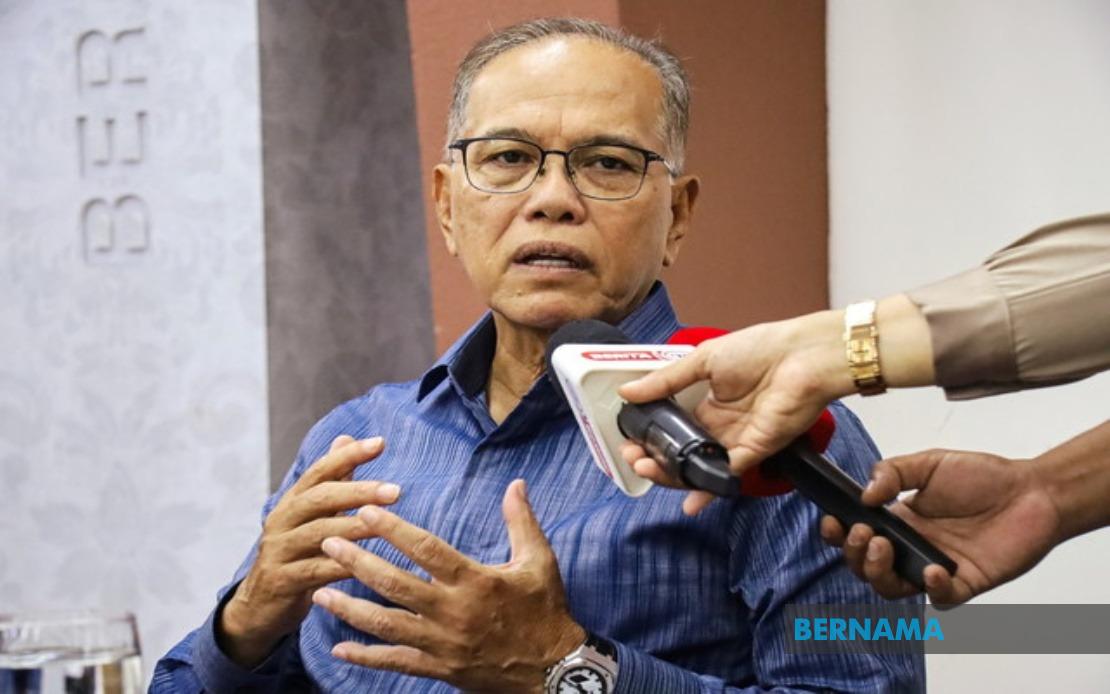
Datuk Seri Wan Rosdy Wan Ismail, chairman of Pahang Barisan Nasional and the state's Menteri Besar, has reaffirmed his party's determination to keep the power-sharing arrangement with Pakatan Harapan intact until the next national poll. Speaking in Kuantan at the unveiling of the 2026 Makmur Pahang Initiative's overseas education assistance programme, Wan Rosdy expressed confidence that the Unity Government partnership would endure through GE16, despite ongoing political uncertainties at federal and state levels.
The coalition between BN and PH in Pahang represents one of the more stable manifestations of Malaysia's post-election unity arrangements. The alliance was formally established in November 2022 following GE15, when neither bloc commanded an outright majority in the 42-seat Pahang state assembly. With BN and Perikatan Nasional each securing 17 seats and PH managing eight, the decision by the Pahang Regent Tengku Hassanal Ibrahim Alam Shah Al-Sultan Abdullah Ri'ayatuddin Al-Mustafa Billah Shah to approve a government combining the two larger opposition coalitions essentially set the template for navigating the fragmented political landscape that emerged from the 2022 elections.
Wan Rosdy's repeated emphasis on this commitment—he has maintained this public position across multiple recent statements—signals that Pahang's BN leadership views the continued partnership as strategically advantageous ahead of what many analysts expect will be a competitive electoral environment. By anchoring Pahang's governance to a visible, working coalition model, the Menteri Besar is attempting to project stability and competence to voters, particularly in a state where traditional BN strongholds have faced increasing pressure from both PN's Malay-Muslim messaging and PH's reform-oriented appeal.
The political arithmetic underlying this arrangement remains worth examining. BN's 17 seats, combined with PH's eight, yields a comfortable 25-seat majority in the assembly, providing what appears to be a durable working arrangement. However, the persistent strength of PN, which matches BN's seat count, means that any fracturing of the current coalition could rapidly destabilise state-level governance. Wan Rosdy's public statements therefore serve as much as internal party messaging—reinforcing to his own ranks that defection or sabotage would be unproductive—as they do external assurances about governance continuity.
Beyond coalition mathematics, Wan Rosdy has signalled openness to exploring cooperative arrangements with other political forces in preparation for GE16. This pragmatic hedging reflects the reality that coalition politics in Malaysia increasingly resemble fluid, negotiated settlements rather than rigid ideological alignments. By positioning Pahang BN as willing to work with multiple partners, Wan Rosdy is keeping his options open while maintaining the existing arrangement that has delivered executive power to his party in Kuala Lumpur's shadow state.
The overseas education initiative announced during the event underscores how state governments are leveraging their administrative portfolios to build goodwill ahead of the electoral cycle. A total of RM118,000 has been allocated to 118 students pursuing further studies in Egypt and New Zealand during the current academic year, with an additional USD1,000 per student channelled through Yayasan Pahang for those studying in Jordan and Morocco. The symmetry between the monetary allocation and student count—RM1,000 per student—suggests careful fiscal management and public relations calculation, ensuring maximum visibility for the expenditure.
Wan Rosdy's accompanying remarks about academic focus and mental preparation for overseas study reflect deeper concerns about brain drain and the need to maintain Malaysia's competitive edge in human capital development. His emphasis on courses incorporating Islamic elements and programmes aligned with strategic economic sectors demonstrates how even scholarship policies have become vectors for advancing particular governance philosophies and religious-cultural priorities. For Pahang specifically, investment in overseas education represents a form of soft power, allowing the state government to influence the professional trajectories and eventual political sympathies of the next generation of skilled citizens who will shape their regions.
The expansion and enhancement of the Makmur Pahang Initiative reflects broader Southeast Asian trends wherein state-level governments increasingly position themselves as direct investors in education and human development, rather than relying primarily on federal programmes. This decentralisation of educational opportunity also carries implicit political messaging—Pahang's BN-led administration is demonstrating responsiveness to constituent demands for improved access to quality tertiary education at a time when such opportunities remain competitive and geographically concentrated.
For Malaysian political observers, Wan Rosdy's sustained commitment to the Unity Government through GE16 offers a case study in how coalition stability functions at state level. Unlike federal coalitions, which face constant pressure from competing national narratives and leadership contests, state-level arrangements can sometimes achieve genuine durability when local leaders have adequate incentive to maintain the status quo. Pahang's relative political equilibrium—without the factional turbulence affecting some other states—suggests that the BN-PH partnership there may indeed survive until the next general election, provided no major upheaval occurs at the federal level that forces recalibration of state alignments.
Looking ahead, the real test of this unity arrangement will emerge during the GE16 campaign itself. Whether BN and PH can maintain disciplined messaging and prevent mutual recrimination when jockeying for votes in marginal constituencies remains uncertain. The partnership's longevity may ultimately depend less on public declarations of commitment from Wan Rosdy than on the patience of grassroots party members who have ceded executive access or patronage opportunities through the coalition compromise. As Malaysia's political landscape continues fragmenting, Pahang's managed coalition offers an instructive, if fragile, model for how diverse political forces can govern collaboratively—at least until the voters next decide.

