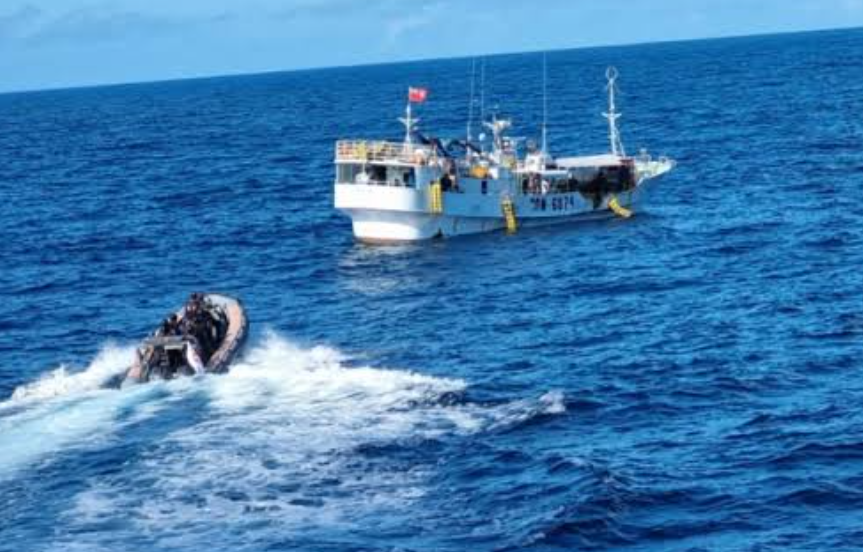
Authorities across the Pacific island region have stepped up enforcement action against foreign fishing operations, with at least four vessels from China and Indonesia detained this month for illegal fishing or licence violations. The Pacific Islands Forum Fisheries Agency confirmed the detentions occurred in Kiribati, Palau and Papua New Guinea, marking a significant effort to protect one of the world's most economically important marine zones. The move reflects growing frustration among Pacific island leaders over the loss of fishing revenue to foreign operators and comes as the region grapples with declining fish stocks amid climate change.
The enforcement surge was part of Operation Island Chief, an ambitious two-week surveillance initiative conducted between early and mid-August involving eleven Pacific island nations. During this coordinated crackdown, maritime authorities boarded more than 100 vessels across 28 million square kilometres of ocean, demonstrating unprecedented regional cooperation. The operation utilised sophisticated monitoring capabilities, including aerial surveillance provided by an Australian military aircraft and sea patrols conducted by a United States Coast Guard vessel alongside Pacific maritime police units. Despite this comprehensive approach, the FFA declined to release details about sixteen additional vessels flagged as suspicious during the operation.
For Pacific island economies, fishing represents far more than a commercial sector—it is a critical pillar of regional prosperity and household survival. The tuna industry alone generates approximately US$500 million annually in access fees paid by foreign fishing companies, supplemented by US$1.2 billion in export earnings. These figures underscore why control of fishing rights has become a paramount concern for island governments facing economic vulnerability. The fishery supports the livelihoods of roughly one-third of all Pacific households, making resource management a matter of both economic survival and political legitimacy for island leaders.
Yet the region's fishing wealth remains largely controlled by distant operators rather than local communities. The waters of the Pacific contain approximately half of the world's tuna stock, yet Pacific island nations process or handle only fifteen percent of their own catch. Instead, massive long-distance fishing fleets operating under foreign flags—predominantly from China, Taiwan, South Korea and Japan—harvest the resource under licensing agreements that transfer most profits overseas. These vessels pay licensing fees to island governments for access to exclusive economic zones, a relationship that has created dependency rather than genuine economic development.
The detention of foreign vessels has become an increasingly sensitive diplomatic issue in the region. Naming Chinese fishing companies suspected of illegal conduct carries political risk, given that Chinese firms operate substantial long-distance fleets and maintain joint venture partnerships with several Pacific island states. These economic relationships complicate enforcement efforts, as island governments must balance environmental protection and revenue maximisation against the prospect of damaging relationships with major investors and trading partners. The reluctance of some authorities to discuss operational details reflects this delicate balance.
The diplomatic dimension became particularly evident in last month's case involving Tuvalu, which holds formal recognition of Taiwan rather than the People's Republic of China. When Tuvalu authorities apprehended a Chinese vessel engaged in illegal fishing while transmitting false location data, the incident highlighted how geopolitical alignments intersect with maritime enforcement. The vessel was eventually released after twenty-four days in detention, following payment of a fine, according to Peter Hammarstedt, captain of the conservation vessel Sea Shepherd that assisted Tuvalu police during the patrol. This relatively light penalty suggests enforcement remains inconsistent across the region.
Historical data on enforcement patterns reveals the scale of violations committed by foreign fleets. Between 2008 and 2026, the Western and Central Pacific Fisheries Commission recorded 278 penalty notices issued to Chinese fishing boats, representing the second-highest infringement tally after Taiwan with 319 violations. These figures indicate systemic problems with compliance among major fishing nations and suggest that current enforcement mechanisms lack sufficient deterrent power. The sheer volume of violations suggests that fines and temporary detentions may be treated merely as operational costs by some fishing companies rather than meaningful penalties.
The upcoming Pacific Islands Forum summit, beginning August 30 in Palau, is expected to prioritise discussion of revised strategies for protecting fishing rights and expanding regional revenue. Pacific island leaders recognise that their bargaining position is weakening as climate change threatens fish stocks and reduces the attractiveness of licensing agreements. A coordinated regional approach to enforcement, resource management and value-capture could strengthen negotiating leverage. However, achieving consensus among nations with varying economic dependencies and political relationships remains challenging, particularly when wealthy fishing nations offer development assistance or investment alongside fishing rights.
For Malaysia and other Southeast Asian nations with significant fishing interests, the Pacific enforcement drive carries important implications. While Malaysia itself operates fishing vessels in Pacific waters, the crackdown principally targets Chinese and Indonesian fleets. Southeast Asian fisheries observers note that the operation reflects broader regional frustration with the dominance of distant-water fishing fleets and the inadequate return on fishing resources to local economies. The enforcement model being tested in the Pacific—involving multilateral cooperation, aerial surveillance, and coordinated boarding operations—could potentially be adapted in Southeast Asian waters, particularly in areas like the South China Sea where illegal fishing and unreported catch remain persistent problems.
The challenges facing Pacific island nations in reclaiming control of their fisheries mirror difficulties experienced throughout the developing world. Small island states possess limited enforcement capacity and are often outmatched by well-resourced foreign fishing companies. Building sustainable local fishing industries requires not only better enforcement but also significant investment in domestic processing infrastructure, skilled workforce development, and market access. Without addressing these structural challenges, Pacific islands will continue to serve as resource extraction zones for foreign commercial interests, regardless of how vigorously authorities pursue individual violators.
Moving forward, the success of Operation Island Chief will ultimately be measured not by the number of vessels detained but by whether it catalyses genuine shifts in how Pacific fishing resources are managed and distributed. The operation demonstrates that regional cooperation and modern surveillance technology can identify violations. However, converting enforcement capacity into sustainable economic benefits for Pacific communities requires complementary reforms to licensing agreements, local industry development, and equitable resource-sharing arrangements. Until island governments can meaningfully process and commercialise their own catch, detention of foreign vessels will remain a symbolic gesture rather than a fundamental solution to the underlying economic imbalance.

