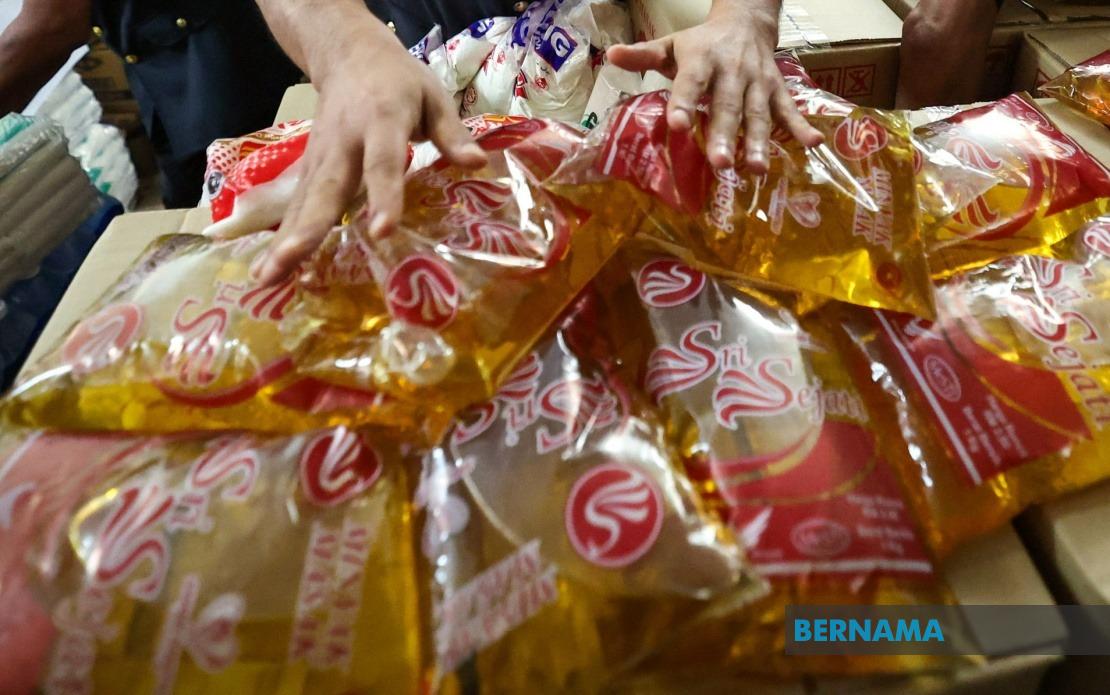
The Public Accounts Committee has delivered a damning assessment of Malaysia's cooking oil subsidy programme, recommending sweeping reforms to the supply chain that would cut monthly quotas by 60,000 metric tonnes and redirect billions in government spending toward genuine beneficiaries. Deputy chairperson Teresa Kok unveiled eight major recommendations following months of parliamentary inquiry into how the Ministry of Domestic Trade and Cost of Living manages price controls and subsidies, painting a picture of systemic waste that has cost taxpayers RM10.879 billion from 2019 through February 2025.
The investigation exposed a fundamental disconnect between policy intention and market reality. The government established the Cooking Oil Price Stabilisation Scheme with a quota of 60,000 metric tonnes monthly, yet evidence presented to the committee suggested actual domestic consumption ranges merely between 19,000 and 30,000 metric tonnes. This massive oversupply created the conditions for widespread diversion, with cheap subsidised one-kilogramme packets flowing into the black market and commercial sectors rather than reaching ordinary Malaysian households. The absence of any distribution mechanism specifically designed to identify and prioritise genuine end-users meant that foreigners and business operators gained access to government assistance never intended for them, undermining both fiscal prudence and the scheme's social objectives.
One of the most striking findings concerned halal certification standards. Despite JAKIM's improvements to its certification process, two of nine packaging companies involved in the programme still lacked halal certificates, a particularly embarrassing outcome for oversight bodies tasked with ensuring quality controls. This regulatory laxity extended beyond paperwork—the committee discovered that spoiled cooking oil stocks continued to attract government subsidies even as they sat warehoused at the packaging company level. There were no proper standard operating procedures to identify, isolate, and account for compromised inventory, meaning public money flowed to oil that would never reach consumer kitchens.
Retailer-level enforcement proved equally ineffective. Markets across the country increasingly featured conditional sales, stock hoarding, and prices exceeding the official RM2.50 ceiling, suggesting that the government's price controls existed more as fiction than functioning policy. Competition authorities and local enforcement agencies lacked either the resources or political will to maintain discipline along the supply chain. The committee's proceedings revealed how each node in the distribution network—from refiners through repackagers to wholesalers and retailers—exploited regulatory ambiguity to maximise private gain at public expense.
The profit margins embedded in the system particularly troubled investigators. Repackaging companies received a RM600 per metric tonne subsidy, yet actual processing costs appeared substantially lower. This gap suggested that repackagers faced little competitive pressure to improve efficiency or justify their compensation in relation to genuine operational expenses. The subsidy had become decoupled from any rational cost-benefit analysis, instead functioning as an entitlement for participants already embedded in the supply chain.
The committee also highlighted troubling market concentration patterns. Foreign companies controlled 67 per cent of the refining quota, while local government-linked companies such as FGV and Sari Dunia Guthrie managed only 10.6 per cent. This distribution reflected neither industrial logic nor national interest in developing domestic capacity. The imbalance meant that Malaysia's cooking oil subsidy—one of the government's largest commodity interventions—primarily enriched foreign shareholders whilst limiting opportunities for Malaysian enterprises to build competitive advantages through stable, predictable procurement arrangements.
To address these overlapping failures, the PAC proposed transitioning away from bulk subsidies toward fully digitalised targeted assistance through the eCOSS system. This shift would enable the government to verify eligibility in real time, cross-referencing subsidy recipients against national databases to prevent fraudulent claims and restrict benefits to Malaysian citizens and genuine households. The technology already existed; the barrier was political willingness to implement it comprehensively. Such a transition would require cooperation from retailers and wholesalers, whose current business models often depended on the opacity and chaos that characterised the present arrangement.
The committee also recommended that KPDN recalibrate subsidy rates for packaging companies to reflect competitive market conditions rather than administrative flat rates. This reform would inject cost discipline throughout the supply chain, encouraging repackagers to optimise operations and eliminate slack. Simultaneously, subsidy payments should flow only for undamaged cooking oil stocks, creating financial incentives to maintain quality and reduce waste. These measures, while apparently technical, would fundamentally reshape the commercial incentives facing supply chain participants.
Regarding the quota itself, reducing it from 60,000 to a figure aligned with actual needs—somewhere between 19,000 and 30,000 metric tonnes monthly—would immediately cut the fiscal bleeding whilst reducing opportunities for leakage. The PAC's recommendation implied that much of the current quota served no domestic purpose and existed primarily as cost transfer to government accounts. Such a reduction would require international negotiations around import arrangements and potential disruption to established trading relationships, but the fiscal case proved overwhelming.
Perhaps most significantly, the PAC recommended that the government study redistributing refining quotas toward competitive local companies, potentially including privately-owned enterprises alongside government-linked corporations. This proposal reflected recognition that the subsidy scheme had become a mechanism for transferring Malaysian public resources to foreign corporate entities without generating corresponding development of domestic industrial capacity. Reorientating procurement toward local firms could simultaneously reduce subsidy burden whilst building competitive Malaysian businesses capable of operating profitably without permanent government support.
These recommendations arrive as Malaysia grapples with fiscal constraints and competing demands across health, education, and infrastructure. The cooking oil subsidy programme illustrates how well-intentioned price controls, once embedded within bureaucratic structures and industry relationships, accumulate inefficiencies and unintended beneficiaries. The RM10.879 billion spent since 2019 might have funded substantial infrastructure, healthcare, or education initiatives had it reached only genuine target groups rather than dissipating across black markets and commercial users. Implementation of the PAC's proposals would test the government's appetite for administrative reform and willingness to disappoint entrenched interests within the supply chain.

