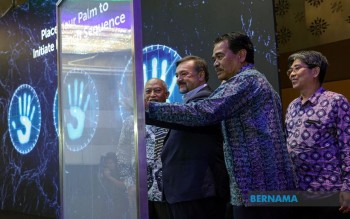
Pengurusan Aset Air Bhd (PAAB), the Minister of Finance's wholly owned entity, has introduced a landmark Sustainable Islamic Finance Framework that represents three significant national achievements for Malaysia's financial sector. The framework simultaneously marks the first incorporation of blue finance mechanisms into Islamic finance structures, secures Platinum Rated Framework certification—the highest available—and establishes the country's maiden sustainable Islamic finance framework tailored to align religious and environmental principles.
The development of this comprehensive framework involved extensive collaboration between PAAB and key financial institutions. Maybank Investment Bank Bhd served as the sole sustainability structuring adviser, providing expertise in designing financial instruments that meet both Islamic principles and environmental sustainability criteria. RAM Sustainability Sdn Bhd contributed independent verification as the framework's second party opinion provider, ensuring credibility and transparency throughout the certification process. This partnership underscores how Malaysia's financial ecosystem is mobilising to address concurrent challenges of Islamic finance development and environmental stewardship.
The framework functions as an enabling mechanism for PAAB to channel financing activities through internationally recognised sustainability standards while maintaining strict adherence to Islamic finance values. By establishing this dual-compliance platform, PAAB creates pathways for issuing sustainable sukuk instruments that target water-related infrastructure and environmentally beneficial projects. The framework specifically prepares the ground for blue sukuk offerings, a novel instrument category that directs capital toward water asset development and management.
PAAB Chairman Datuk Seri Jaseni Maidinsa highlighted the tangible scale of the organisation's water sector engagement, noting that cumulative migrated and committed investments had reached RM46.88 billion as of December 31, 2026. These investments have translated into concrete infrastructure outcomes that directly enhance Malaysia's water supply resilience. Twenty-one operational water treatment plants now collectively process 2.085 billion litres daily, providing treated water to households and businesses nationwide. Additionally, PAAB's portfolio encompasses forty-two completed reservoir projects with combined storage capacity of 783 million litres, creating buffer capacity against seasonal variations and drought conditions.
Beyond treatment and storage infrastructure, PAAB has invested significantly in pipeline replacement and rehabilitation programmes. Approximately 3,263 kilometres of new pipeline have been installed to retire ageing water distribution networks that contributed to substantial losses through leakage. This infrastructure modernisation directly reduces non-revenue water—the critical metric measuring water lost before reaching paying customers—and improves overall supply reliability across distribution zones. The cumulative effect of these investments positions Malaysia's water sector on a more sustainable operational footing, extending service viability for future demographic expansion.
Finance Minister II Datuk Seri Amir Hamzah Azizan, who officiated the framework launch, announced that PAAB intends to issue its inaugural blue sukuk by the third quarter of this year. This forthcoming instrument carries particular significance as it will reportedly constitute the first blue finance instrument globally to adopt a taxonomy jointly developed by PAAB, Maybank, and RAM Sustainability under guidance from the Securities Commission Malaysia. The taxonomy framework provides standardised criteria for categorising water assets and projects eligible for blue sukuk financing, establishing quantifiable metrics for environmental impact measurement.
The blue sukuk structure introduces an innovative approach to asset securitisation by utilising water infrastructure assets as collateral backing sukuk repayments. Rather than relying on conventional corporate debt structures, the blue sukuk model ties investment returns directly to the performance and cash generation of underlying water assets. This asset-backed approach creates transparency regarding how capital flows through the financial system into productive water infrastructure, allowing investors to clearly trace the relationship between their financing and tangible water security improvements. The model potentially attracts investors specifically motivated by environmental outcomes alongside financial returns.
From a policy perspective, the framework innovation reflects Malaysia's strategic recognition that insufficient investment in water sector modernisation creates systemic risks across multiple domains. Water supply inadequacy cascades into public health vulnerabilities, economic productivity constraints, and social stability challenges. By developing new financing mechanisms that make water infrastructure investment more accessible and attractive to capital markets, Malaysia seeks to close persistent funding gaps that have impeded network rehabilitation and capacity expansion. The blue sukuk mechanism addresses a genuine market failure wherein environmental benefits of water projects were not reflected in traditional financing costs.
The framework's development also signals Malaysia's positioning within global sustainable finance movements. The Platinum certification indicates that PAAB's approach meets or exceeds international best practice standards for sustainable finance governance. This credential enhances Malaysia's credibility when attracting international institutional investors increasingly mandated to allocate portions of portfolios toward verified sustainable investments. As global capital increasingly segregates sustainable and conventional investment streams, frameworks receiving platinum-level validation become competitive advantages for issuing entities seeking to access premium-priced capital.
The implications for Malaysia's water sector extend beyond immediate financing availability. By establishing a standardised framework and taxonomy for blue sukuk, PAAB creates replicable structures that other entities and government agencies might subsequently utilise for water-related financing. The framework potentially becomes infrastructure-level public good, lowering transaction costs and information asymmetries for future market participants. This systemic effect could catalyse broader deepening of sustainable finance markets in Malaysia across other environmental asset classes.
For Malaysian and regional investors, the blue sukuk opportunity represents a novel avenue for combining Shariah-compliant investment exposure with environmental impact conviction. Institutional investors managing Islamic finance portfolios face limited options for water sector participation, creating unmet demand that PAAB's blue sukuk directly addresses. The inaugural issuance will likely establish pricing and market conventions that subsequent entrants can reference, accelerating market maturation and improving execution terms for future issuers.
The framework also demonstrates how financial innovation can simultaneously advance multiple national priorities. Water security, Islamic finance development, and sustainable capital markets expansion are distinct policy objectives that PAAB's initiative integrates into unified institutional structures. This convergence approach reflects sophisticated policy design that recognises complementarities between environmental sustainability, religious values, and financial system modernisation. The successful execution of this framework may provide templates applicable to other sectors where Malaysia seeks to deploy capital toward strategically important infrastructure whilst maintaining Islamic finance principles.

