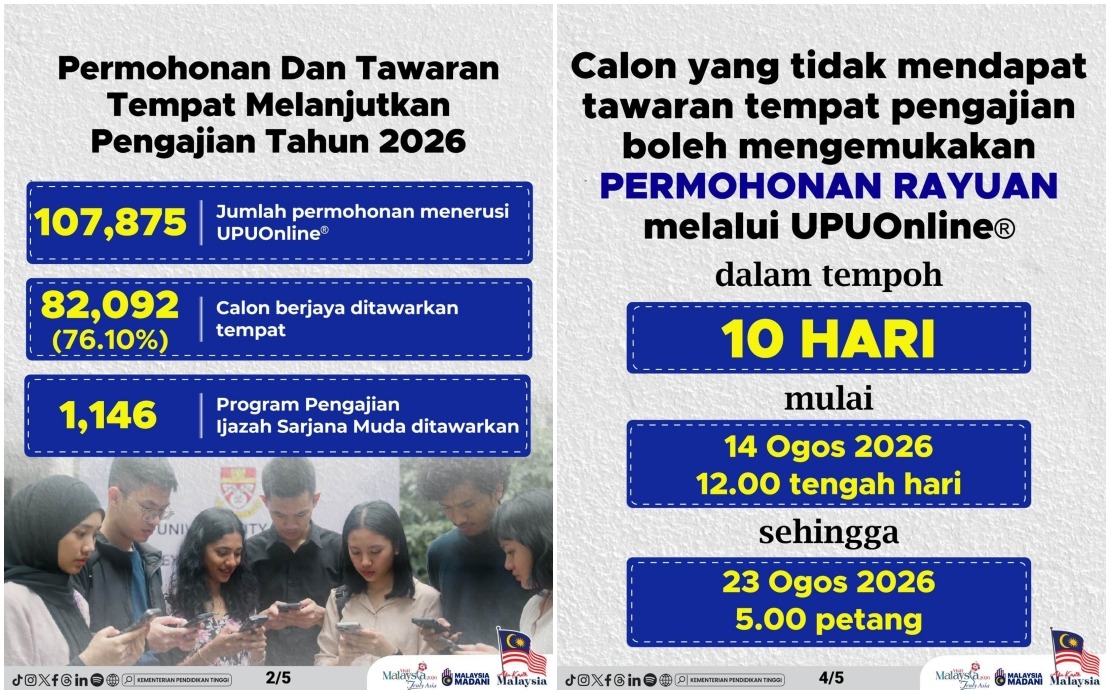
The Ministry of Higher Education (KPT) has announced that 82,092 candidates will begin undergraduate studies at Malaysia's 20 public universities this year, marking a significant intake in the national higher education system. This figure, representing 76.10 per cent acceptance of 107,875 qualified applicants, reflects the continued demand among Malaysian students seeking places at government-funded tertiary institutions, which remain the primary pathway for many seeking degree-level qualifications.
The selection process drew from a substantial pool of applicants competing for 1,146 different bachelor's degree programmes offered across the public university network. The breadth of programme offerings underscores the diversity of academic disciplines available within Malaysia's public higher education sector, spanning fields from engineering and medicine to humanities and social sciences. This range aims to accommodate varied career aspirations and academic interests among the incoming cohort.
Admissions were conducted strictly according to meritocratic principles, with KPT arranging all eligible candidates by their merit scores in descending order. This approach ensures that placement decisions are based on academic performance rather than other considerations, maintaining the integrity of the selection system. The merit-based framework has long been central to Malaysia's public university intake process, aligning with broader national efforts to ensure fair and transparent access to higher education opportunities.
For the significant minority of applicants who did not secure placement in this initial round, KPT has established a structured second-chance mechanism. Beginning at noon on August 14 and continuing until 5pm on August 23, 2026, unsuccessful candidates may lodge appeals through the UPUOnline portal to request reconsideration. This appeal window, lasting ten days, provides an opportunity for candidates to contest their outcomes or seek alternative placement options before the academic year fully commences.
The appeal process represents an important safeguard within Malaysia's university admission system, acknowledging that initial placements may not capture all eligible candidates who could contribute meaningfully to their chosen institutions. For students and parents navigating what is often a high-stakes process, the availability of this recourse offers a formal avenue to address placement concerns without requiring external intervention.
From a systemic perspective, the 76 per cent conversion rate of eligible applications into successful offers reflects the ongoing tension between demand for public university places and institutional capacity. While nearly 25,000 eligible candidates remain unplaced after the initial round, this proportion indicates relatively healthy absorption of the qualified applicant pool. However, the gap also highlights persistent challenges in expanding public university intake to meet the volume of aspiring students seeking subsidised higher education.
The public university intake carries particular significance for Malaysian society, as these institutions educate the majority of the nation's degree-holding workforce and shape the intellectual and professional landscape. The diversity of successful candidates reflects Malaysia's commitment to broadening educational access, though questions persist regarding equitable distribution across geographic regions, socioeconomic backgrounds, and ethnic communities.
The ministry's statement extended congratulations to successful candidates and encouraged them to maximise their university experience. This framing emphasises the transformative potential of higher education and the responsibility placed upon students to derive full value from their studies, both personally and in terms of their future contribution to the economy and society.
Looking beyond this intake cycle, the scale of applications and the proportion of eligible candidates suggests sustained strong interest in public university education among Malaysians. This demand underscores the ongoing relevance of these institutions as engines of social mobility and professional development, particularly for middle and lower-income households for whom public universities offer more affordable alternatives to private institutions.
The announcement arrives amid broader debates within Malaysia's higher education sector regarding quality, capacity, and inclusivity. Policymakers continue weighing how best to accommodate rising numbers of qualified students while maintaining educational standards and ensuring equitable access across different demographic groups. The intake figures provide empirical data informing these discussions, demonstrating both the appetite for public university education and the current limitations of the system.

