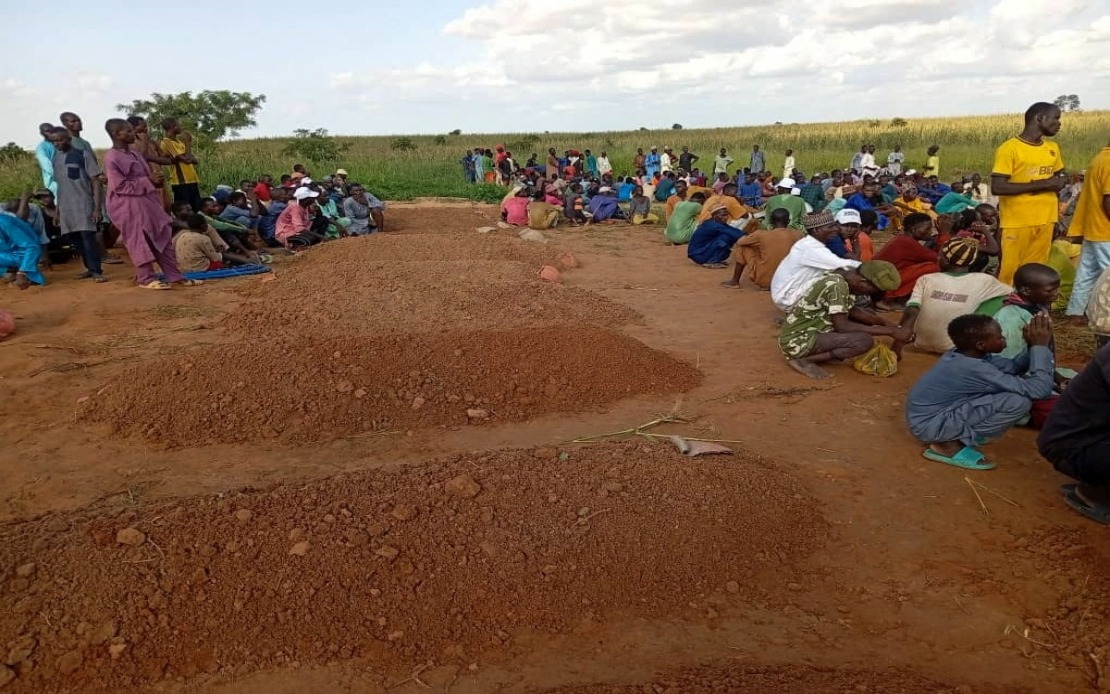
A devastating maritime disaster claimed the lives of over 40 people, the majority of them children, when an overloaded vessel capsized in northwestern Nigeria's Sokoto State on Thursday. The boat, carrying farmers and agricultural labourers bound for rice fields, went down near Gorau town in the Goronyo Local Government Area, prompting authorities to launch rescue operations that continued into the evening as divers searched the waterway for additional victims and survivors.
Initial death toll estimates from Nigeria's National Inland Waterways Authority (NIWA) placed the confirmed fatalities at 40, though officials acknowledged these numbers remained preliminary and subject to revision as recovery efforts progressed. A local witness provided a more somber accounting, reporting approximately 47 bodies laid out at a community mosque in Gorau awaiting traditional burial rites that evening. The discrepancy between official figures and eyewitness accounts reflects the confusion that typically characterises the immediate aftermath of such disasters in remote areas with limited infrastructure for coordinated emergency response.
Nasiru Adamu, a lawmaker serving the affected region in the Sokoto State House of Assembly, revealed that the vessel had been transporting nearly 70 passengers at the time of the tragedy. He stated that whilst over 40 bodies had been recovered, rescue teams had also managed to pull 16 survivors from the water, suggesting ongoing efforts to locate any remaining victims. The fact that rescue operations continued hours after the initial capsizing underscores both the scale of the disaster and the challenges faced by local responders in locating and retrieving victims from waterway conditions.
The composition of those aboard the doomed boat painted a particularly tragic picture. Adamu reported that most passengers fell within the 10 to 15 age bracket, indicating that school-age children comprised a significant portion of those who perished. This demographic reality transforms the disaster from a general maritime accident into a catastrophe specifically affecting the region's youth, with implications for families and communities already facing economic hardship in northwestern Nigeria.
Personal accounts from residents amplified the human cost of the tragedy. Samaila Garba, a 55-year-old community member, recounted losing his 13-year-old granddaughter, Jamila Usman, in the incident. Garba's independent body count of at least 42 victims, with a composition predominantly comprising women and children, provided crucial ground-level verification of the disaster's severity and composition. Such personal testimonies often reveal patterns that official statistics alone cannot convey, illustrating how the tragedy rippled through extended family networks and household structures across the affected communities.
The circumstances surrounding the boat's journey illuminate why residents of this region undertook such perilous travel during the rainy season. Passengers were commuting to agricultural holdings to engage in rice planting and harvesting operations, economic activities essential to local livelihoods in an agricultural region where farming provides the primary income source for many households. The decision to transport such large numbers on a single vessel reflected both the necessity of reaching distant fields and the economic pressures that incentivise overcrowding despite obvious safety risks.
This tragedy represents merely the latest chapter in a troubling pattern of maritime disasters on Nigeria's inland waterways, a pattern particularly pronounced during the rainy season when water levels rise and weather conditions become unpredictable. The underlying causes—chronic overcrowding, deferred maintenance on vessels, and inadequate enforcement of safety regulations—remain stubbornly persistent despite repeated loss of life. Regulatory bodies appear unable or unwilling to impose the stringent capacity restrictions and mandatory safety equipment standards necessary to prevent foreseeable tragedies.
Nigeria's history with inland waterway disasters extends well beyond Sokoto State. In January of this year, at least 25 individuals perished when a vessel with structural defects sank in Yobe State in northeastern Nigeria, demonstrating that waterway fatalities occur across multiple regions and persist throughout the year. The recurrence of such incidents suggests systemic failures rather than isolated accidents, pointing toward inadequate infrastructure investment, insufficient regulatory capacity, and weak political will to prioritise maritime safety among inland populations who lack the political influence of urban constituencies.
For Malaysia and other Southeast Asian nations, Nigeria's experience with inland waterway safety offers cautionary lessons. Developing countries throughout the region that rely on waterborne transportation across rivers, lakes, and coastal routes face comparable pressures to prioritise economic throughput over safety compliance. The tendency to overload vessels, defer maintenance, and underinvest in enforcement mechanisms appears to transcend national boundaries, suggesting that economic desperation and weak institutional capacity create similar conditions wherever they coexist. Malaysian policymakers monitoring disaster management practices internationally might draw lessons from Nigeria's failures regarding the necessity of sustained investment in maritime safety infrastructure and the political costs of tolerating preventable tragedies.
The Sokoto State capsizing also reflects the particular vulnerability of agricultural populations dependent on seasonal travel to farmland. Rainy season flooding creates both the conditions that make boat transport necessary and the weather hazards that increase accident risk. Communities with limited alternative transportation infrastructure face a tragic bind: travel by boat is economically essential despite known dangers, creating a form of coerced risk-taking that disproportionately affects vulnerable populations including children and women.
As rescue operations concluded and authorities began the process of formal casualty confirmation, the focus will inevitably shift toward accountability and prevention. Whether Sokoto State authorities initiate investigations into vessel operator compliance, NIWA's regulatory effectiveness, or systemic failures in capacity enforcement remains to be seen. Historical patterns suggest that public attention wanes quickly following major disasters in developing countries, particularly those affecting rural populations remote from media centres and political decision-makers. Breaking this cycle would require sustained commitment to maritime safety as a governance priority rather than a periodic response to tragedy.

