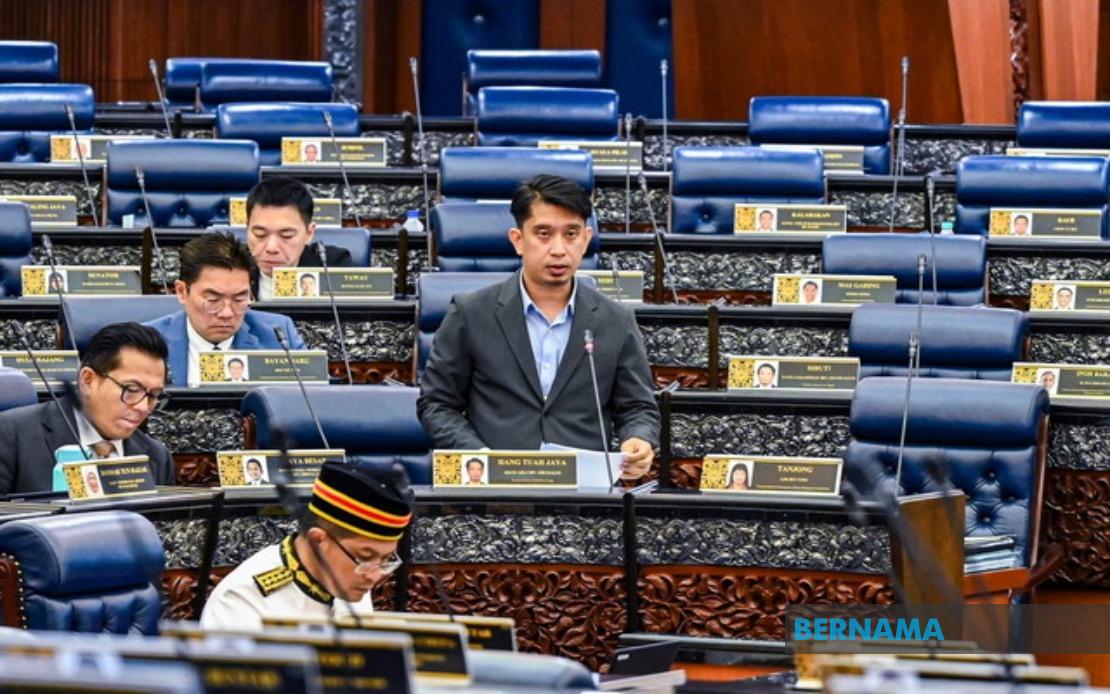
Malaysia's commitment to building a science and technology workforce appears evident in the latest enrolment figures presented to parliament, with Deputy Minister of Higher Education Adam Adli Abd Halim revealing that 326,419 out of 556,556 students entering public institutions of higher learning from 2023 through March 2026 chose STEM subjects. The remaining 230,137 students pursued non-STEM programmes, marking a clear institutional tilt toward fields that policymakers view as essential for the nation's economic future.
The enrolment split underscores Malaysia's deliberate strategy to align university intake with sectoral needs, particularly in emerging industries that have become focal points of national development plans. Adam Adli explained that this distribution reflects the system's emphasis on cultivating expertise across science, technology, engineering and mathematics disciplines, recognising that these fields will drive growth in artificial intelligence, semiconductor manufacturing, automation systems, digital transformation and renewable energy sectors over the coming decade.
The underlying policy framework guiding these institutional priorities is the National Science, Technology and Innovation Policy spanning 2021 to 2030, jointly overseen by the Ministry of Science, Technology and Innovation. However, the deputy minister clarified that this long-term strategy does not prescribe rigid targets for specific numbers of engineers by discipline. Instead, it adopts a more flexible human capital model centred on building what policymakers term the Researchers, Scientists, Engineers and Technologists ecosystem, acknowledging that talent development extends beyond traditional engineering roles into adjacent technical and research professions.
Under this broader framework, Malaysia has set a distinctive benchmark: achieving a ratio of 200 RSET professionals for every 10,000 workers across the national economy by 2030. This metric-based approach provides flexibility while maintaining clear strategic direction. When applied to Malaysia's projected workforce of approximately 17.06 million people, the calculation yields a requirement for roughly 341,200 RSET professionals by the end of the decade, a figure that has influenced higher education planning across both public and private institutions.
The questioning in parliament also ventured into the comparative landscape of STEM enrolment between public universities and private higher education institutions, a distinction that reveals Malaysia's multi-sector approach to skills development. While the deputy minister provided specific data for public institutions, the parliament was also asked about enrolment patterns in the private sector, reflecting growing recognition that IPTS institutions contribute meaningfully to Malaysia's talent pipeline, particularly in niche technical programmes that attract both domestic and international students.
Adam Adli acknowledged that sustaining this expansion in STEM education requires ongoing investment in institutional capacity. The ministry's strategic response centres on the Malaysian Technical University Network, comprising four designated universities receiving enhanced focus and resources to develop expertise in high-demand specialisms. This concentrated approach differs from spreading resources uniformly across the public higher education sector and reflects a policy preference for building centres of excellence rather than incremental expansion across all campuses.
A supplementary parliamentary query highlighted concern about the infrastructure and human resources necessary to support rapid growth in artificial intelligence, semiconductor and digital engineering programmes. The questioner, Onn Abu Bakar from Batu Pahat, pressed the ministry on its plans to recruit specialist lecturers, expand research laboratories and acquire sophisticated equipment needed to deliver these technically demanding programmes at international standards. These concerns underscore the practical challenges of translating enrolment targets into quality educational delivery and graduate competence.
The infrastructure question resonates across Malaysia's higher education landscape, where the transition toward technology-focused curricula requires simultaneous investment in physical facilities and human expertise. Developing lecturers with real industry experience and research credentials, particularly in fast-moving fields like artificial intelligence, remains constrained by global competition for talent and budget limitations. The concentration of MTUN resources may help, but questions persist about whether this approach adequately supports non-designated universities with significant STEM programmes.
Malaysia's approach to STEM enrolment planning reflects broader Southeast Asian trends toward technology-driven development, though the region's labour markets and industrial capacity vary considerably. The 341,200 RSET target by 2030 positions Malaysia ambitiously within regional benchmarks, competing alongside Singapore, South Korea and other developed economies for technical talent. Whether Malaysia's public universities can produce graduates matching the quality expectations of high-technology employers remains an ongoing challenge, particularly as multinational semiconductor and AI companies establish regional operations.
The parliament's discussion also touched on private higher education's complementary role, though specific enrolment data for IPTS students in STEM fields was not disclosed. Understanding the full STEM pipeline requires visibility into both public and private sectors, as numerous IPTS institutions serve specific industry niches and increasingly attract international students seeking technical qualifications. This two-tier system, when functioning effectively, provides pathways suited to diverse student needs and labour market demands.
Moving forward, the ministry's stated commitment to aligning programme offerings, institutional capacity and talent development with industry requirements suggests ongoing dialogue between universities and employers. However, translating strategy into consistent delivery across all campuses remains complex, particularly given Malaysia's geographic dispersal and varied resource availability. The deputy minister's emphasis on the MTUN universities indicates that not all public institutions will expand equally in technical fields, a reality that demands careful consideration of regional equity in access to STEM education.
The enrolment trajectory outlined in parliament also requires monitoring against actual graduate employment outcomes and industry feedback on skill relevance. Intake numbers alone do not guarantee that programmes produce graduates meeting employer expectations, particularly in rapidly evolving fields like AI and semiconductors where curriculum content risks becoming dated. Malaysia's higher education system must therefore balance enrolment targets with quality assurance, a tension that will intensify as STEM programmes expand and international competition for top technical talent intensifies across the region.

