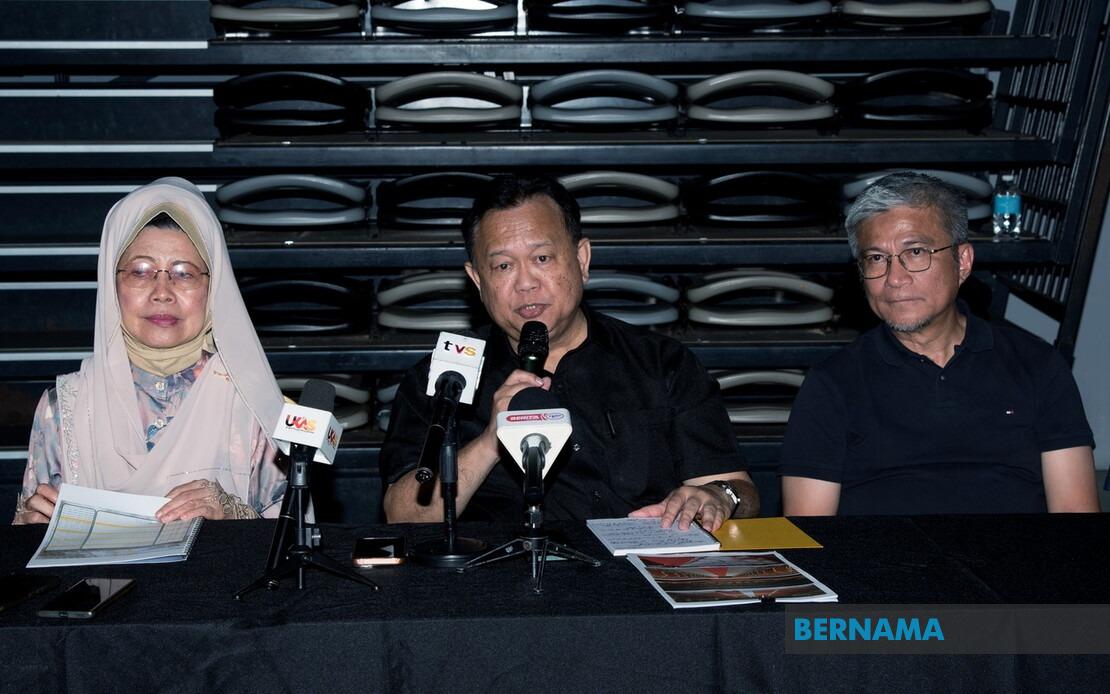
Sarawak's dominant political party is gearing up for a significant gathering in its Central Zone this month, with preparations now in full swing for what party officials describe as a landmark convention. The Parti Pesaka Bumiputera Bersatu Sarawak (PBB) expects to welcome more than 3,000 delegates representing 24 branches to the Sibu Indoor Stadium on July 26, underscoring the scale and importance the party attaches to the event. The assembly marks a pivotal moment for the party apparatus to engage with grassroots membership and chart its strategic direction.
Party secretary-general Datuk Seri Alexander Nanta Linggi confirmed that the Central Zone will lead the way among the party's regional divisions in holding its special convention this year. The southern, Betong, and northern zones are scheduled to follow suit after the Central Zone completes its proceedings, suggesting a carefully orchestrated rollout of party activities across Sarawak's geography. Linggi's announcement came after an organising committee convened to fine-tune logistics and ensure the event proceeds without disruption, reflecting the procedural rigour the party applies to major gatherings.
The convention's agenda reveals the substantive focus party leadership intends to bring to the floor. A dedicated presentation on the Malaysia Agreement 1963 will feature prominently, a choice that underscores the ongoing significance of the constitutional framework governing Sarawak's place within the Malaysian federation. For Malaysian observers, the emphasis on MA63 is particularly noteworthy, as discussions around the agreement have intensified across Southeast Asia in recent years, with Sarawak and Sabah periodically raising questions about the implementation and interpretation of its terms. By platforming MA63 at a mass party gathering, PBB signals its intention to engage delegates on constitutional matters that shape the state's autonomy and development trajectory.
Equally prominent will be deliberations on the Post COVID-19 Development Strategy 2030, a policy framework designed to steer Sarawak's economic recovery and longer-term prosperity following the pandemic's disruptions. This forward-looking agenda indicates the party's preoccupation with post-recovery positioning and competitive advantage in the region's shifting economic landscape. The inclusion of development strategy alongside constitutional discussion suggests an effort to bind together institutional resilience with pragmatic economic planning, a combination that resonates with voter concerns about both stability and progress.
Beyond these headline items, party officials have indicated that political matters will occupy convention time, though specifics remain unelaborated. The breadth of this final category hints at potential discussion of internal party dynamics, positioning for forthcoming electoral contests, or regional political developments that affect Sarawak's interests. For a party that has dominated state politics for decades, such conventions serve as critical moments for recalibrating membership engagement and reasserting leadership priorities.
Sarawak Premier Tan Sri Abang Johari Tun Openg, who doubles as PBB president, will preside over the convention and address the assembled delegates. His presence and remarks will inevitably carry weight as the state's chief executive and the party's supreme figurehead, likely setting the tone for how the party frames its challenges and opportunities in the coming period. The dual role of premier and party president creates a natural platform for articulating the government's policy direction while simultaneously strengthening party cohesion and messaging discipline.
The choice of Sibu as the venue for the Central Zone convention carries symbolic and practical significance. As one of Sarawak's major urban centres and a commercial hub, Sibu serves as a natural gathering point for delegates from the densely populated central region. The city's established infrastructure and accessibility make it a logical host for large-scale party events, while its status as a significant political constituency reflects its weight within the broader Sarawak electoral map.
For Malaysian political observers, the PBB convention represents a routine but meaningful exercise in party organisation and member mobilisation. As the backbone of Sarawak's ruling coalition and a key component of the broader Malaysian political establishment, PBB's internal proceedings warrant attention as indicators of party health, factional dynamics, and strategic thinking. The scale of the gathering—over 3,000 delegates—demonstrates the organisational capacity and membership reach of a party that has anchored Sarawak governance for generations.
The convention's emphasis on MA63 also carries implications for Malaysia's broader federal architecture and state-federal relations. Sarawak's periodic emphasis on the constitutional underpinnings of its association with Malaysia reflects ongoing discussions about fiscal distribution, legislative authority, and regional autonomy that periodically surface in Malaysian politics. By dedicating convention space to MA63 examination, PBB positions itself as attentive to these foundational questions while potentially building internal consensus on how the party should approach federal-state negotiation in future policy cycles.
The planned succession of zone conventions across southern, Betong, and northern regions will allow PBB to cascade messaging and policy directions from the Central Zone gathering outward, ensuring consistent communication across the party's territorial structure. This tiered approach to party organisation reflects sophisticated political management and the premium placed on maintaining message discipline across disparate constituencies and membership cohorts. As Sarawak continues to navigate its role within Malaysia's federal system while pursuing development objectives, such internal party mechanisms become vehicles through which policy consensus is built and communicated to the broader electorate.

