Singapore's newly launched SG Partnerships Fund has become a magnet for community innovators, with over 200 projects submitting applications for grants under the S$50 million scheme designed to incubate ground-up social initiatives. Announced by Prime Minister Lawrence Wong during his February 2026 Budget speech, the fund officially commenced operations in April 2026 and represents a significant shift in how the government supports citizen-led solutions to community challenges. The programme underscores a broader strategic pivot toward enabling Singaporeans to identify and address local problems through their own enterprise and creativity, rather than relying solely on top-down policy interventions.
The fund's architecture reflects a deliberate attempt to democratise access to development capital across different scales of ambition and organisational maturity. The seed tier operates as the entry point, offering up to S$5,000 to individuals, nascent grassroots groups, and newly registered Singapore-based organisations testing pilot ideas in their neighbourhoods. According to Hasliza Ahmad, director of the Singapore Government Partnerships Office (SGPO) which administers the scheme, this smallest grant category has paradoxically proven the most attractive to applicants. The insight reveals a fundamental truth about community mobilisation: many aspiring social entrepreneurs possess viable ideas but lack the initial capital to move beyond planning stages. The seed tier removes that barrier, enabling experimentation without prohibitive financial risk.
Above this sits the sprout tier, allocating up to S$50,000 for established organisations aiming to generate sector-wide impact beyond their immediate communities. The scale tier, newly launched in July 2026, represents the fund's apex, offering grants up to S$1 million for mature organisations with proven track records seeking to expand their influence across multiple constituencies or geographies. This tiered architecture mirrors venture capital funding models, where early-stage ideas receive modest validation grants before advancing to larger scale-up rounds. The progression creates natural checkpoints for demonstrating feasibility and impact before committing substantial sums, a prudent approach given the inherent uncertainty of social innovation initiatives.
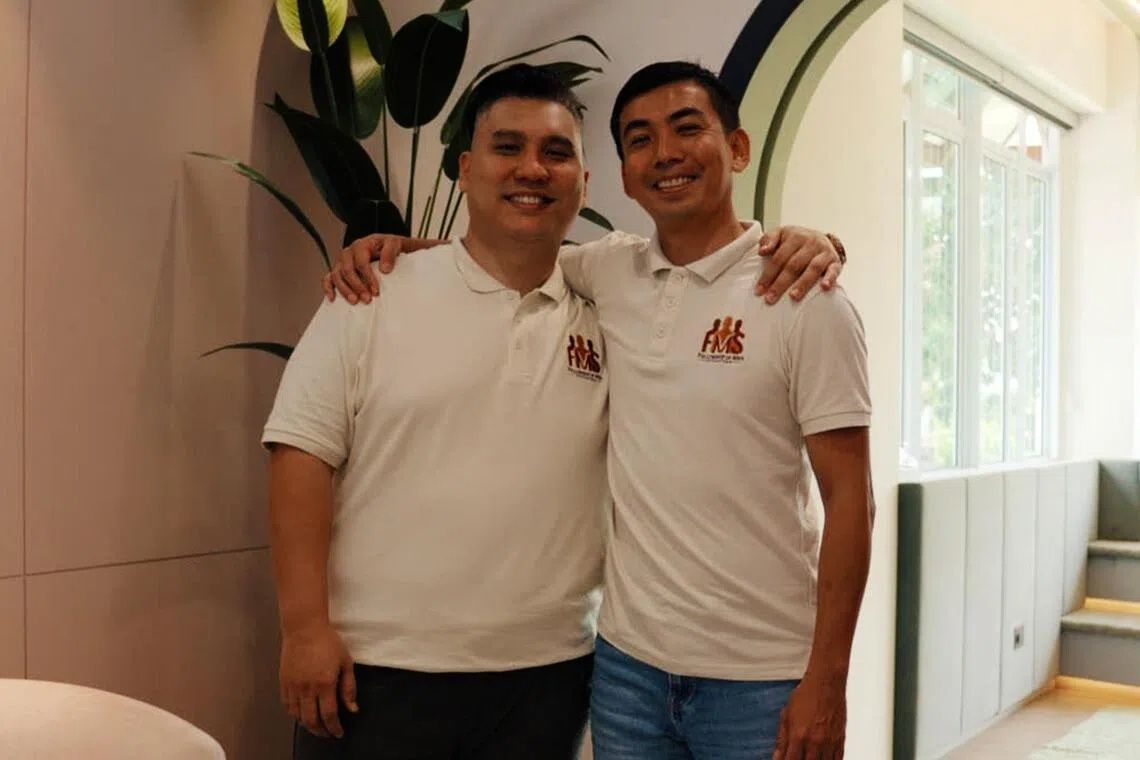
One compelling example of seed-tier impact involves Fellows for Movement Singapore, a non-profit launched in January 2026 by Ben Ang and Ismail Didih Ibrahim. The pair met five years earlier at a family service centre while collaborating on support programmes for men struggling with violence and aggression. Their evolution toward prevention-focused work rather than crisis intervention led them to establish their organisation, which combines community engagement, mentoring, and group activities to encourage men to seek emotional support and professional help when struggling. The culture of male emotional reticence remains deeply embedded across many Asian societies, including Singapore, making their work particularly significant in contexts where traditional notions of masculinity often inhibit vulnerability and help-seeking behaviour.
The S$5,000 seed grant proved transformative for Ang and Didih's fledgling initiative. Without external funding, they had planned to conduct a family engagement session using Ang's home kitchen, a logistical constraint that would have severely limited both the session's scale and professional quality. The seed grant enabled them to hire a professional culinary space in Geylang, accommodating 24 men alongside their wives and children. Over three hours, participants engaged in guided conversations exploring self-care, masculinity, relationships, and help-seeking while participating in hands-on cooking activities. This combination of practical engagement and structured dialogue created a non-threatening entry point for discussing sensitive topics, exemplifying how modest grants can unlock disproportionate social value when paired with thoughtful programme design.
Another seed-grant recipient, 21-year-old LASALLE College of the Arts student Loke Wai Yee, identified a structural gap in Singapore's seasonal charitable giving infrastructure. During the annual angel tree season, where shopping malls display wish lists from disadvantaged children seeking Christmas gifts, Loke observed that trees appeared only in certain mall locations and that expensive gift prices excluded younger or budget-conscious donors. Together with twelve friends, she conceived Little Wishes, an online platform enabling donors to support disadvantaged children by selecting gifts aligned with their spending capacity. The platform curates gift options across multiple price points, matching contributions to child beneficiaries and thereby extending giving opportunities beyond the geographic and financial constraints of traditional mall-based angel trees.
Loke's team initially planned to develop their website independently, but the complexity and technical demands of creating a user-friendly, professionally functional platform exceeded their capacity. The S$5,000 seed grant proved instrumental in securing professional web development expertise, with the site scheduled for August 2026 launch. Beyond the direct funding, the SGPO provided intangible support equally valuable as the monetary component: it connected the team with social service agencies, identified complementary funding sources, and offered ongoing mentorship guiding the project from concept to operational reality. This holistic support model recognises that emerging initiatives often require scaffolding across multiple dimensions—technical expertise, institutional linkages, and strategic guidance—not merely capital injections.
Senior Minister of State for Culture, Community and Youth Low Yen Ling, speaking at the SGPO's inaugural community exchange event on July 4, 2026, characterised the tiered structure as creating a developmental pathway for Singaporean citizens to cultivate and scale their ideas. The exchange event itself, held at the Common Ground Civic Centre in Bedok North, brought together approximately 100 participants representing funded initiatives, applicants, and interested community members. This convening function extends the programme's value beyond financial distribution, creating spaces where practitioners can share learnings, build networks, and identify potential collaborations. Such ecosystem-building mechanisms often yield returns exceeding individual grant impacts, as practitioners learn from peers' experiences and identify opportunities for complementary or integrated efforts.
Hasliza Ahmad's observation that the seed tier's popularity reflects citizens' genuine desire to initiate change without requiring grand-scale ambitions carries profound implications for community development philosophy. The insight inverts conventional assumptions that social innovation requires substantial initial capitalisation and organisational complexity. Instead, it suggests that many individuals possess practical ideas addressing genuine community needs but lack mechanisms to operationalise them. By reducing barriers to entry through modest seed grants, the fund activates latent social entrepreneurship that might otherwise remain unrealised due to financial constraints. This bottom-up activation differs markedly from traditional grant-making, which typically prioritises established organisations with existing infrastructure and proven capacity.
The fund's emphasis on guided development through SGPO mentorship and networking assistance addresses a critical gap often overlooked in grant-making: the provision of non-financial support enabling recipients to deploy capital effectively. Newly formed groups lack institutional experience navigating fiscal management, regulatory compliance, stakeholder engagement, and programme evaluation. By pairing grants with structured guidance and access to professional networks, the SGPO substantially increases the probability that funded initiatives will achieve their intended outcomes. This integrated support model reflects learning from decades of development work demonstrating that capital alone, without accompanying institutional capacity building, frequently yields disappointing results.
For Malaysian observers, Singapore's SG Partnerships Fund offers instructive insights into mechanisms for scaling community-driven social innovation. Malaysia's own ecosystem of grassroots initiatives and social enterprises could potentially benefit from similarly structured tiered funding systems that reduce access barriers for emerging organisations. The success of seed-tier initiatives like Fellows for Movement Singapore and Little Wishes suggests demand for platforms enabling citizen-led problem-solving, provided adequate financial and institutional support exists. The SGPO's emphasis on mentorship and ecosystem building rather than purely transactional grant-making represents a sophistication in grant administration that could inform regional best practices.
Beyond funding mechanics, both featured initiatives address persistent social challenges requiring cultural shifts rather than merely programmatic interventions. Fellows for Movement Singapore tackles male help-seeking behaviour and emotional expression, longstanding issues across East and Southeast Asia rooted in traditional gender norms. Little Wishes confronts structural inequalities in access to basic childhood experiences like gift-giving and festive participation. These initiatives demonstrate that community members often perceive and prioritise social problems differently from government planners, identifying leverage points for change that top-down approaches might overlook. The fund's structure explicitly creates space for such alternative perspectives and locally-generated solutions, suggesting a democratic deepening of how public resources address collective challenges.
The strong application uptake for Singapore's SG Partnerships Fund signals substantial citizen appetite for participating in community problem-solving when given accessible entry points and adequate support structures. As of mid-2026, applications remain under processing, with outcomes likely to crystallise the fund's genuine impact on Singapore's community landscape. However, the preliminary evidence from seed-tier recipients suggests the programme successfully activates social entrepreneurship among individuals and small groups who previously lacked mechanisms to transform ideas into action. Whether the fund sustainably generates systemic change in how communities address local challenges, or remains a valuable but circumscribed intervention, will become apparent as funded initiatives mature and demonstrate longitudinal outcomes. The programme's existence itself, however, represents meaningful institutional recognition that community-driven solutions merit public investment and systematic support.

