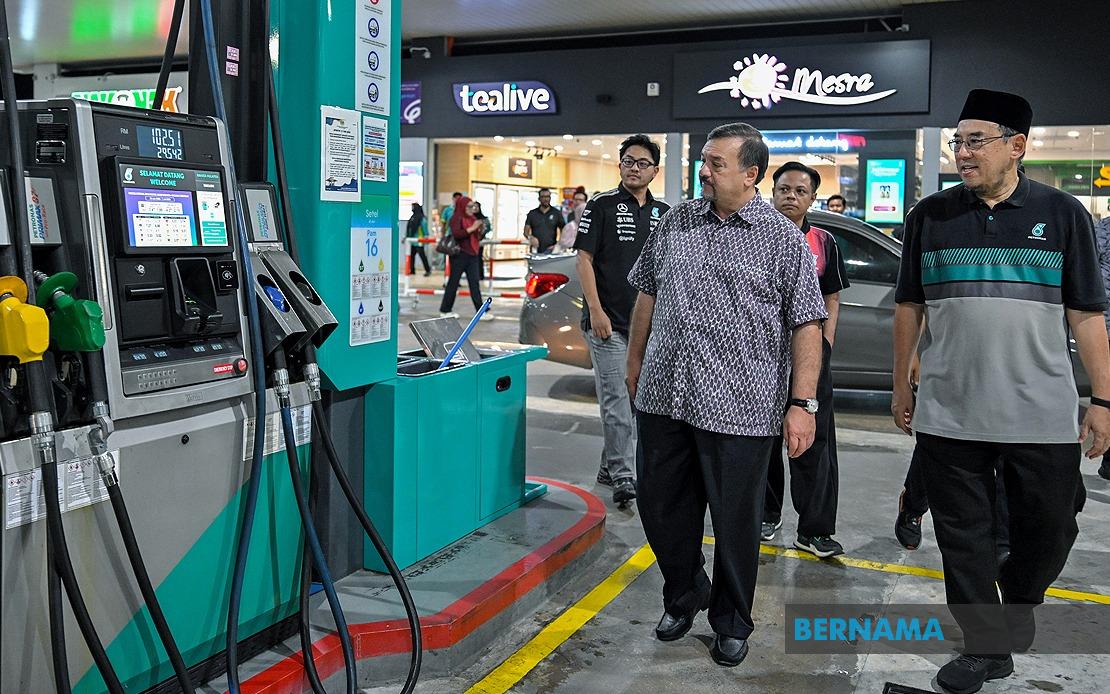
The government's new subsidised diesel initiative has generated substantial interest among Malaysian motorists, with the BUDI MADANI portal recording more than 18,000 applications for additional fuel quota during its opening phase. According to Second Finance Minister Datuk Seri Amir Hamzah Azizan, the early rollout of BUDI MADANI Diesel commenced in Peninsular Malaysia on June 27 and has proceeded without operational hiccups or technical complications, marking a significant milestone in the government's efforts to provide targeted relief to specific vehicle owners.
The scale of the response underscores both the appeal of the subsidy and the accessibility of the application platform. Within the first forty-eight hours, transactions exceeding 40,000 were processed through the BUDI MADANI system, indicating robust user engagement and effective digital infrastructure. Amir Hamzah made these remarks during an inspection of the early implementation phase at a Petronas petrol station along NKVE, Damansara Bound, conducted jointly with Treasury secretary-general Tan Sri Johan Mahmood Merican. The ministerial visit was designed to monitor real-world operations and gather feedback from both motorists and fuel retailers.
Eligible vehicle owners—those holding diesel-powered pickup trucks and sport utility vehicles—can access a flexible monthly diesel quota of up to 200 litres at subsidised rates. During the initial implementation phase, subsidised diesel is priced at RM2.15 per litre, with the government committed to further reduction to RM2.10 per litre beginning Wednesday, June 30. This tiered pricing approach reflects the government's intention to gradually transition support levels while maintaining affordability for target beneficiaries.
The programme has been designed with multiple access points to accommodate users with varying levels of digital literacy. The primary channel operates through the official BUDI MADANI online portal, where applications can be submitted remotely. However, recognising that not all eligible users may be comfortable navigating digital platforms, the government has established alternative assistance mechanisms. Officers stationed at Inland Revenue Board (LHDN) offices and Urban Transformation Centres (UTCs) nationwide provide in-person guidance, whilst several major oil companies have deployed dedicated service counters to assist applicants. This multi-channel approach significantly broadens accessibility and reduces potential exclusion of less digitally-savvy groups.
A particularly innovative feature of the BUDI Diesel framework addresses a common practical challenge in Malaysia's informal economy and family vehicle arrangements—the distinction between registered vehicle owners and actual users. The government has introduced a quota transfer facility enabling registered owners to designate another individual as the quota beneficiary. This flexibility recognises that many pickup trucks and SUVs serving commercial purposes may be operated by drivers or employees rather than legal owners. Once a transfer application is approved through the portal, verification occurs at petrol stations using the identity card number of the designated user, with the quota electronically tagged to that individual's IC number.
The technical architecture underlying these transfers demonstrates thoughtful system design. Rather than tethering the subsidy to the vehicle registration alone, the government has implemented a person-based verification system that matches the quota to the actual user's identity card at the point of purchase. This distinction prevents circumvention attempts whilst accommodating legitimate operational arrangements. The subsidy amount itself remains vehicle-linked, meaning it cannot be transferred between vehicles or used by individuals other than the designated beneficiary. Such controls aim to preserve programme integrity and prevent misuse or black-market diversion of subsidised fuel.
To date, both system reliability and participation from petroleum retailers appear solid. Amir Hamzah confirmed that no technical issues involving the BUDI MADANI infrastructure or complications from petrol station operators have surfaced during the initial forty-eight-hour window. This absence of implementation friction is noteworthy given the complexity of integrating new subsidy mechanisms into thousands of retail fuel pumps across the peninsula. For Malaysian consumers, smooth operational execution translates to reliable access to the promised subsidy rates without encountering system errors or station-level disputes over eligibility.
The government's emphasis on sustained focus leading into the July 1 transition date suggests that officials recognise the importance of maintaining momentum and managing the full-scale rollout carefully. The two-day early implementation phase allows system administrators, petroleum retailers, and Revenue Board personnel to identify and resolve any emerging bottlenecks before nationwide expansion. This staged approach reflects lessons learned from previous subsidy programme launches in Malaysia, some of which experienced significant teething problems when scaled rapidly.
From a regional perspective, Malaysia's targeted diesel subsidy for specific vehicle categories represents a refined approach compared to historical broad-based fuel subsidies. By restricting benefits to owners of pickup trucks and SUVs—vehicles typically used for livelihoods in agriculture, trade, and small business—the government attempts to direct support toward economically productive users whilst limiting the fiscal burden. This contrasts sharply with untargeted petrol subsidies that historically consumed substantial government resources whilst primarily benefiting higher-income vehicle owners with larger fuel consumption.
The programme's design also reflects acknowledgment of Malaysia's informal sector dynamics. Pickup trucks and commercial SUVs remain workhorses for rural and small-scale enterprises, construction operations, and agricultural activities. Many such vehicles operate under formal ownership but are driven by hired operators or family members who bear the actual fuel costs. The quota transfer facility directly addresses this reality, ensuring that those bearing financial burden receive the subsidy benefit rather than allowing the registered owner to capture unintended windfall gains.
Looking forward, the government faces the challenge of scaling this system beyond the initial 18,000 applications. Whilst the current uptake is encouraging, many potentially eligible vehicle owners may not yet be aware of the programme or may encounter delays in processing. The Finance Ministry's support infrastructure through LHDN offices and UTCs will be critical in reaching users in less urban areas where digital access or portal familiarity may be limited. Monitoring compliance and preventing fraudulent claims—such as individuals claiming multiple quota transfers for non-existent users or falsifying vehicle categories—will require ongoing vigilance from revenue authorities and petroleum retailers.
The broader policy significance extends beyond immediate fuel cost relief. The BUDI MADANI Diesel initiative demonstrates the government's willingness to implement digitally-enabled, means-tested subsidies rather than maintaining universal fuel price controls. Successful execution of this programme could establish a template for future targeted assistance initiatives across other sectors, from food subsidies to electricity discounts for qualifying demographics. As Malaysia seeks to balance fiscal sustainability with social safety net provisions, programmes that achieve meaningful relief for intended beneficiaries whilst containing costs may become increasingly central to government spending strategy.
The momentum established in the opening forty-eight hours provides an encouraging foundation for the full rollout. However, sustaining this operational excellence and managing public expectations as applications increase will determine whether BUDI MADANI Diesel becomes a model for effective subsidy delivery or encounters the familiar challenges that have plagued previous fuel support schemes. Officials' careful attention to system integrity, user accessibility, and retailer coordination suggests a government determined to learn from past implementation difficulties.

