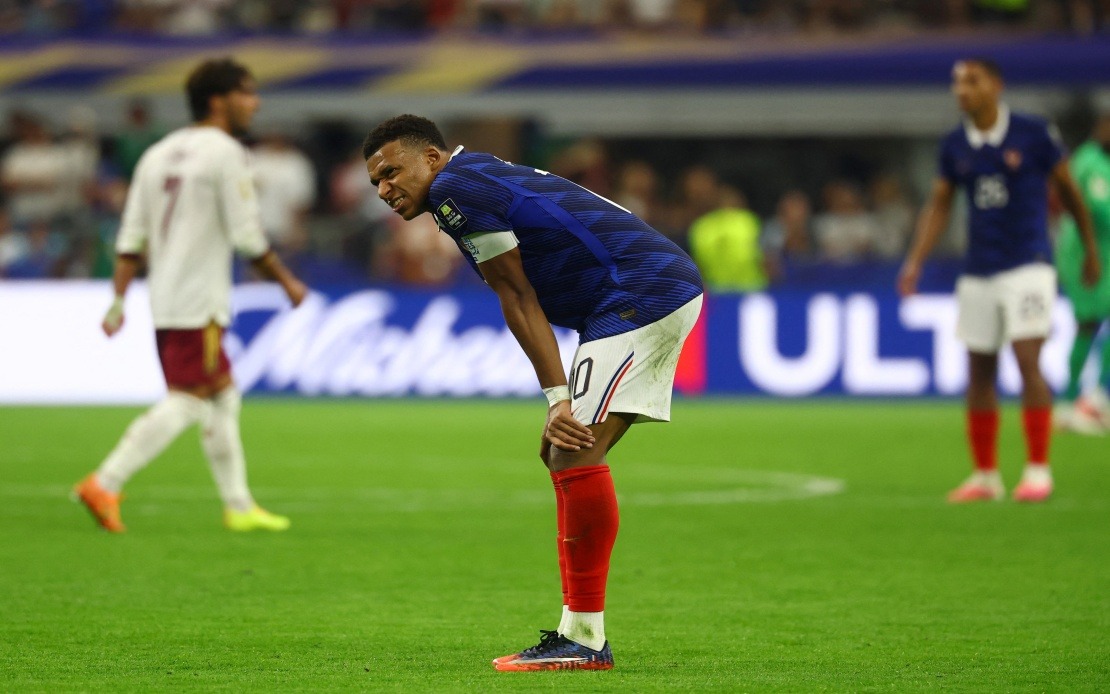
France's shock elimination from the FIFA World Cup at the semifinal stage on Tuesday night descended into disorder across the country, with law enforcement agencies making more than 160 arrests as fans reacted angrily to the team's 2-0 defeat by Spain. The scale of the disturbances underscored how deeply invested French society had become in the tournament, and how quickly celebration can turn to confrontation when sporting expectations are shattered.
Parisian authorities bore the brunt of the unrest, with the Paris Police Prefecture confirming that 141 individuals were taken into custody in the capital region in the hours following the match. The concentration of arrests in the French capital reflects both its size and the density of passionate football supporters who gathered to witness the semifinal. While the exact circumstances varied from incident to incident, police identified a consistent pattern of behaviour that prompted action across multiple locations throughout the evening.
The primary charge linking the majority of arrests centred on the deployment of pyrotechnic devices, specifically firework mortars that witnesses and law enforcement alleged were directed at police officers and emergency service workers responding to the unrest. Such tactics represent a deliberate escalation beyond spontaneous expressions of disappointment, and authorities treated them as serious enough to warrant detention. The targeting of emergency responders elevates these incidents beyond typical post-match disorder into behaviour that poses genuine risks to public safety and those tasked with maintaining order.
Despite the scale of arrests and the potentially dangerous nature of the projectiles involved, French authorities reported that the disturbances did not result in significant injuries. This relative restraint in outcomes, however, should not be interpreted as minimising the seriousness of what occurred. The absence of major casualties reflects either fortunate timing or the effectiveness of police response rather than any absence of intent or danger from those involved in the disorder.
Lyon, France's third-largest city, witnessed its own eruption of fan unrest centred on Place Bellecour, one of Europe's largest public squares and a traditional gathering point for supporters during major sporting events. Several hundred people congregated in the area to watch the semifinal match on screens, creating a concentrated crowd of emotionally invested spectators. The immediate aftermath of Spain's victory proved volatile, as smaller factions within the broader crowd began engaging in confrontational behaviour that authorities felt compelled to address through intervention.
The disturbances in Lyon, while serious enough to warrant police action, remained comparatively contained. Projectiles including fireworks were hurled toward law enforcement personnel, mirroring the incidents unfolding simultaneously in Paris. French riot police deployed to manage the situation, ultimately apprehending approximately 20 individuals in connection with the Lyon incidents. The relatively lower arrest toll in Lyon compared to Paris likely reflects both the city's smaller population and the more dispersed nature of fan gatherings outside the capital.
A notable demographic characteristic emerged from the arrests: the detainees were reportedly born between 2002 and 2011, suggesting that younger supporters, many not yet adults or only recently so, constituted a significant portion of those involved in the disorder. This generational aspect raises questions about how youth engagement with football culture, social media dynamics during live events, and peer group behaviour influence responses to sporting disappointment in contemporary France.
Local authorities in Lyon confirmed that despite the clashes, no injuries or substantial damage to property occurred in their jurisdiction. This stands in contrast to some historical football-related incidents in European cities, which have sometimes resulted in significant destruction and injuries. The relative containment of damage may reflect the quick deployment of riot police or the nature of the crowd itself, though the precise reasons remain unclear from official reports.
The broader context of France's early elimination from a World Cup tournament on home continent—the match took place at a European venue—added particular poignancy to the supporters' reaction. France, as a football powerhouse with deep cultural attachment to the sport, carried expectations of deep tournament runs. The semifinal stage represents a point where expectations crystallise into either triumph or bitter disappointment, leaving little room for perspective in the immediate aftermath. The sudden transformation of public spaces from celebration zones to conflict zones illustrated how fragile the boundary between sporting passion and disorder can prove in tense moments.
For Malaysia and other Southeast Asian nations observing these developments, the incidents serve as a reminder of universal patterns in how sporting societies process major defeats, regardless of geography or development level. The deployment of public order resources, the targeting of emergency personnel, and the involvement of younger supporters present consistent challenges that transcend borders. As football continues its global expansion and intense fandom spreads across Asia, the phenomenon of post-match disorder remains pertinent to understanding crowd management and public safety considerations surrounding major sporting events throughout the region.

